Table of Contents
Thematic board games offer something truly special: the chance to step into another world where stories unfold through your decisions, not just dice rolls. For newcomers, this immersive quality can transform a simple game night into a memorable adventure, sparking laughter, strategic thinking, and genuine connection around the table. Unlike abstract strategy games, thematic titles wrap mechanics in compelling narratives—whether you’re negotiating peace treaties among alien species, racing to uncover ancient artifacts, or managing a bustling bakery—making complex rules feel intuitive and purposeful. This narrative glue helps new players grasp why they’re taking certain actions, turning potential confusion into captivating engagement right from the first play.
Yet, diving into thematic games as a beginner can feel overwhelming. With countless options promising epic adventures, how do you choose one that won’t drown you in rulebooks or leave your group frustrated? The wrong pick might feature labyrinthine setup, punishingly long turns, or themes that clash with your group’s vibe, turning what should be fun into a chore. The key isn’t finding the “hottest” game of the year, but identifying titles that balance rich storytelling with approachable design—where the theme enhances simplicity rather than complicating it. This guide cuts through the noise, focusing on universal principles to help you discover games that welcome newcomers while delivering that magical, story-driven experience everyone craves.
Top 10 Thematic Board Games for New Players
Detailed Product Reviews
1. Scorpion Masqué Sky Team | Voted Game of The Year 2024 | Best 2 Player Game | Work Together to Land The Plane | Ages 14+ | 20 Minutes

Overview: Sky Team is an intensely cooperative dice game where two players assume roles as pilot and co-pilot racing to land a plane safely before time runs out. Players must simultaneously manage critical systems like speed, altitude, and brakes using shared dice, creating palpable tension as the runway approaches.
What Makes It Stand Out: Its unique real-time pressure and asymmetric roles foster genuine teamwork—players strategize between rounds but must trust each other’s split-second dice decisions during them. The modular scenarios (like kerosene leaks or icy runways) and immersive cockpit components heighten replayability and thematic engagement.
Value for Money: Priced competitively for a premium 20-minute experience, it delivers exceptional depth through its 20 scenarios and expansions. It outshines similar-priced cooperative games by eliminating downtime and maximizing every second of play.
Strengths and Weaknesses: Strengths: Brilliant tension, seamless teamwork mechanics, high replayability, elegant components. Weaknesses: Very short playtime may disappoint those seeking longer sessions; steep difficulty curve for casual players.
Bottom Line: A masterclass in cooperative design that earns its Game of the Year title—essential for couples or partners craving a tight, thrilling, and deeply collaborative challenge.
2. Asmodee Sid Meier’s Civilization: A New Dawn Board Game - Rewrite History Your Way! Strategy Game for Kids & Adults , Ages 14+, 2-4 Players, 1-2 Hour Playtime

Overview: Civilization: A New Dawn streamlines the legendary PC franchise into a focused board game where 2-4 players build empires across seven ages, competing for victory through science, culture, or military dominance. It emphasizes accessible yet strategic empire-building in 60-90 minutes.
What Makes It Stand Out: The game’s “wonder” system replaces complex worker placement with intuitive action cards, allowing dynamic shifts in strategy. Multiple victory paths ensure diverse playstyles, while beautifully illustrated era boards visually track progression, making it welcoming for newcomers without sacrificing depth for veterans.
Value for Money: Justifies its price with high-quality components and near-infinite replayability thanks to asymmetric civilizations and variable objectives. It offers more strategic nuance than entry-level strategy games at a similar cost.
Strengths and Weaknesses: Strengths: Streamlined rules, strong visual storytelling, meaningful player choices, balanced pacing. Weaknesses: Limited player interaction can feel isolating; setup time slightly lengthy for the play duration.
Bottom Line: An outstanding gateway to 4X strategy that captures Civilization’s essence—highly recommended for families and strategy enthusiasts seeking depth without overwhelming complexity.
3. The Chameleon: Award-Winning Bluffing Board Game for Family, Adults & Friends | Includes 80 Extra Secret Words | Who is The Imposter?

Overview: The Chameleon is a lightning-fast social deduction game where players collaborate to guess a secret keyword—except one “chameleon” who doesn’t know it and must bluff convincingly to avoid detection. Ideal for 3-8 players, it’s mastered in minutes and played in 15.
What Makes It Stand Out: Its genius lies in simplicity: no apps or complex rules, just a rotating keyword wheel and coded wordplay. The chameleon’s tension—mimicking others while avoiding suspicion—creates hilarious, high-stakes moments. The included 80+ extra words vastly extend its lifespan.
Value for Money: Exceptional for the price, offering party-game longevity rarely seen. It outperforms pricier deduction games with its effortless setup, portability, and consistent replayability across gatherings.
Strengths and Weaknesses: Strengths: Ultra-quick setup/play, inclusive for all skill levels, massive replay value, perfect for large groups. Weaknesses: Limited strategic depth; relies heavily on group dynamics (quieter players may struggle).
Bottom Line: A near-perfect party game that’s effortless to learn but endlessly engaging—unreservedly recommended for game nights craving laughter and clever deception.
4. Spy Alley - Mensa Award-Winning Strategy Game - Social Deduction & Bluffing Board Game - Family Game Night Fun - Ages 8+ for 2-6 Players

Overview: Spy Alley is a timeless deduction game where players move through a city grid as spies of different nationalities, gathering hidden identity clues while bluffing to conceal their own mission. Designed for ages 8+, it blends strategy and social cunning for 2-6 players.
What Makes It Stand Out: Its enduring appeal (30+ years) stems from elegant hidden-identity mechanics and multi-generational accessibility. The coincidence of designer William Stephenson sharing a name with WWII spymaster “INTREPID” adds charming lore, enhancing the spy-movie immersion without complex rules.
Value for Money: A steal as a durable, endlessly replayable classic. It outperforms newer deduction games by accommodating wider age ranges and requiring zero setup—just open and play for decades.
Strengths and Weaknesses: Strengths: Inclusive for kids/adults, no reading required, high strategic depth for its simplicity, exceptional longevity. Weaknesses: Luck-based elements may frustrate hardcore strategists; board art feels dated.
Bottom Line: A must-have family staple that earns every award—it’s the ideal blend of approachable strategy and nostalgic fun, perfect for gifting or holiday gatherings.
5. Asmodee The Lord of The Rings: Duel for Middle-Earth Board Game - Epic Strategy Game of Power and Conquest for Kids and Adults, Ages 10+, 2 Players, 30 Minute Playtime

Overview: This two-player duel pits the Fellowship against Sauron in a condensed battle for Middle-earth, using card-driven mechanics to control regions, rally allies, and pursue unique victory conditions across three thematic chapters.
What Makes It Stand Out: It brilliantly adapts 7 Wonders Duel’s card-drafting elegance into Tolkien’s lore, with immediate win conditions (destroying the Ring, gathering allies, or conquering territories) creating dynamic, high-stakes decisions. The dual-sided board and rich iconography immerse players without rule bloat.
Value for Money: Priced fairly for a deeply thematic, replayable duel that avoids filler. It delivers more strategic richness per minute than most 30-minute games, justifying cost for LOTR fans and strategy lovers alike.
Strengths and Weaknesses: Strengths: Tight gameplay, strong theme integration, accessible rules with strategic depth, perfect session length. Weaknesses: Limited player count excludes groups; Fellowship’s path feels slightly unbalanced.
Bottom Line: A triumphant duel that captures LOTR’s epic spirit—highly recommended for couples or fans seeking a quick, engrossing, and lore-rich two-player experience.
6. Hasbro Gaming Clue Conspiracy Board Game for Adults and Teens, Secret Role Strategy Games, Ages 14+, 4-10 Players, 45 Minutes, Mystery & Party Games
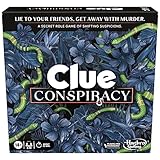
Overview:
Clue Conspiracy reimagines the classic whodunit as a high-stakes social deduction party game. Set on a tropical island, players assume secret roles as either “Friends” protecting Mr. Coral or “Conspiracy” members scheming his murder using traps and deception, accommodating 4-10 players in 45 minutes.
What Makes It Stand Out:
Its brilliance lies in the secret team dynamic and mandatory deception. Unlike traditional Clue, lying and bluffing are core mechanics, creating intense psychological drama. The shifting alliances, multiple win conditions (disarming traps vs. executing the murder plot), and tropical setting refresh the formula with a lively party-game energy perfect for teens and adults.
Value for Money:
Priced competitively against similar strategy games, it delivers exceptional replayability through variable roles and player counts. The included traps, character cards, and streamlined rules justify the cost, especially for groups tired of static trivia or deduction games—offering more strategic depth than most party games in its range.
Strengths and Weaknesses:
Strengths: Highly engaging social interaction; scales brilliantly from 4 to 10 players; innovative twist on Clue; quick setup; encourages creative deception. Weaknesses: Can feel chaotic with inexperienced players; setup requires careful role explanation; less focus on traditional clue-solving may disappoint Clue purists.
Bottom Line:
An outstanding upgrade for Clue fans seeking deeper strategy and laughter-filled betrayal. Ideal for game nights prioritizing interaction over pure logic, it earns strong recommendation for groups aged 14+ wanting a fresh, tense, and replayable party experience.
7. Wit’s End — A Smart, Mind-Bending Trivia & Brain Teaser Game That Will Challenge Your Wits & Knowledge — Adult & Family Night Fun

Overview:
Wit’s End elevates trivia gaming with four uniquely challenging categories designed to test logic, deduction, and knowledge beyond simple recall. Targeted at adults and families, it transforms game nights into rigorous mental workouts where “smart” means solving patterns, not just facts.
What Makes It Stand Out:
Its four specialized categories—Teaser (rhyming riddles), Odd-1-Out (pattern recognition), Sequence (logical ordering), and Wild Card (unpredictable challenges)—demand diverse cognitive skills. This structure avoids trivia fatigue, rewarding adaptable thinking over rote memorization, making every round feel distinct and intellectually stimulating.
Value for Money:
The game’s depth justifies its price, offering far more longevity than standard trivia sets. With thousands of potential question combinations across its categories, it avoids repetition and suits competitive players seeking genuine mental challenges, outperforming generic trivia games in replay value.
Strengths and Weaknesses:
Strengths: Exceptional variety in question types; sharp focus on critical thinking; high replayability; accessible yet challenging for teens/adults. Weaknesses: May frustrate casual players preferring straightforward trivia; sequence/odd-one-out questions can spark debate; fewer pop-culture references than mainstream trivia games.
Bottom Line:
A must-have for puzzle enthusiasts and competitive families. Wit’s End brilliantly merges trivia with brain-teasing logic, delivering consistently fresh challenges. Highly recommended for groups craving intellectually rich, non-elimination gameplay that builds knowledge and deduction skills.
8. USAOPOLY The Original TAPPLE, The Fast-Paced Family Board Game,Choose a Category & Race Against The Timer to be The Last Player,Learning Word Game for Ages 8 & Up, 2-8 Players, 15-20 Minute Play Time

Overview:
TAPPLE delivers lightning-fast wordplay by combining category-based vocabulary challenges with a tactile timer wheel. Players race against the clock to shout words starting with a specific letter, pressing corresponding tabs to stay in the game—ideal for 2-8 players seeking quick, energetic rounds.
What Makes It Stand Out:
The ingenious timer wheel (with integrated countdown) creates relentless, inclusive pressure. Unlike turn-based word games, TAPPLE’s real-time format ensures constant engagement, while the portable design (storing all cards internally) makes it perfect for travel. Its simplicity shines in quick setup and intuitive play.
Value for Money:
Excellent for its price point, offering durable components and 144 categories that sustain interest across countless sessions. The brevity of games (15-20 minutes) encourages repeated plays, providing far more entertainment per dollar than complex games with lengthy setups—especially for families.
Strengths and Weaknesses:
Strengths: Unbeatable pacing; highly portable; easy to learn; inclusive for mixed ages; sharpens vocabulary under pressure. Weaknesses: Timer can feel unforgiving for younger players; limited strategic depth; repetitive without house rules; volume may overwhelm quiet spaces.
Bottom Line:
A stellar choice for families wanting fast, brain-boosting fun without complexity. TAPPLE’s portability, frantic energy, and educational value make it a top-tier party game for ages 8+. Highly recommended as a go-to for game nights, travel, or classroom wordplay.
9. Herd Mentality: Udderly Funny Family Board Game | Easy & Fun for Big Groups of 4-20 Players | Includes 20 Extra Exclusive Questions

Overview:
Herd Mentality thrives on group psychology, challenging players to guess the most popular answers to quirky questions. Designed for massive groups (4-20 players), it transforms game nights into laughter-filled sessions where conformity wins cows—and nonconformity brings the dreaded “pink cow of doom.”
What Makes It Stand Out:
Its genius is scalability and simplicity. Questions like “Name something you’d hate to find in your soup” spark hilarious discussions as players anticipate groupthink. The pink cow mechanic adds playful tension, while the 20 bonus questions enhance replayability—no complex rules or setup required.
Value for Money:
Outstanding for large gatherings, where few games accommodate 15+ players without splintering groups. The low price per player (thanks to high capacity) and endless humor from unpredictable answers make it a budget-friendly staple for holidays or parties, outperforming games limited to 6-8 participants.
Strengths and Weaknesses:
Strengths: Effortless setup; hilarious group dynamics; scales perfectly for big crowds; accessible for ages 10+; encourages social bonding. Weaknesses: Humor relies heavily on group chemistry; repetitive after many rounds; minimal strategic depth; answers can feel culturally narrow.
Bottom Line:
An essential icebreaker for chaotic family gatherings or parties. Herd Mentality’s ease, scalability, and laugh-out-loud moments justify its spot in every game cabinet. Highly recommended for stress-free fun where the goal is simply to blend in—and avoid that pink cow.
10. Outsmarted Ultimate Edition - 10 Exciting Bonus Categories | Kids, Teens & Adults | Next-Level Game Night for Family & Friends | 2–24 Players | Age 8+ | 10,000+ Questions | 2026 Edition

Overview:
Outsmarted merges traditional board gaming with app-driven tech, simulating a TV quiz show where players of all ages compete in real-time. The Ultimate Edition boasts 10,000+ questions across 10 core categories, adaptive difficulty, and remote play—supporting 2-24 players via smartphones or smart TVs.
What Makes It Stand Out:
Its AI-driven age adjustment ensures kids compete fairly against adults, while multimedia elements (song clips, images, video) and remote play break geographical barriers. The 10 bonus categories (like Logo Quiz or Movie Music) and Breaking News updates keep content perpetually fresh, rivaling actual game shows.
Value for Money:
Exceptional long-term value: the vast question library and free category updates negate replay fatigue. Though requiring devices, it leverages existing tech (no extra hardware), making it cheaper per play than physical trivia sets. The Ultimate Edition’s bonus categories add significant depth for minimal extra cost.
Strengths and Weaknesses:
Strengths: Unmatched scalability; adaptive difficulty; rich multimedia; remote play; constantly updated content. Weaknesses: Tech dependency risks glitches; setup requires app downloads; less tactile than traditional games; internet needed for updates.
Bottom Line:
A revolutionary, future-proof game night solution. Outsmarted’s inclusivity, tech integration, and sheer content volume make it ideal for modern families. Highly recommended despite minor tech hurdles—especially for those valuing fairness across generations and global connectivity.
Understanding Thematic Games for Beginners
What Makes a Game “Thematic”?
Thematic games prioritize narrative and atmosphere over pure mechanical elegance. Every component—from the artwork on cards to the shape of tokens—serves the story, making players feel like active participants in a unfolding drama. Mechanics are designed to reflect the theme; for example, a time-travel game might use a unique deck structure where cards physically move backward, reinforcing the concept. This cohesion helps new players intuit rules because actions make sense within the story context, reducing the cognitive load of memorizing arbitrary systems. The best thematic experiences make you forget you’re learning a game and instead feel like you’re living the adventure.
Why Thematic Games Excel for New Players
Story-driven games lower the barrier to entry by providing intuitive scaffolding for rules. When a rule aligns with the narrative—“You need three wood resources to build that bridge because the story says the river is swollen!"—it’s easier to remember and accept than an abstract requirement. Thematic immersion also fosters emotional investment; players care about outcomes because they’re invested in the characters or world, making losses feel like plot twists rather than failures. Crucially, these games often encourage collaborative storytelling, where mistakes become funny anecdotes (“Remember when our clumsy wizard set the tavern on fire?”), easing pressure and building group rapport naturally.
Essential Features to Prioritize
Playtime That Respects Your Night
For new players, a game overstaying its welcome is the fastest path to disinterest. Prioritize titles with clear, realistic playtimes under 60–90 minutes for your first session. Look for streamlined setup—games where components are clearly labeled or use intuitive iconography—and avoid those requiring extensive pre-game organization. Shorter sessions allow beginners to grasp core concepts without fatigue, leaving them eager for “just one more round.” Remember, a tight 45-minute game that feels complete is far more satisfying than a sprawling epic that drags past the group’s energy limit.
Rulebook Clarity and Learning Curve
The quality of the rulebook is non-negotiable. Seek out games with illustrated, step-by-step guides that explain why rules exist (“This phase represents gathering supplies before your expedition”). Avoid dense text blocks; instead, favor guides using visual examples, color-coding, or even QR codes linking to short tutorial videos. A gentle learning curve is equally vital: the first play should focus on basic actions, with deeper strategies unfolding organically over subsequent games. Games that teach through doing—like having players draw a card and immediately perform its thematic action—help newbies absorb rules naturally, without overwhelming theory.
Player Interaction Styles
Consider how your group likes to engage. Cooperative games, where everyone works toward a common goal against the game system itself, eliminate cutthroat dynamics that can intimidate newcomers. Competitive-but-friendly titles with minimal “take-that” mechanics (like resource trading instead of direct sabotage) keep the mood light. For social groups, games emphasizing storytelling or negotiation—where talking and laughter are part of the strategy—can be more accessible than silent, number-crunching experiences. Match the interaction style to your group’s personality to ensure comfort and sustained enjoyment.
Matching Games to Your Group’s Personality
The Social Butterfly Group
If your crew thrives on conversation and shared laughter, prioritize games with strong social deduction or collaborative storytelling elements. Look for mechanics that require players to describe scenarios, negotiate deals aloud, or collectively solve puzzles through discussion. Games where turns are fast-paced and downtime is minimal keep energy high, while humorous themes (like running a chaotic animal shelter) encourage playful engagement. Avoid silent, highly tactical games where players optimize in isolation—these stifle the chatter your group loves.
The Casual Strategist Circle
Groups that enjoy light planning but dislike cutthroat competition should seek " Eurogame-lite” hybrids. These offer meaningful decisions—like efficient resource management or route-building—wrapped in a strong theme, without punishing luck or direct conflict. Prioritize games with clear spatial elements (e.g., tile placement) or simple set collection where the theme explains the mechanics (“Gathering these festival tokens represents winning local competitions”). Short setup and consistent turn length prevent analysis paralysis, keeping strategy accessible and fun.
The Narrative-Driven Duo or Small Group
For intimate gatherings craving deep immersion, focus on campaign-style or scenario-based games with evolving stories. These often feature branching narratives where choices impact future sessions, creating a personalized adventure. Ensure the game includes robust solo/co-op modes if group size fluctuates. Look for strong production value—custom miniatures, illustrated storybooks—that enhances atmosphere without complicating rules. Avoid overly complex legacy systems; instead, choose titles where narrative progression is driven by simple, repeatable mechanics you can master quickly.
Navigating Complexity Wisely
Recognizing Approachable Complexity
Not all complexity is bad—it becomes problematic when it feels unnecessary or disconnected from the theme. Approachable complexity emerges when intricate mechanics serve the story, like a detective game using a clue-organizing system that mimics real investigation. Watch for “gateway complexity”: games that introduce one new layer per session (e.g., adding event cards only after mastering basic actions). New players should feel challenged but never lost; a well-designed game provides subtle hints through components (e.g., color-coded tracks) that guide decisions without explicit instruction.
Components That Teach, Not Confuse
High-quality components actively aid learning. Custom dice with thematic symbols (instead of numbers), double-sided boards showing progression, or player mats that outline turn sequences turn abstract rules into tactile experiences. Avoid games where tiny text on cards is essential—new players shouldn’t need magnifying glasses to participate. Instead, favor icon-driven design where symbols are clearly explained in a reference guide. Tactile elements like chunky resources or distinctive miniatures also create memorable anchors for rules (“Ah yes, the purple crystals are for magic spells—that makes sense!”).
Practical Selection Strategies
Leveraging Demo Opportunities
Never buy blind. Seek out local game stores hosting “demo nights” or conventions with open play areas. Playing a game guided by an experienced person reveals nuances no rulebook can—like common beginner mistakes or how downtime feels in practice. Many stores also offer “try before you buy” programs. If in-person demos aren’t feasible, search for detailed playthrough videos focusing on first-time player experiences, not expert showcases. Seeing real people stumble and recover is invaluable for assessing accessibility.
Reading Beyond the Box Hype
Marketing copy often oversells. Scrutinize the “complexity rating” on retailer sites (aim for 1.5–2.5 stars on a 5-point scale for beginners) and read forum threads titled “First impressions” or “Is this newbie-friendly?”. Ignore player count ranges; test with your actual group size (e.g., a game for 2–4 might feel sluggish with only two). Pay attention to setup time complaints—“30 minutes to unpack” is a red flag. Focus on recurring praise about intuitive rules or thematic cohesion, not just “amazing artwork.”
Avoiding Common Pitfalls
The Overambition Trap
It’s tempting to start with a game that looks stunning on Instagram, but massive boxes with 500 components rarely suit beginners. Resist “shiny object syndrome”—a simpler game played repeatedly builds confidence faster than one complex title gathering dust. Begin with standalone experiences before exploring expansions or campaign systems. Remember: a game you actually play is infinitely more valuable than a showpiece that intimidates your group into never unboxing it.
Ignoring Physical and Mental Accessibility
Consider your group’s real-world needs. Games requiring fine motor skills (like fiddly miniatures) or intense color discrimination can exclude players. Opt for sturdy, large components and colorblind-friendly designs where possible. Also, assess cognitive load: games with simultaneous turns or “real-time” elements reduce downtime anxiety for new players who fear “slowing everyone down.” If someone has attention challenges, avoid games with lengthy setup phases or complex upkeep steps between turns.
Building Confidence Through Play
Running Your First Thematic Session
As the organizer, your role is facilitator, not enforcer. Start by reading the rules aloud together using the rulebook’s examples. Assign someone to manage setup while others learn core concepts. For the first half, focus only on essential actions—skip advanced rules entirely. Encourage questions with “No rule is too small to ask!” and model grace when mistakes happen (“Oops, let’s rewind—that fireball spell shouldn’t have hit the dragon!”). Most importantly: keep it light. Laugh at blunders and celebrate small victories to build psychological safety.
Iterating for Long-Term Enjoyment
Don’t expect perfection on game one. After playing, discuss what worked: “Did the story make the rules click?” or “Was anyone bored during setup?” Use feedback to guide future choices—maybe your group prefers cooperative over competitive after all. Gradually introduce slightly deeper games as confidence grows, but always anchor new mechanics to familiar themes (“Remember how we gathered resources in the bakery game? This mining game works similarly!”). Documenting your journey (photos, funny moments) reinforces positive associations beyond the rules.
Growing Your Thematic Journey
From First Game to Lasting Habit
The goal isn’t just one successful night, but creating a sustainable hobby. Start with monthly “thematic nights” using a rotating theme (pirates, space exploration) to explore different mechanics within a familiar framework. Partner with local libraries or cafes hosting game sessions to meet like-minded players. As skills develop, revisit earlier games with advanced variants—this builds mastery without new learning overhead. Remember, consistency trumps complexity; playing a simple game monthly beats a rare, stressful epic.
Community and Continuous Learning
Join online communities focused on learning games, not just expert analysis. Subreddits or Discord servers with “newbie-friendly” channels offer safe spaces to ask “dumb” questions. Attend relaxed meetups where veterans explicitly welcome beginners—many cities have “no-judgment” game nights. Most importantly, lean on your group: designate a “rules champion” for each session who preps slightly more, rotating the role to share the load. This distributes responsibility and makes everyone feel invested in the hobby’s growth.
Frequently Asked Questions
How long should my first thematic game session last?
Aim for 45–75 minutes total, including setup and rules explanation. This keeps energy high and prevents fatigue, making players eager to try again soon.
Can thematic games be too simple for adults?
Not if the theme resonates. Depth comes from narrative engagement, not rule complexity. A well-crafted story with meaningful choices feels rich even with streamlined mechanics.
What if my group prefers competition but I want thematic depth?
Seek “multiplayer solitaire” hybrids where players pursue individual goals within a shared story world, like developing regions of a fantasy kingdom. Minimal direct conflict keeps it friendly.
How do I explain rules without overwhelming new players?
Teach only what’s needed for the first turn. Use the theme: “You’re a chef, so your first action is always to grab ingredients—that’s step one!” Reveal rules organically as situations arise.
Are expensive games better for beginners?
Not necessarily. Many affordable games ($20–$40) excel at accessibility. Prioritize component clarity and rulebook quality over price or miniatures.
What’s the biggest mistake new thematic players make?
Trying to master all rules at once. Focus on core actions first—advanced strategies should emerge naturally after 2–3 plays.
How many players is ideal for a first thematic game?
Start with 2–4 players. Larger groups increase downtime and confusion. Many thematic games scale poorly below 3 players, so check minimum counts.
Can thematic games work for mixed-skill groups?
Yes! Choose games with adjustable difficulty (e.g., an “easy mode” AI) or asymmetric roles where experienced players take slightly more complex characters.
What theme works best for absolute beginners?
Everyday concepts (farming, cooking, city-building) are instantly relatable. Avoid niche genres (e.g., stock market simulation) that require real-world knowledge.
How do I know when to move beyond beginner games?
When your group consistently finishes games under 90 minutes, asks for “just one more round,” and starts discussing strategies unprompted—you’re ready for gentle complexity!
See Also
- 10 Best Budget Thematic Board Games Under $50 for New Players in 2026
- 10 Best Thematic Board Games for Families with Teens in 2026
- 10 Thematic Board Games Recommendations for Date Nights in 2026
- 10 Thematic Board Games That Solve Lack of Engagement in 2026
- 10 Best Thematic Board Games for Solving Common Boredom Problems in 2026