Table of Contents
Tile placement games have quietly revolutionized the strategy board game landscape, transforming from niche curiosities into the cornerstone of modern tabletop design. There’s something profoundly satisfying about drawing a tile from a bag or stack and discovering the perfect spot to place it—every game becomes a unique puzzle where you’re simultaneously building the board and navigating your path to victory. In 2026, this genre has reached new heights of sophistication, blending elegant mechanics with stunning components that turn your tabletop into a work of art as you play.
Whether you’re a seasoned strategist looking to deepen your spatial reasoning skills or a newcomer drawn to the tactile joy of constructing patterns and networks, understanding what makes tile placement games tick will transform how you approach your next purchase. This comprehensive guide cuts through the noise to help you identify the key features, mechanics, and strategic considerations that separate memorable, replayable experiences from shallow, forgettable ones. We’ll explore how to evaluate complexity, player interaction, and long-term engagement potential so you can build a collection that grows with your skills.
Top 10 Strategy Board Games
Detailed Product Reviews
1. CATAN Board Game (6th Edition) Trade, Build & Settle in The Classic Strategy Game for Family, Kids & Adults, Ages 10+, 3-4 Players, 60-90 Min Playtime

Overview: CATAN 6th Edition continues its reign as the quintessential gateway strategy game, tasking players with colonizing a modular island through resource management and trading. Players collect brick, wood, wheat, ore, and sheep to build roads, settlements, and cities in a race to 10 victory points. This edition refines the experience with improved components and streamlined rules while preserving the core gameplay that has sold over 35 million copies worldwide.
What Makes It Stand Out: The modular hexagonal board guarantees infinite replayability, creating unique resource distributions every game. The trading mechanic transforms competitive strategy into a dynamic social experience, where negotiation becomes as crucial as planning. The 6th Edition enhances this with detailed plastic pieces, refined artwork, and a robust box insert that finally organizes components properly, elevating an already polished classic.
Value for Money: At $45-50, CATAN delivers exceptional long-term value through near-infinite variability. Comparable strategy games often cost more while offering less replayability. The base game provides countless sessions, and the ecosystem of expansions extends its lifespan indefinitely. For families seeking a foundational game that grows with their interest, this represents a sound investment with a remarkably low cost-per-play ratio.
Strengths and Weaknesses: Strengths: Highly interactive gameplay; incredible replayability; bridges casual and serious gaming; excellent tutorial for new players; fosters social engagement. Weaknesses: Can suffer from “kingmaker” situations; dice luck may frustrate purists; requires separate expansion for 5-6 players; prone to analysis paralysis; initial games run long.
Bottom Line: CATAN 6th Edition remains an essential purchase for families and strategy enthusiasts. Its perfect balance of accessibility and depth creates engaging experiences that keep players returning. While not flawless, its strengths overwhelmingly justify its classic status and make it the ideal cornerstone for any board game collection.
2. Gamewright - Forbidden Island - Cooperative Strategy Survival Board Game, 2-4 Players
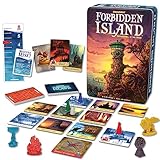
Overview: From Pandemic creator Matt Leacock, Forbidden Island is a cooperative survival game where 2-4 players work together to retrieve four sacred treasures from a rapidly sinking island. As flood waters rise, players must strategize collectively, manage cards efficiently, and sacrifice personal advancement for group survival. The shared victory condition creates palpable tension and fosters genuine teamwork in a compact 30-minute experience.
What Makes It Stand Out: The cooperative mechanics eliminate direct conflict, making it ideal for family harmony. The “Flood Deck” system progressively submerges island tiles, creating a dynamic, time-sensitive puzzle that demands adaptive strategy. Unlike competitive games, Forbidden Island encourages table-wide discussion and collaborative problem-solving, teaching valuable teamwork skills while maintaining strategic depth through role specializations and escalating difficulty levels.
Value for Money: Typically retailing under $20, Forbidden Island offers tremendous affordability. It provides a complete cooperative experience at a fraction of the cost of heavier strategy games. The component quality exceeds price expectations, and the included difficulty levels extend replayability significantly. For budget-conscious gamers seeking meaningful, educational experiences, this delivers outstanding value.
Strengths and Weaknesses: Strengths: Fosters genuine teamwork; quick setup and playtime; scalable difficulty; accessible rules; excellent for teaching strategic thinking; portable box. Weaknesses: Less replayable than competitive games; experienced players can “quarterback” decisions; component durability concerns; simpler than Leacock’s Pandemic; limited strategic variety.
Bottom Line: Forbidden Island excels as a family-friendly cooperative gateway game. Its affordable price, quick gameplay, and emphasis on teamwork make it perfect for introducing new players to modern board gaming. While veteran gamers may eventually outgrow it, its value and accessibility make it an indispensable addition to any family collection.
3. Hasbro Gaming Connect 4 Classic Grid,4 in a Row Game,Strategy Board Games for Kids,2 Player .for Family and Kids,Ages 6 and Up
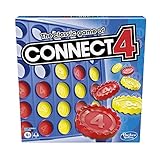
Overview: Hasbro’s Connect 4 Classic Grid revitalizes the timeless 1974 abstract strategy game where two players drop colored discs into a vertical grid, aiming to connect four in a row. This edition modernizes the experience with contemporary styling while preserving the pure, head-to-head tactical challenge that has engaged generations. The game requires zero setup and plays in under 10 minutes, making it ideal for instant entertainment.
What Makes It Stand Out: The inclusion of three distinct play modes distinguishes this edition. Classic mode delivers the traditional experience, while “Connect 4 Frenzy” introduces simultaneous play for chaotic fun. The innovative pop-out feature allows players to remove bottom discs, adding a surprising tactical layer that reinvigorates the familiar formula. This versatility transforms a simple game into multiple experiences within one box.
Value for Money: Retailing around $10-12, Connect 4 represents exceptional value. The durable plastic grid withstands years of play, and the timeless design never becomes outdated. Unlike disposable trends, this game maintains relevance across decades, offering perhaps the lowest cost-per-play ratio in family gaming. It’s an unbeatable value for instant, reliable entertainment.
Strengths and Weaknesses: Strengths: Immediate accessibility; zero learning curve; durable components; portable; excellent for developing pattern recognition; three gameplay variants; minimal storage space. Weaknesses: Limited to two players; solved game at expert levels; can feel repetitive; lacks thematic depth; older children may lose interest quickly; no team play option.
Bottom Line: Connect 4 Classic Grid remains a must-have for families with children. Its simplicity, durability, and quick gameplay make it ideal for casual sessions and developing strategic thinking in young minds. While not complex enough for serious hobbyists, its value and accessibility cement its status as an essential childhood classic that deserves a place on every family shelf.
4. Quoridor - Over 1 Million Sold! Mensa Select Winner | Wooden Abstract Strategy Game for Adults and Families | Ages 8+ | 2 to 4 Players | 1 Minute to Learn, 15 Minutes to Play

Overview: Quoridor is an elegant abstract strategy game where 2-4 players race pawns across a square grid to reach the opposite side. On each turn, players either move their pawn or place a wooden fence to obstruct opponents. This Mensa Select winner distills profound strategic depth into simple rules, creating a brain-burning experience where every decision carries long-term consequences in a constantly evolving maze that demands both offensive advancement and defensive blocking.
What Makes It Stand Out: The game’s brilliance lies in its emergent complexity—simple rules generate infinite strategic possibilities. Solid wooden pieces provide satisfying tactile feedback, and the stained finish ensures durability without chipping paint. The 1-minute teaching time belies the game’s strategic depth, making it accessible yet challenging for years. Its recognition by Mensa signals genuine intellectual merit and educational value that transcends mere entertainment.
Value for Money: Priced around $30-35, Quoridor sits in the premium tier for abstract games. The high-quality wooden components justify the cost, as they withstand decades of play while maintaining aesthetic appeal. Compared to cheaper plastic alternatives, Quoridor’s craftsmanship and infinite replayability make it a worthwhile investment for serious strategy enthusiasts seeking a beautiful, lasting game that never becomes obsolete.
Strengths and Weaknesses: Strengths: Elegant, learnable rules; infinite strategic depth; premium wooden components; scalable player count; quick playtime; Mensa-endorsed educational value; no language dependency. Weaknesses: Abstract theme lacks narrative appeal; can induce analysis paralysis; board feels small at 4 players; no variable setup; intimidating for purely casual players; limited player interaction.
Bottom Line: Quoridor is a masterpiece of abstract strategy that belongs in every serious gamer’s collection. Its perfect balance of simplicity and depth, combined with gorgeous components, creates a timeless experience. While casual players may prefer themed games, Quoridor’s quality and strategic richness make it an essential purchase for those who appreciate pure, elegant gameplay that rewards repeated play.
5. SEQUENCE- Original SEQUENCE Game with Folding Board, Cards and Chips by Jax ( Packaging may Vary ) White, 10.3" x 8.1" x 2.31"
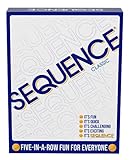
Overview: SEQUENCE combines cards and board game elements into a unique pattern-building experience. Players play cards from their hand to place chips on corresponding board spaces, aiming to create five-chip sequences. Supporting 2-12 players through team play, it merges poker hands with tic-tac-toe strategy. The folding board and included chips provide a complete package for a surprisingly strategic family game that scales from intimate duels to large party sessions.
What Makes It Stand Out: The hybrid gameplay appeals to both card and board game fans, bridging two gaming worlds seamlessly. The team variant (3-4 per team) transforms it into a social, collaborative experience where partners strategize together. Jacks serve as special wildcards, adding tactical depth. This versatility allows SEQUENCE to function as both a light filler and a serious strategic contest, adapting to player preferences and group sizes effortlessly.
Value for Money: At approximately $15-18, SEQUENCE offers remarkable value. The substantial folding board, two card decks, and 135 chips provide generous components for the price. Its broad player range eliminates the need for multiple games when hosting gatherings, making it economically efficient for entertaining diverse groups. The packaging may vary, but the core value and component quantity remain consistently excellent.
Strengths and Weaknesses: Strengths: Accommodates large groups; easy to learn but strategically deep; excellent for mixed-age play; team variant adds social dimension; develops pattern recognition; compact storage. Weaknesses: Card drawing introduces significant luck; can feel slow with maximum players; chip quality inconsistent; board artwork is functional but dated; prone to analysis paralysis; no solo mode.
Bottom Line: SEQUENCE is an exceptional choice for multi-generational family gatherings and casual game groups. Its blend of accessibility and strategy, combined with generous player capacity, makes it incredibly versatile. While luck influences outcomes, the tactical decisions and social teamwork create engaging experiences that justify its place in any family game collection seeking inclusive, scalable entertainment.
6. Renegade Game Studios Axis & Allies: 1941 - A WWII Strategy Board Game, Renegade Game Studios, Epic War Game Set in 1941, Struggle for Supremacy, Ages 12+, 2-5 Players, 1-3 Hour Playing Time

Overview: Axis & Allies: 1941 offers a streamlined entry into the legendary WWII strategy franchise. This edition distills the epic conflict into a more accessible format while preserving the core experience of commanding nations in global warfare. Designed for 2-5 players, each participant controls a major power, maneuvering 160 plastic miniatures across a historically-inspired board. The updated rulebook incorporates years of errata and FAQs, making this the most polished version of the 1941 scenario. With a playing time of 1-3 hours, it strikes a balance between depth and accessibility that newcomers will appreciate.
What Makes It Stand Out: This edition’s primary distinction is its deliberate simplification without sacrificing the franchise’s signature feel. The 160 detailed miniatures—including infantry, tanks, and aircraft—come with resealable storage bags, addressing a common complaint about component organization. The updated rulebook and improved box design demonstrate Renegade’s commitment to quality-of-life improvements. Unlike heavier Axis & Allies titles that can consume an entire day, this version delivers a complete strategic experience in a single evening, making it feasible for regular game nights.
Value for Money: Priced as an entry-level strategy game, 1941 provides exceptional value compared to its pricier siblings like Axis & Allies 1940. You’re getting authentic franchise gameplay, high-quality miniatures, and a historically immersive experience for roughly half the cost of flagship titles. For players uncertain about committing to complex wargaming, this represents a low-risk investment. The component quality rivals games costing significantly more, and the included storage solutions add tangible value.
Strengths and Weaknesses: Strengths include accessible rules that teach in under 30 minutes, durable plastic miniatures, improved component storage, and a manageable playtime. The streamlined combat and production systems reduce analysis paralysis while maintaining strategic depth. Weaknesses involve oversimplification for veteran players seeking granular complexity, occasionally imbalanced victory conditions favoring the Allies, and a game board that feels cramped compared to larger editions. Player elimination can also leave eliminated participants waiting.
Bottom Line: Axis & Allies: 1941 succeeds brilliantly as a gateway wargame, offering authentic franchise flavor without overwhelming complexity. It’s perfect for history buffs and strategy gamers wanting to explore WWII tabletop conflict without dedicating an entire weekend. While hardened veterans may find it too lightweight, it’s arguably the best entry point for the series and an excellent value for casual to intermediate gaming groups.
7. Azul Asmodee Azul Board Game - Award-Winning Tile-Placement Strategy Game, Beautiful Mosaic Art, Family Fun for Kids & Adults, Ages 8+, 2-4 Players, 30-45 Minute Playtime
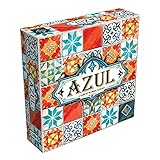
Overview: Azul revolutionized abstract strategy gaming by combining tactile tile-drafting with stunning visual appeal. Players compete as artisans decorating Portuguese palace walls, drafting colorful resin tiles from shared factories to create intricate patterns on personal player boards. The game balances simple turn structure—take tiles, place them, score points—with surprisingly deep strategic layers. Each session unfolds in about 30-45 minutes, making it ideal for family gatherings or as a filler between heavier games. Its universal theme and language-independent gameplay have made it a global phenomenon.
What Makes It Stand Out: The game’s standout feature is its unparalleled component quality. The heavyweight resin tiles provide satisfying tactile feedback, and the mosaic patterns create a beautiful table presence. Azul’s genius lies in its double-edged decision space: drafting tiles you need while denying opponents critical pieces. The scoring system rewards both horizontal and vertical completion, creating multiple strategic paths. It’s genuinely easy to teach within 10 minutes, yet mastering the timing of when to complete rows versus sabotaging opponents takes dozens of plays.
Value for Money: Azul sits at a mid-tier price point that undercuts many strategy games of similar quality. The deluxe components—thick player boards, resin tiles, and custom inserts—feel premium. With near-infinite replayability due to variable tile distribution and opponent strategies, the cost-per-play is exceptionally low. It replaces multiple abstract games in most collections and appeals to non-gamers, maximizing its utility. Given its Spiel des Jahres win and enduring popularity, it holds resale value remarkably well.
Strengths and Weaknesses: Strengths include gorgeous components, intuitive rules, perfect information gameplay, and strong player interaction without direct conflict. It scales excellently across all player counts and engages both casual and serious gamers. Weaknesses involve potential for analysis paralysis, significant “hate-drafting” that can feel aggressive in family settings, and limited theme integration beyond aesthetics. The score track can be fiddly, and some variants in the series offer more complexity.
Bottom Line: Azul belongs in nearly every board game collection as a modern masterpiece of accessible depth. Its combination of beauty, strategy, and broad appeal is unmatched. While the cutthroat nature might surprise some families, it’s a flawless execution of elegant game design that rewards repeated play. For those seeking a gateway game that remains engaging after 50+ sessions, Azul is an essential purchase.
8. Risk Board Game, Strategy Games for 2-5 Players, Strategy Board Games for Teens, Adults, and Family, War Games, Ages 10 and Up

Overview: Risk remains the quintessential game of global domination, now enhanced with modern touches. This latest edition preserves the classic formula: deploy armies, attack territories, and conquer the world through dice-driven combat. Supporting 2-5 players, it delivers the same territory-control tension that has defined family game nights for decades. The inclusion of Alexa integration and a dragon token variant adds contemporary appeal to this timeless design. With a playing time of 1-2 hours, it maintains the epic feel while streamlining some of the original’s more tedious elements.
What Makes It Stand Out: The Alexa skill integration represents the most significant innovation, allowing voice-controlled gameplay, automated score tracking, and ambient sound effects that enhance immersion without replacing the physical experience. The dragon token introduces a cooperative threat that disrupts traditional strategies, forcing players to balance conquest with dragon management. The updated components include detailed army figures and organized storage crates, elevating the tactile experience. These additions modernize Risk without alienating purists who cherish the original’s straightforward aggression.
Value for Money: Risk occupies the budget-friendly tier of strategy gaming, often retailing below newer titles while offering nearly infinite replayability. The Alexa feature adds digital value at no extra cost, and the dragon variant effectively provides two games in one box. For families seeking a recognizable brand with low complexity, it’s unmatched. However, compared to modern design innovations, its luck dependency and player elimination mechanics feel dated, slightly diminishing its relative value for serious gamers.
Strengths and Weaknesses: Strengths include universal brand recognition, simple rules that children grasp quickly, dramatic narrative moments, and the exciting Alexa integration. The dragon variant adds welcome variety. Weaknesses center on excessive dice luck, lengthy downtime with eliminated players, potential for 3+ hour sessions with analysis paralysis, and limited strategic depth compared to contemporary area-control games. The player elimination mechanic increasingly feels antiquated.
Bottom Line: Risk successfully bridges generations, offering nostalgic gameplay with just enough modern polish to remain relevant. It’s ideal for families with teens and casual gaming groups prioritizing theme and drama over pure strategy. While serious gamers may find it too random and lengthy, the Alexa integration and dragon token provide fresh angles on a classic. Purchase if you want an accessible, thematic war game; avoid if you prefer strategic depth without luck dominance.
9. AEG & Flatout Games | Cascadia - Award-Winning Board Game Set in the Pacific Northwest | Easy to Learn | Quick to Play | Ages 10+

Overview: Cascadia distills the essence of the Pacific Northwest into an elegant spatial puzzle that earned the prestigious Spiel des Jahres 2022 award. Players draft habitat tiles and wildlife tokens simultaneously, constructing ecosystems where bears, elk, salmon, and eagles thrive in interconnected corridors. The game supports 1-4 players with solo mode included, playing in a brisk 15-30 minutes. Its core mechanism—pairing a tile with a token each turn—creates a deceptively simple decision space that blossoms into rich strategic territory. The nature theme provides calming ambiance while the puzzle demands sharp spatial reasoning.
What Makes It Stand Out: Winning board gaming’s highest honor for accessibility and design excellence immediately distinguishes Cascadia. Its dual-drafting system is brilliantly efficient: every choice affects both your landscape geometry and wildlife placement. The game includes family mode scoring cards alongside advanced variants, making it truly adaptable to any audience. Solo play with automated opponents works seamlessly, a rarity in light strategy games. The tactile wooden wildlife tokens and thick hexagonal tiles create premium feel, while the rulebook teaches the game in under two minutes—a testament to its elegant design philosophy.
Value for Money: As a recent Game of the Year winner, Cascadia is priced aggressively competitive, often matching games with far less prestige. The included solo mode and dual difficulty settings effectively deliver multiple games in one box. Component quality exceeds expectations at this price point, with custom inserts and durable pieces. Its 15-30 minute playtime means you’ll get more sessions per gaming night than heavier alternatives, driving the cost-per-play extremely low. For families and casual gamers, it replaces several filler games while offering depth that satisfies enthusiasts.
Strengths and Weaknesses: Strengths include lightning-fast setup and teaching, satisfying solo play, scalable complexity, peaceful theme with crunchy decisions, and flawless component organization. The spatial puzzle rewards planning without punishing mistakes harshly. Weaknesses involve limited player interaction—it’s primarily multiplayer solitaire—and a theme that, while beautifully executed, may not excite players seeking high conflict or narrative. The scoring can feel abstract initially, and advanced players may crave more variability after extensive play.
Bottom Line: Cascadia represents modern board game design at its finest—accessible, rewarding, and beautifully produced. It’s an essential purchase for families, casual gamers, and anyone seeking a peaceful yet engaging puzzle. The Spiel des Jahres validation isn’t just hype; this game delivers genuine strategic satisfaction in a package anyone can enjoy. While not for those craving direct competition, it’s nearly perfect for its intended audience and one of the best values in contemporary gaming.
10. Unstable Games Twisted Cryptids Board Game - Strategy Card Game for Adults and Kids - Family Board Games for 2-4 Players, Ages 12 and Up - from The Creators of Unstable Unicorns and Here to Slay

Overview: Twisted Cryptids applies Unstable Games’ signature chaotic charm to cryptozoology, creating a light strategy card game where players collect legendary creatures while sabotaging opponents. Drawing from the design DNA of Unstable Unicorns and Here to Slay, this 2-4 player game delivers interactive, take-that gameplay in about 60 minutes. Players deploy Cryptid meeples and action cards to build their collection while navigating hidden trait mechanics that keep everyone guessing. The tarot-sized cards and lenticular box art demonstrate the publisher’s commitment to visual flair, making it as much a shelf display piece as a playable game.
What Makes It Stand Out: The hidden trait system adds a deduction element rare in light card games, forcing players to anticipate opponents’ secret abilities. The take-that mechanics are finely tuned—impactful enough to create dramatic moments without completely derailing strategies. Component quality shines with chunky Cryptid meeples and oversized cards that feel substantial. The expandable design, with announced expansions like Cryptid Culture, ensures longevity. The lenticular box is genuinely eye-catching, making it an instant conversation starter. Unlike its predecessors, Twisted Cryptids balances aggression with more strategic scaffolding.
Value for Money: Positioned in the mid-range card game bracket, Twisted Cryptids offers solid value through component quality and expansion potential. The base game provides sufficient variety for dozens of sessions, but expansion support significantly extends its lifespan compared to static card games. For fans of Unstable Unicorns, it offers familiar mechanics with improved strategic depth. However, the 60-minute playtime feels slightly long for its weight class, and the take-that style limits its audience. Competitive pricing and high production values justify the cost for the right group.
Strengths and Weaknesses: Strengths include high-quality components, engaging cryptid theme, expandable design, hidden information creating suspense, and accessible rules for casual gamers. The art is consistently charming and the meeples add tactile enjoyment. Weaknesses involve take-that mechanics that can alienate conflict-averse players, slightly overstaying its welcome at 60 minutes, and requiring the right group dynamic to shine. Player elimination, while rare, can feel punishing. The strategy layer may disappoint gamers seeking deeper engine-building.
Bottom Line: Twisted Cryptids is a worthy addition to Unstable Games’ portfolio, refining their formula with more strategic nuance and exceptional production. It’s best suited for groups that enjoy interactive, slightly mean-spirited card play with lots of table talk. The cryptid theme and quality components make it an excellent gift, though the take-that nature requires knowing your audience. If you loved Unstable Unicorns but wanted slightly more control, this delivers. For those preferring multiplayer solitaire or Euro-style efficiency, look elsewhere.
Understanding Core Tile Placement Mechanics
The Fundamental Placement Decision
Every tile placement game revolves around that critical moment when you commit a tile to the board. The best designs make this decision agonizing in the most delightful way possible. You’re not just matching colors or completing shapes—you’re weighing immediate point gains against future opportunities, blocking opponents while advancing your own position, and managing limited resources that might not come around again. Understanding this core tension helps you appreciate games that offer genuine strategic depth versus those that simply feel like multiplayer puzzles.
Scoring System Variations
Scoring mechanisms dramatically alter how you approach tile placement. Some games reward immediate, tactical scoring where each tile placed generates points right away, creating a constant sense of progression. Others use delayed scoring, where you build toward major endgame bonuses that require long-term planning and risk tolerance. The most sophisticated systems layer multiple scoring paths—area majority, pattern completion, network connectivity, and resource collection—forcing you to balance competing priorities with every placement.
Tile Types and Shape Complexity
The physical nature of tiles themselves creates vastly different gameplay experiences. Square tiles with simple connections offer approachable entry points where you can focus on strategic positioning rather than spatial gymnastics. Hexagonal tiles introduce six-directional possibilities that exponentially increase placement options and strategic depth. Irregular shapes and unique tile powers push you into advanced territory where every piece feels distinct and placement becomes a high-stakes puzzle.
Key Features to Evaluate Before Buying
Player Count Flexibility
A game’s robustness across different player counts reveals much about its design quality. The most versatile tile placement games maintain tension and meaningful decisions whether you’re playing head-to-head or with a full table. Look for titles that include scalable boards, adjustable tile pools, or dynamic turn order systems that preserve interaction levels. A game that only shines at specific player counts will spend more time on your shelf than your table.
Complexity and Learning Curve Assessment
Honest evaluation of complexity prevents buyer’s remorse. Light games teach in 10 minutes and play in 30, perfect for casual gatherings and gateway experiences. Medium-weight titles introduce layered scoring and moderate interaction, requiring 2-3 plays to grasp fully. Heavy games demand investment—they reward repeated plays with emergent strategies and deep mastery but can overwhelm first-time players. Match the complexity to your group’s dedication and patience.
Game Duration and Pacing
Tile placement games range from snappy 20-minute fillers to epic 2-hour brain-burners. Consider your gaming windows and attention spans. Games with simultaneous placement phases or rapid turns maintain momentum and keep everyone engaged. Titles with frequent analysis paralysis potential or complex endgame scoring can drag if your group prefers brisk gameplay. The best games scale their length intelligently, offering shorter variants or modular expansions.
Theme and Visual Appeal
While mechanics drive gameplay, theme and aesthetics determine how often a game hits the table. Nature-themed games with lush artwork create calming, meditative experiences. Abstract games with minimalist design focus attention on pure strategy. Adventure-themed titles with narrative elements make placements feel consequential and immersive. Choose visuals that resonate with your group’s preferences—you’ll be staring at this board for hours, so it should be something you love looking at.
Component Quality and Durability
Premium components elevate tile placement games from good to essential. Thick, linen-finished tiles with satisfying weight feel substantial in hand and withstand repeated plays. Clearly printed icons and colorblind-friendly palettes prevent frustrating misplays. Custom storage solutions within the box keep setup time minimal and protect your investment. Consider how components will hold up after dozens of plays and whether replacement packs are available.
Strategic Depth and Interaction Levels
Competitive vs. Solitaire Gameplay
The spectrum of player interaction defines your table dynamics. Highly interactive games create cutthroat battles where every placement directly impacts opponents’ options, fostering tense, head-to-head mind games. Low-interaction “multiplayer solitaire” experiences let you focus on optimizing your own engine or pattern without worrying about aggression. Most modern designs strike a balance—shared resource pools, drafting systems, or area majority competitions create passive interaction that feels engaging without being confrontational.
Randomness vs. Perfect Information
Your tolerance for luck shapes which tile placement games will satisfy you. Random tile draws introduce variability and force adaptive strategies, preventing scripted play but potentially creating runaway winners. Perfect information games where all tiles are available or drafted eliminate luck, rewarding pure strategic planning and pattern recognition. Hybrid systems with controlled randomness—like drafting from a visible pool—offer the best of both worlds, mitigating luck while maintaining freshness.
Long-term Planning vs. Tactical Adaptation
The temporal focus of a game’s strategy determines its cognitive demands. Some games reward grand plans executed over many turns, where early placements set up cascading endgame bonuses. Others throw constant curveballs, forcing you to pivot based on available tiles and opponents’ moves. Mastering tile placement means recognizing which type you’re playing—overcommitting to a long-term strategy in a tactical game leads to frustration, while playing too reactively in a strategic game cedes victory.
Expansion and Replayability Architecture
The best tile placement games grow with your interest level. Modular expansions add new tile types, scoring mechanisms, or player powers that refresh the base experience. Variable setup procedures—random board layouts, asymmetric player abilities, or scenario-based objectives—ensure no two games feel identical. Investigate whether a game offers official expansions or community variants that extend its lifespan beyond the honeymoon period.
Categories of Tile Placement Strategy
Territory Building and Area Control
These games transform tile placement into a battle for spatial dominance. You’re claiming regions, connecting territories, or surrounding opponents’ positions. Success requires balancing expansion with consolidation—spread too thin and your influence weakens; focus too narrowly and you miss growth opportunities. The spatial arms race creates natural tension as the board fills and contested spaces become increasingly valuable.
Pattern Completion and Set Collection
Pattern-driven games challenge your visual-spatial reasoning and planning skills. You’re building specific configurations—lines, clusters, or elaborate shapes—to trigger scoring combinations. The puzzle-like nature makes each placement feel like solving a small mystery while contributing to a larger mosaic. These games often feature satisfying “aha!” moments when you spot the perfect spot that completes multiple patterns simultaneously.
Route Connection and Network Building
Network games turn tile placement into infrastructure development. You’re laying paths, connecting nodes, or building transportation routes that link key locations. Efficiency matters—shorter, more direct networks score better, but opportunistic placement might force circuitous routes. These games often feature satisfying engine-building elements where connected locations generate resources or open new placement options.
Economic Engine Builders
Some tile placement games weave economic systems into spatial decisions. Placed tiles might generate resources, activate abilities, or trigger production chains. You’re not just building a pretty pattern—you’re constructing an engine where tile adjacency and positioning create synergistic combos. These games reward players who can visualize not just the current board state but potential future production capabilities.
Abstract Spatial Puzzles
Pure abstract games strip away theme to focus entirely on geometric perfection. Every tile is identical in function, and victory comes from superior spatial manipulation. These are the chess-like experiences where mastery emerges from understanding nuanced placement principles, anticipating opponent moves, and controlling key board positions. They offer infinite depth but require dedication to appreciate their elegance.
Mastering Essential Tile Placement Skills
Spatial Reasoning Development
Expert tile placement players think several moves ahead in three dimensions. They visualize not just the immediate board but potential future states based on probable tile draws. Practice rotating tiles mentally, considering placement from multiple angles, and recognizing how a single tile can serve multiple scoring objectives. This skill transfers between games and improves with deliberate practice—replay the same game back-to-back to see how your spatial awareness evolves.
Pattern Recognition Techniques
Training your brain to spot scoring patterns quickly separates novices from masters. Start by identifying the most common scoring configurations and scanning the board for near-completions. Advanced players recognize emergent patterns—how two separate placements might suddenly create a scoring opportunity they hadn’t initially planned. Use your opponents’ placements as learning tools; watch how they spot opportunities you missed.
Risk Assessment and Mitigation
Tile placement involves calculated gambles. Do you commit to a high-value but difficult pattern, or play it safe with reliable small scores? Evaluate risk by considering tile availability—are the tiles you need plentiful or rare? Assess board space—will you have room to complete your plan if opponents block you? The best players maintain multiple viable paths, pivoting when one becomes untenable rather than going all-in on a single strategy.
Adaptive Strategy Formation
Rigid plans break in tile placement games. You must adapt to the tiles you actually draw, the spaces opponents actually leave open, and the scoring opportunities that emerge organically. Develop flexible frameworks rather than fixed strategies. Ask yourself: “What are my three best options this turn?” rather than “How do I advance my predetermined plan?” This mental shift keeps you competitive even when luck seems against you.
Practical Buying Considerations
Price Point and Value Proposition
Tile placement games range from budget-friendly card-based titles to premium productions with custom components. A $30 game that hits the table 50 times delivers better value than a $80 game played twice. Consider cost-per-play rather than sticker price. Expensive games should justify their price through exceptional component quality, infinite replayability, or unique mechanisms unavailable in cheaper alternatives.
Box Size and Storage Solutions
Your shelf space is finite. Large-box games with extensive tiles and boards make a statement but require significant storage. Compact, travel-friendly versions sacrifice some tactile satisfaction for portability. Evaluate whether a game includes efficient internal organization—bags, trays, or custom inserts that make setup and teardown painless. Games that store assembled boards or have minimal components get played more frequently.
Solo Mode Implementation
Solo modes have become standard in modern tile placement games, but quality varies dramatically. The best solo experiences maintain the core strategic decisions while providing a challenging, dynamic opponent through automated decks, target score thresholds, or beat-your-own-score systems with meaningful variability. Test a game’s solo mode before buying if solo play matters to you—some feel like afterthoughts while others are fully realized experiences.
Digital Implementation and App Support
Many tile placement games offer digital versions that serve as excellent learning tools. Apps can teach rules interactively, handle scoring automatically, and let you practice strategies solo. Some physical games include companion apps for scoring or randomization that streamline gameplay. Consider whether a digital version might satisfy your needs before purchasing the physical copy, especially for games you might only play occasionally.
Community and Tournament Scene
Active communities extend a game’s lifespan through strategy discussions, fan content, and organized play. Check for active forums, strategy guides, or local tournament scenes. Games with robust competitive communities often have deeper strategy than initially apparent and offer ongoing challenges as the meta evolves. Even casual groups benefit from community-created variants and house rules that keep familiar titles fresh.
Frequently Asked Questions
What makes tile placement games different from other strategy board games? Tile placement games uniquely combine spatial reasoning with strategic planning by having players physically build the game board as they play. Unlike static board games, the playable area evolves dynamically, creating emergent strategies and making each session distinct. The tactile nature of placing tiles provides immediate visual feedback and a satisfying sense of creation that abstract strategy games often lack.
How long does it typically take to learn a medium-complexity tile placement game? Most medium-complexity tile placement games require 15-30 minutes to learn the rules and 2-3 full playthroughs to understand strategic depth. The visual nature of tile placement often accelerates learning—players can see how tiles connect and score more easily than parsing abstract rule concepts. However, mastering optimal placement patterns and long-term planning typically requires 5-10 games.
Are tile placement games suitable for family play with children? Many tile placement games excel as family activities, offering accessible entry points where children can grasp basic placement rules while adults pursue deeper strategies. Look for titles with simple turn structures, clear visual scoring, and minimal text dependency. Games featuring colorful artwork and tactile components engage younger players, while adjustable complexity or team variants accommodate mixed skill levels.
What’s the optimal player count for most tile placement games? While many games support 2-4 players, tile placement often shines at 3 players, creating enough competition for contested spaces without excessive downtime. Two-player games tend to be more strategic and chess-like, while four-player sessions introduce more chaos and interaction. Always check how a game scales—some add boards or adjust tile counts to maintain tension across all player numbers.
How do I prevent analysis paralysis in tile placement games? Set reasonable turn timers, encourage players to plan during others’ turns, and emphasize that perfect optimization is less important than steady progress. Games with simultaneous placement phases or limited tile options naturally reduce paralysis. For teaching new players, focus on one scoring mechanism at a time and remind them that mistakes are part of learning—speed comes with experience.
Can tile placement skills transfer between different games? Absolutely. Core skills like spatial visualization, pattern recognition, and risk assessment improve across the genre. However, each game has unique scoring nuances and interaction patterns that require specific adaptation. Players who master one game can typically learn similar titles faster, though switching between games with contradictory placement principles (like area control vs. route building) may cause temporary confusion.
What should I look for in a tile placement game if I primarily play solo? Prioritize games with dedicated solo modes that preserve strategic depth rather than simply providing a beat-your-score challenge. Look for “automa” systems that simulate opponent actions, variable difficulty levels, and clear solo-specific setup rules. Games with minimal setup time and compact footprints also get more solo play, as does strong app implementation for digital solo practice.
How important is table space for tile placement games? Table space requirements vary dramatically. Some games fit on a small coffee table, while others expand across multiple boards and player mats. Consider your typical playing environment before purchasing. Games with modular boards or scalable play areas offer flexibility. Always check play area dimensions in reviews—an otherwise perfect game that doesn’t fit your table will gather dust.
Do tile placement games work well for remote or online play? Tile placement translates reasonably well to digital platforms, with apps and online implementations handling the spatial components effectively. However, the tactile satisfaction of physically placing tiles is a core part of the experience for many players. For hybrid remote play, some groups use camera setups pointing at a physical board, but this works best with lower player counts and simpler games.
How can I store and organize tile placement games to prevent component damage? Invest in small plastic bags or component trays to separate tiles by type, preventing scratches and speeding setup. Store games flat to avoid tile warping, and keep them away from extreme temperatures and humidity. For frequently played titles, consider custom foam core inserts or third-party storage solutions that protect components while making the game easier to set up and teach to new players.
See Also
- 10 Best Strategy Board Games for Tile Placement Enthusiasts in 2026
- 10 Must-Have Abstract Board Games for Tile Placement Masters in 2026
- 10 Essential Tile Placement Games Every Board Games Enthusiast Needs in 2026
- 10 Essential Tile Placement Games Every Board Game Enthusiast Needs in 2026
- 10 Essential Tile Placement Games Every Abstract Board Game Lover Needs in 2026