Table of Contents
Forget the endless scroll of短视频 and fleeting social media trends for a moment. There’s a quiet revolution happening at kitchen tables and in game cafes worldwide, powered not by algorithms, but by cardboard, tokens, and the satisfying click of a well-placed piece. Strategy board games are experiencing a phenomenal resurgence, especially among teenagers – a generation often stereotyped as glued to screens. Why? Because these games offer something digital interactions often lack: tangible presence, deep cognitive engagement, and the irreplaceable thrill of outmaneuvering a friend across a physical board. For teens navigating a complex world, these games aren’t just fun; they’re dynamic training grounds for critical life skills, wrapped in layers of suspense and social connection.
Imagine the focused intensity as players weigh resource allocation against long-term goals, the sudden gasp when an opponent executes a bluff, or the collaborative buzz of a team strategizing under pressure. Strategy board games provide a unique sandbox where abstract concepts like probability, resource scarcity, and diplomatic negotiation become visceral, immediate experiences. They demand patience, foresight, and adaptability – qualities increasingly vital in our fast-paced society. For parents seeking meaningful screen-free engagement and teens craving substantive interaction beyond passive consumption, diving into the world of strategic tabletop gaming isn’t just a pastime; it’s an investment in developing sharper minds and stronger social bonds. Let’s explore how to find the perfect strategic challenge for the teenage mind.
Top 10 Strategy Board Games for Teens
Detailed Product Reviews
1. Gamewright - Forbidden Island - Cooperative Strategy Survival Board Game, 2-4 Players
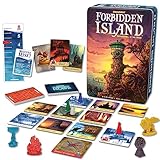
Overview: Forbidden Island is a cooperative strategy board game where 2-4 players work together as adventurers racing to retrieve four sacred treasures from a sinking island before it disappears. Designed by Matt Leacock, it emphasizes teamwork over competition, making it ideal for family game nights for ages 10+. What Makes It Stand Out: Its true cooperative nature—players win or lose as a team—fosters genuine collaboration and communication. The dynamic island tiles that sink as the game progresses create escalating tension, while rich illustrations and intuitive mechanics make the perilous adventure visually immersive and easy to grasp. Value for Money: Priced competitively for a high-quality board game, it delivers exceptional replayability through variable tile layouts and difficulty levels. The focus on skill development (problem-solving, strategic planning) justifies its cost compared to purely luck-based alternatives, offering educational depth alongside entertainment. Strengths and Weaknesses: Strengths: Encourages teamwork, simple to learn yet strategically engaging, beautiful components, and highly replayable. Weaknesses: Limited player count (max 4), and the sinking mechanic can occasionally feel punishing for younger players if not moderated. Bottom Line: A must-have cooperative game that masterfully blends strategy, tension, and teamwork; highly recommended for families and strategy enthusiasts seeking meaningful shared experiences.
2. The Chameleon: Award-Winning Bluffing Board Game for Family, Adults & Friends | Includes 80 Extra Secret Words | Who is The Imposter?

Overview: The Chameleon is a fast-paced social deduction game for 3-8 players (ages 14+), where one player secretly holds the “Chameleon” card and doesn’t know the round’s hidden keyword. Others must subtly discuss related words while the Chameleon bluffs to avoid detection. What Makes It Stand Out: Its brilliant simplicity—players communicate using only coded associations to the secret word—creates hilarious moments of misdirection and suspicion. The included 80 extra words vastly extend replayability, and the 15-minute playtime ensures constant engagement without drag. Value for Money: Exceptional value given its compact size, high-quality components, and near-infinite replayability from the extensive word bank. It outshines pricier party games by delivering intense, laughter-filled rounds suitable for teens and adults at any skill level. Strengths and Weaknesses: Strengths: Incredibly easy to learn, quick setup, perfect for large groups, and masterfully balances deduction with social bluffing. Weaknesses: Can feel repetitive with fewer players, and the Chameleon’s success relies heavily on group dynamics and player honesty. Bottom Line: A near-perfect party game that excels in accessibility and rewatchable fun; ideal for gatherings and highly recommended for fans of social deduction.
3. Risk Board Game, Strategy Games for 2-5 Players, Strategy Board Games for Teens, Adults, and Family, War Games, Ages 10 and Up

Overview: This classic war strategy game challenges 2-5 players to conquer territories through dice-driven battles, resource management, and tactical alliances. The reissued version includes traditional components like armies, dice, and a world map board, with optional Alexa integration for turn tracking. What Makes It Stand Out: The enduring appeal lies in its epic-scale conquests and high-stakes player negotiation. Unique additions like the dragon token—which randomly attacks territories—introduce chaotic twists, while Alexa support modernizes setup (though not essential to gameplay). Value for Money: Solid value as a timeless strategy staple with durable components. However, the dragon mechanic feels gimmicky, and Alexa integration is underutilized; it compares less favorably to modern strategy games offering deeper mechanics at similar prices. Strengths and Weaknesses: Strengths: Iconic gameplay, accommodates up to 5 players, and teaches strategic risk assessment. Weaknesses: Lengthy playtime prone to downtime, luck-heavy dice rolls, and the dragon/Alexa features add little meaningful depth. Bottom Line: A nostalgic pick for casual players, but its dated mechanics and luck dependency make it harder to recommend over contemporary strategy games unless you prioritize brand familiarity.
4. Azul Asmodee Azul Board Game - Award-Winning Tile-Placement Strategy Game, Beautiful Mosaic Art, Family Fun for Kids & Adults, Ages 8+, 2-4 Players, 30-45 Minute Playtime
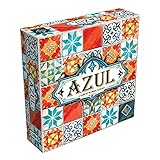
Overview: Azul challenges 2-4 players to draft vibrantly colored tiles to build mosaics on their personal boards, scoring points through strategic placement and pattern completion. Its Portuguese azulejo tile inspiration creates a visually stunning, abstract strategy experience for ages 8+. What Makes It Stand Out: The tactile, high-quality tiles and elegant ruleset make it instantly accessible yet deeply strategic. Each turn involves satisfying spatial puzzles, and the game’s 30–45 minute runtime ensures tight, focused gameplay without complexity overload. Value for Money: Excellent value due to premium components, exceptional replayability from variable starting setups, and broad age appeal. It justifies its price by offering consistent, high-quality fun that surpasses many entry-level strategy games. Strengths and Weaknesses: Strengths: Gorgeous artwork, intuitive rules, quick to learn but rich in tactics, and perfect for family or casual gaming. Weaknesses: Limited player interaction (mostly indirect competition), and advanced players may master it quickly, reducing long-term depth. Bottom Line: A beautifully crafted, accessible strategy gem that’s perfect for family game nights; highly recommended for its elegance and replay value.
5. CATAN Board Game (6th Edition) Trade, Build & Settle in The Classic Strategy Game for Family, Kids & Adults, Ages 10+, 3-4 Players, 60-90 Min Playtime

Overview: In CATAN, 3–4 players (ages 10+) compete to settle the island by gathering resources (wood, brick, etc.), building roads and settlements, and trading with others. The modular hex board ensures no two games play alike in this foundational modern strategy game. What Makes It Stand Out: Its revolutionary resource-trading mechanic creates dynamic player interaction and negotiation, while the variable board layout drives endless strategic diversity. The 60–90 minute playtime balances depth with accessibility, making it a gateway to modern board gaming. Value for Money: Highly justifiable as a genre-defining classic with immense replayability and broad appeal. Though newer editions exist, this version remains cost-effective compared to niche strategy games, offering years of engagement for families and hobbyists. Strengths and Weaknesses: Strengths: Encourages negotiation and adaptive planning, highly replayable, and fosters meaningful player interaction. Weaknesses: Luck-dependent resource rolls can frustrate, and the 3–4 player limit excludes larger groups common in family settings. Bottom Line: An essential strategy game that remains unmatched for teaching resource management and social dynamics; a top recommendation for beginners and veterans alike.
6. Asmodee Splendor Board Game - Master The Art of Wealth and Prestige! - Engaging Gem Mining Strategy Game for Kids & Adults, Ages 10+, 2-4 Players, 30 Min Playtime

Overview: Splendor challenges players to build gem-mining empires as Renaissance merchants, collecting stones, acquiring developments, and attracting nobles to earn prestige points. Its streamlined engine-building mechanics make it accessible for families and newcomers while offering tactical depth for veterans, all within a tight 30-minute playtime.
What Makes It Stand Out: The game’s brilliance lies in its elegant balance of simplicity and strategic richness. Players efficiently manage gem tokens to “purchase” development cards, creating cascading combos that fuel point-scoring engines. The 10th-anniversary refresh enhances component quality and visual appeal, while multiple victory paths ensure no two games feel identical.
Value for Money: Priced moderately for a premium strategy game, Splendor delivers exceptional replayability through its near-perfect scalability (2–4 players) and minimal downtime. It outperforms cheaper alternatives in depth and surpasses pricier titles in approachability, making it a cornerstone for any game library.
Strengths and Weaknesses: Strengths include intuitive rules, lightning-fast setup, and satisfying tactical decisions. The compact box packs high-quality chips and cards. Weaknesses involve occasional “kingmaking” in 4-player games and limited player interaction beyond resource competition.
Bottom Line: Splendor remains a masterclass in accessible strategy gaming. Its flawless blend of speed, depth, and elegance justifies its status as a modern classic—highly recommended for families and hobbyists seeking a quick, engaging challenge.
7. Hasbro Gaming Clue Conspiracy Board Game for Adults and Teens, Secret Role Strategy Games, Ages 14+, 4-10 Players, 45 Minutes, Mystery & Party Games
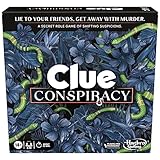
Overview: Clue Conspiracy reimagines the classic whodunit as a social deduction party game set on a tropical island. Players assume secret roles—either “Friends” protecting Mr. Coral or “Conspiracy” members plotting his murder—using lies, sabotage, and shifting alliances to achieve opposing objectives in under an hour.
What Makes It Stand Out: The game shines through its dynamic team-based deception. Unlike traditional Clue, players actively bluff, manipulate information, and set traps while racing to complete hidden goals. The 4–10 player range accommodates large groups effortlessly, blending murder mystery tension with lively party-game energy.
Value for Money: At its price point, it offers outstanding group entertainment value. The modular setup and multiple win conditions negate replay limitations of the original Clue, while high player counts make it ideal for gatherings where most games fail to scale.
Strengths and Weaknesses: Strengths are its infectious social chaos, easy role-based rules, and thrilling accusations phase. Weaknesses include potential imbalance if players refuse to engage in deception and a reliance on group dynamics—less effective with passive players.
Bottom Line: Clue Conspiracy successfully modernizes a legacy IP into a must-have for social gamers. Its blend of strategy and improv makes it perfect for teens and adults craving interactive, high-energy fun—just ensure your group enjoys mind games.
8. Asmodee Ticket to Ride Board Game (2025 Refresh) - A Cross-Country Train Adventure for Friends and Family, Strategy Game for Kids & Adults, Ages 8+, 2-5 Players, 30-60 Minute Playtime

Overview: This refreshed edition of Ticket to Ride invites players to claim railway routes across 1900s North America, connecting cities via color-coded train cards. Simple drafting and route-building mechanics create an engaging, family-friendly experience that balances luck and planning in 30–60 minutes.
What Makes It Stand Out: The 2025 update features a more vibrant map and sturdier miniature trains, enhancing an already iconic design. Its genius is in intuitive gameplay—drawing cards, claiming routes, and fulfilling destination tickets—wrapped in stunning aesthetics that appeal to all ages.
Value for Money: While slightly pricier than entry-level family games, its durability, universal appeal (ages 8+), and near-perfect scalability (2–5 players) justify the cost. It outshines cheaper alternatives with deeper strategy and far surpasses complex euros in accessibility.
Strengths and Weaknesses: Strengths include effortless teachability, beautiful components, and satisfying route-completion tension. Weaknesses involve potential “route blocking” frustration for new players and limited strategic depth for hardcore gamers.
Bottom Line: Ticket to Ride remains the gold standard for gateway board games. The 2025 refresh cements its legacy as an essential, endlessly replayable family favorite that bridges generations with joyful, competitive fun.
9. Unstable Games Twisted Cryptids Board Game - Strategy Card Game for Adults and Kids - Family Board Games for 2-4 Players, Ages 12 and Up - from the Creators of Unstable Unicorns and Here to Slay

Overview: Twisted Cryptids pits players as cryptid hunters using action cards to sabotage opponents or fulfill secret objectives. This light strategy card game blends hidden traitor mechanics with “take-that” chaos, delivering 60 minutes of fast-paced, thematic fun centered around mythical creatures.
What Makes It Stand Out: Standout features include lenticular box art, Cryptid meeples, and adaptable rules that scale from casual to cutthroat. Its unique “hidden trait” system creates constant suspicion, while expansion packs like Cryptid Culture extend longevity beyond most card games.
Value for Money: Priced competitively, it offers strong value through high-quality tarot-sized cards and multiple replay paths. Though less complex than heavy strategy games, it outperforms similar party games in thematic cohesion and component quality.
Strengths and Weaknesses: Strengths are quick setup, hilarious player interactions, and gorgeous art. Weaknesses include reliance on luck during card draws and potential imbalance if one player is overly targeted early.
Bottom Line: Twisted Cryptids excels as a lively, accessible game for mixed groups. While not a strategic heavyweight, its whimsical theme and interactive mechanics make it a standout choice for family nights or casual gaming sessions.
10. Stonemaier Games: Wingspan (Base Game) by Elizabeth Hargrave | A Relaxing, Award-Winning Strategy Board Game About Collecting Birds for Adults and Family | 1-5 Players, 70 Mins

Overview: Wingspan casts players as ornithologists attracting birds to wildlife preserves through engine-building. Using custom dice, egg miniatures, and 170+ unique bird cards, it combines set collection and resource management in a serene, nature-themed experience lasting 60–90 minutes.
What Makes It Stand Out: The game’s tranquil yet strategic depth is unmatched. The birdfeeder dice tower, vibrant illustrations, and educational bird facts create immersion, while habitat-specific chains encourage clever combos. Its solo mode and swift-start guide broaden accessibility.
Value for Money: As a premium-priced game, it justifies cost through exceptional components, 170 bird cards, and immense replayability. It surpasses cheaper euros in thematic richness and outlasts many family games in longevity due to variable setups.
Strengths and Weaknesses: Strengths include stunning design, satisfying engine growth, and stress-free gameplay. Weaknesses are a steeper learning curve for non-gamers and potential analysis paralysis with large player counts.
Bottom Line: Wingspan is a masterpiece of thoughtful design that rewards both casual and strategic players. Its beauty, depth, and calming theme make it a must-own—highly recommended for nature lovers and board game enthusiasts seeking meaningful, relaxing fun.
Understanding Strategy Games for the Teenage Mindset
Defining the Strategy Genre Spectrum
Strategy board games encompass a vast universe, far beyond simple roll-and-move mechanics. At their core, they require players to make meaningful decisions that significantly impact the outcome, prioritizing planning, analysis, and adaptation over pure luck. This spectrum ranges from pure abstract strategy (like chess or Go) focusing solely on spatial reasoning and pattern recognition, to complex eurogames emphasizing intricate resource management and engine building, and hybrid games blending negotiation, area control, and thematic storytelling. Recognizing this diversity is the first step to finding the right fit.
Why Strategy Resonates with Teens
Teenagers are in a crucial developmental stage, honing abstract thinking, complex problem-solving, and social navigation skills. Strategy games perfectly align with this growth. They provide a safe, structured environment to practice evaluating risks and rewards, understanding long-term consequences of decisions, and navigating social dynamics like cooperation and competition. The inherent challenge stimulates the developing brain, offering tangible rewards for intellectual effort – a powerful counterpoint to instant-gratification digital experiences. The social interaction is also key; debating moves, forming temporary alliances, and celebrating (or lamenting) outcomes fosters communication and empathy.
Moving Beyond Luck: Emphasizing Player Agency
While some luck elements (like dice rolls or card draws) can add excitement and unpredictability, the most rewarding strategy games for teens minimize randomness as the primary driver of victory. Look for games where player choices – careful planning, tactical adjustments, and strategic foresight – are the dominant factors determining success. This emphasis on agency is crucial; it empowers teens, teaching them that thoughtful action, not just fortune, shapes outcomes. Games where a skilled player consistently outperforms a lucky one over multiple sessions foster genuine skill development and a sense of earned accomplishment.
Core Strategy Elements to Evaluate
Resource Management & Allocation Mechanics
How a game handles resources – whether they’re wood and wheat, action points, influence tokens, or time itself – is fundamental. Effective resource management games challenge teens to prioritize needs, anticipate future requirements, and make tough trade-offs. Does the game require balancing immediate gains against long-term investments? Are resources scarce, forcing difficult choices, or more abundant, focusing on efficient conversion? Understanding these dynamics helps gauge the cognitive load and the type of strategic thinking (short-term tactics vs. long-term planning) the game will cultivate.
Spatial Reasoning and Area Control
Many compelling strategy games revolve around controlling territory or positioning pieces effectively on a board. This demands strong spatial reasoning – visualizing potential moves, understanding adjacency and influence radii, and anticipating how board state changes affect opportunities. Games emphasizing area control or territorial expansion teach teens to think in terms of zones of influence, defensive perimeters, and strategic positioning, skills directly transferable to fields like geometry, engineering, and even understanding geopolitical dynamics.
Player Interaction Dynamics
Strategy isn’t played in a vacuum. Critically assess how players interact. Is it primarily competitive, with direct conflict and blocking? Does it involve negotiation, trade, and temporary alliances (often called “player diplomacy”)? Is there a strong cooperative element where players work together against the game system? Or is it more “multiplayer solitaire,” where players pursue individual strategies with minimal direct interference? Teens often thrive on social negotiation and dynamic interaction, making games with meaningful (but not overly cutthroat) player engagement particularly appealing.
Decision Depth and Meaningful Choices
The hallmark of a great strategy game is the presence of consistently meaningful choices. Each turn should present options where the pros and cons require genuine consideration, not just an obvious “best” move. Evaluate the depth: Do early decisions have long-lasting consequences? Are there multiple viable paths to victory, encouraging different playstyles? Does the game state evolve in ways that require players to constantly re-evaluate their strategy? Games offering shallow choices lead to boredom, while those with overwhelming complexity can cause frustration; finding the right balance for the teen’s maturity and experience is key.
Cognitive and Social Skill Development
Enhancing Critical Thinking and Problem Solving
Every strategic move is a mini-problem to solve. Teens must analyze the current board state, predict opponent actions, weigh potential outcomes, and select the optimal path forward. This constant cycle of assessment, prediction, and decision-making directly strengthens critical thinking muscles. They learn to break down complex situations, identify patterns, recognize cause-and-effect relationships, and develop contingency plans – skills invaluable for academic success, future careers, and navigating everyday life challenges.
Cultivating Patience and Long-Term Planning
In a world of instant notifications, strategy games are a powerful antidote. They teach the value of delayed gratification. A successful strategy often requires investing resources or making seemingly suboptimal moves early on to set up a powerful play several turns later. Teens learn that rushing rarely wins; careful, step-by-step planning towards a distant objective is frequently the key to victory. This fosters patience, foresight, and the understanding that complex goals are achieved through consistent, deliberate action.
Fostering Adaptability and Resilience
No plan survives contact with the enemy – or, in this case, contact with other players! Strategy games are inherently dynamic. An opponent’s unexpected move, a crucial resource shortage, or a shift in the game state can instantly invalidate a carefully laid plan. Teens must learn to adapt quickly, reassess their strategy on the fly, and recover from setbacks. This builds crucial resilience and mental flexibility, teaching them that failure within the game is a learning opportunity, not a dead end, and that pivoting is often smarter than stubbornly sticking to a failing approach.
Developing Communication and Negotiation Skills
Games involving negotiation, trade, or teamwork provide exceptional, low-stakes practice for real-world social dynamics. Teens learn to articulate their needs clearly, listen to others’ perspectives, find mutually beneficial solutions, read social cues, and manage conflict constructively. Whether brokering a temporary alliance or diplomatically explaining why a trade isn’t fair, these interactions build confidence and nuance in communication – essential skills for relationships, teamwork, and future professional environments.
Age Appropriateness and Experience Level
Matching Complexity to Maturity
“Strategy” doesn’t equate to “overwhelming.” Complexity should align with the teen’s cognitive development and attention span. Consider factors like rule density (how many mechanics interact?), decision tree depth (number of meaningful choices per turn), and required mental calculations. A game with simple core rules but deep emergent strategy is often more suitable for younger teens than one with numerous fiddly subsystems. Look for games known for elegant rule sets that unfold strategic depth through play, rather than lengthy rulebooks.
Gauging Previous Gaming Experience
A teen who grew up playing classic family games like Ticket to Ride or Splendor will likely handle more intricate mechanics than one new to the hobby. Assess their familiarity with common gaming concepts: Do they understand terms like “worker placement,” “set collection,” or “action points”? Have they played games requiring simultaneous planning or hidden information? Starting slightly above their current level provides a challenge, but jumping too far can lead to frustration. Look for games marketed as “gateway” or “intermediate” strategy as good stepping stones.
Considering Attention Span and Session Length
Be realistic about commitment. While epic 2-hour campaigns exist, many teens (and families) benefit from strategic depth within a manageable timeframe. Games with playtimes consistently under 60-90 minutes are often more accessible for regular play. Look for games with clear phases, a sense of progression within each turn, and minimal downtime between players to maintain engagement. Games that allow for “just one more turn” moments without ballooning session length are particularly appealing.
Key Considerations for Selecting the Right Game
Balancing Competition and Cooperation
The social tone matters. Some teens thrive on intense, head-to-head competition where every move is a potential dagger. Others prefer collaborative challenges where players work together against the game itself, reducing direct interpersonal conflict while still requiring strategic coordination. Many excellent games strike a balance with semi-cooperative or competitive-cooperative mechanics, where players must cooperate to some degree to survive but ultimately compete for victory. Consider the group’s dynamics and what kind of interaction will be most enjoyable and constructive.
Theme Integration and Immersion Factor
While mechanics are paramount, theme significantly impacts engagement, especially for teens. A compelling theme – whether it’s building ancient civilizations, exploring alien worlds, managing a bustling market, or solving a mystery – provides context for the mechanics and fuels imagination. The best strategy games integrate theme and mechanics seamlessly, where the actions you take feel logical within the game’s world (e.g., gathering resources to build structures). A strong theme can make abstract strategy concepts more relatable and memorable.
Replayability Through Variable Setups
A game that plays identically every time quickly loses its strategic luster. High replayability is essential for long-term value. Look for games featuring modular boards (different layouts each game), variable player powers (each player has unique abilities), scenario-driven objectives, or randomized setups. These elements ensure that strategies must adapt to the specific game state, preventing memorization of “the winning path” and encouraging players to explore different approaches, deepening their strategic understanding over multiple sessions.
Physical Components and Table Presence
Let’s be honest – teens appreciate aesthetics. Well-designed, durable components (thick cardboard, detailed miniatures, clear iconography) enhance the experience and signal quality. Consider the table footprint; a massive board might be impractical for some spaces. Artwork should be appealing and support the theme without being overwhelming. Components that are easy to manipulate and organize contribute to smooth gameplay and reduce frustration. A game that looks and feels great on the table invites repeated plays.
Accessibility of Rules and Learning Curve
No one enjoys deciphering a convoluted rulebook. Prioritize games known for clear, well-organized rulebooks, often supplemented by excellent online video tutorials. A smooth learning curve is vital: core concepts should be graspable within the first few turns, with deeper strategic layers revealing themselves through repeated plays. Games that allow for “learning while playing” through intuitive mechanics or introductory scenarios are ideal. Avoid games where the initial barrier to understanding is so high it discourages continued engagement.
Building a Sustainable Gaming Habit
Creating the Right Environment for Play
Strategy games thrive in conducive settings. Minimize distractions – put phones away in a basket! Ensure adequate table space and comfortable seating. Good lighting is essential for reading cards and seeing the board clearly. Consider the time of day; avoid starting complex games when everyone is tired or hungry. Setting aside dedicated, regular game nights (even short ones) helps build the habit and creates something for teens to look forward to, reinforcing the positive association with strategic thinking.
Encouraging Reflection and Discussion
The learning doesn’t stop when the game ends. Foster post-game discussions: What was your key strategy? When did things change? What would you do differently next time? What surprised you? Encouraging teens to articulate their thought processes deepens their understanding of the game’s mechanics and their own decision-making. This reflective practice is where abstract strategy concepts solidify into transferable cognitive skills. Avoid focusing solely on who won; emphasize the strategic journey.
Integrating Games into Broader Learning
Strategy games aren’t isolated activities. Draw connections to real-world applications: How does resource management in the game relate to budgeting time or money? How does spatial reasoning on the board connect to geometry or urban planning? Discuss historical contexts of themed games. This contextualization demonstrates the tangible value of the skills being practiced, moving games beyond mere entertainment into the realm of practical education and critical life preparation.
Frequently Asked Questions
How do I know if a strategy game is too complex for my teen?
Look for signs of frustration during the learning phase – constant rulebook referencing, disengagement, or statements like “this is too confusing.” Start with games explicitly labeled “beginner-friendly” or “gateway” that introduce one or two core mechanics clearly. If the rulebook seems daunting, check online for “how to play” videos; a good video can make complex rules feel accessible. Prioritize games where the core loop (main actions) is simple to grasp initially.
Can strategy games really help with school performance?
Absolutely. The core skills developed – critical thinking, problem-solving, logical reasoning, spatial awareness, and planning – are directly applicable to subjects like math, science, and even essay writing. Games requiring reading rulebooks or thematic narratives boost comprehension. The focus and patience cultivated also translate to better study habits and test-taking strategies.
What’s the ideal number of players for teen strategy games?
This varies greatly by game, but 3-4 players is often the sweet spot for strategic depth and player engagement. Two-player games can be excellent for focused duels, while games scaling well to 5+ players often involve more negotiation or become slightly more chaotic. Check the game’s recommended player count range; games where downtime (waiting for your turn) is minimized tend to stay engaging with more players.
How important is theme versus mechanics for keeping teens interested?
For most teens, a strong, immersive theme significantly boosts initial interest and sustained engagement. Mechanics without thematic context can feel dry. However, exceptionally elegant and satisfying mechanics can also captivate. The best games blend both seamlessly, where the theme justifies the mechanics (e.g., gathering wood/stone feels like building). Observe what subjects or stories your teen is passionate about when choosing a theme.
How long should a typical strategy game session last for teens?
Aim for 45-90 minutes for most strategic games targeting this age group. Games significantly longer than 90 minutes risk losing attention spans unless the group is highly experienced and deeply engrossed. Many excellent strategy games are designed for this timeframe. Shorter, highly strategic “filler” games (15-30 mins) are also great for warming up or playing multiple rounds.
Are cooperative strategy games better than competitive ones for teens?
Neither is universally “better”; it depends on the group. Cooperative games reduce interpersonal conflict and foster teamwork, great for building unity. Competitive games teach healthy rivalry, handling wins/losses, and direct strategic confrontation. Many teens enjoy both. Semi-cooperative games (where players cooperate but ultimately compete) offer a compelling middle ground. Match the style to your group’s social dynamics.
How can I encourage a teen who usually prefers video games to try board games?
Involve them in the selection process – let them browse appealing themes. Start with highly thematic, visually engaging games that have some familiar elements (e.g., resource gathering, exploration). Play with them; don’t just hand them a rulebook. Highlight the unique social aspect: “It’s like playing an MMO, but together in the same room, no lag!” Keep initial sessions short and positive, focusing on fun over complexity.
What if my teen gets too frustrated when they lose?
Frame losing as part of the learning process essential for getting better. Emphasize specific strategic choices they made well, even in defeat (“I loved how you planned that trade!”). Avoid games with highly cutthroat “take-that” mechanics initially; focus on games where setbacks feel like part of the challenge, not personal attacks. Encourage reflection: “What’s one thing you’ll try differently next time?” Model good losing behavior yourself.
Are expensive strategy games always better?
Not necessarily. Many outstanding strategic games are mid-priced ($30-$60). Price often reflects component quality (miniatures, thick boards) or brand/licensing costs more than pure strategic depth. Numerous excellent, deeply strategic games exist in the $20-$40 range, often with simpler components. Focus on gameplay depth, replayability, and suitability for your group rather than price tag alone. Libraries often have game collections to try before buying.
How often should we play to see cognitive benefits?
Consistency matters more than frequency. Playing one deeply strategic game session per week, where real thought and discussion occur, is far more beneficial than sporadic marathon sessions. The key is active engagement and reflection during play. Even 30-45 minutes of focused strategic thinking during a game can be valuable. Make it a regular, enjoyable habit rather than a chore.
See Also
- Best Strategy Board Games for Couples: 10 Expert Picks for 2026
- Best Strategy Board Games for Competitive Players: 10 Expert Picks for 2026
- Best Strategy Board Games for Beginners: 10 Expert Picks for 2026
- Best Abstract Strategy Games for Seniors: 10 Expert Picks for 2026
- How to Solve Boring Game Nights with the 10 Best Strategy Board Games in 2026