Table of Contents
Ever feel like you’re handing your child a smartphone just to buy five minutes of quiet? What if instead, you could spark genuine focus and clever thinking with something far more rewarding? Teaching strategic thinking through play isn’t just about winning board games—it’s about building the mental muscle kids need to navigate homework hurdles, social complexities, and even future career challenges. In a world buzzing with instant digital gratification, fostering patience, foresight, and adaptive problem-solving becomes a superpower we can gift our children, one thoughtful move at a time.
Imagine your child carefully weighing options, anticipating consequences, and adjusting their plan when things don’t go as expected—not during a high-stakes test, but while giggling over a colorful game board. This isn’t magic; it’s intentional play designed to develop executive functions. Strategic board games offer a unique sandbox where mistakes are low-risk and learning feels like an adventure. Forget rote memorization; here, kids actively construct their understanding of cause-and-effect, resource management, and logical sequencing, all while believing they’re just having fun. Let’s explore how to unlock this potential.
Top 10 Strategy Board Games for Kids
Detailed Product Reviews
1. Asmodee Ticket to Ride First Journey Board Game - Fun and Easy for Young Explorers! Train Strategy Game, Family Game for Kids & Adults, Ages 6+, 2-4 Players, 15-30 Min Playtime

Overview:
This streamlined adaptation of the beloved Ticket to Ride series distills cross-country train travel into a family-friendly experience perfect for young players. Designed for ages 6+, it simplifies route-building with a smaller U.S. map and shorter playtime while retaining the core mechanics of collecting train cards and claiming routes.
What Makes It Stand Out:
The Golden Ticket victory condition—completing just six destination tickets—reduces complexity significantly compared to the original game. Vibrant, age-appropriate artwork and intuitive rules make it an exceptional gateway into strategy gaming, successfully introducing spatial planning without overwhelming newcomers.
Value for Money:
Priced accessibly, it delivers remarkable educational value by fostering critical thinking and geography skills. While lighter than the full Ticket to Ride, its focus on accessibility justifies the cost as a dedicated entry point, outperforming generic kids’ games in strategic depth.
Strengths and Weaknesses:
Strengths: Effortless setup; genuinely scalable for mixed-age groups; high replayability with variable ticket draws; durable components. Weaknesses: Limited strategic depth for seasoned gamers; map lacks the thematic richness of mainline versions; player count capped at four.
Bottom Line:
An essential primer for budding strategists, First Journey masterfully balances simplicity and engagement. Highly recommended for families seeking a meaningful first step into modern board gaming that both children and adults can enjoy equally.
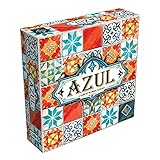
2. Azul Asmodee Azul Board Game - Award-Winning Tile-Placement Strategy Game, Beautiful Mosaic Art, Family Fun for Kids & Adults, Ages 8+, 2-4 Players, 30-45 Minute Playtime
Overview:
Azul redefines abstract strategy with its stunning Portuguese-tile-inspired design, challenging 2–4 players to craft mosaics through clever tile drafting. Winning the Spiel des Jahres award, it merges visual artistry with deceptively deep tactical decisions in compact 30–45 minute sessions suitable for ages 8+.
What Makes It Stand Out:
The tactile, weighty acrylic tiles and vibrant color palette create an immersive unboxing experience rarely seen in strategy games. Its brilliance lies in ultra-simple rules—draft tiles, avoid duplicates, maximize row/column bonuses—that unfold into profound spatial puzzles with every turn.
Value for Money:
Premium components justify its mid-range price point, offering far more replayability than comparable abstract games. While cheaper alternatives exist, Azul’s heirloom-quality materials and endless strategic permutations ensure lasting value for casual and serious gamers alike.
Strengths and Weaknesses:
Strengths: Gorgeous, museum-worthy components; rules digestible in under five minutes; endlessly replayable with emergent tension; silent planning phase reduces analysis paralysis. Weaknesses: Limited player interaction may deter competitive gamers; colorblind accessibility issues; endgame scoring can feel abrupt.
Bottom Line:
A masterpiece of minimalist design, Azul delivers elegant strategy wrapped in breathtaking artistry. An unequivocal must-have for family game nights seeking beauty, brains, and bite-sized sessions that resonate long after the tiles are packed away.
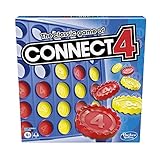
3. Hasbro Gaming Connect 4 Classic Grid,4 in a Row Game,Strategy Board Games for Kids,2 Player .for Family and Kids,Ages 6 and Up
Overview:
Hasbro revives the iconic vertical-checkers classic with a modern aesthetic, challenging two players to be the first to align four discs. This refreshed edition maintains the timeless strategy of blocking opponents while introducing new variations to reinvigorate the 6+ age demographic in quick 10-minute matches.
What Makes It Stand Out:
Three distinct play modes—including the innovative “Pop-Out” feature allowing disc removal—add surprising strategic layers to the familiar premise. The sleek grid design with vibrant dual-tone discs enhances visual appeal while preserving the game’s addictive simplicity.
Value for Money:
As an entry-level strategy game, its affordability shines. The durability and multi-variant ruleset offer superior longevity compared to basic plastic sets, making it a smarter investment than disposable dollar-store alternatives for developing critical thinking skills.
Strengths and Weaknesses:
Strengths: Instant setup; excellent for teaching foresight and spatial reasoning; portable design; Pop-Out mode elevates replay value. Weaknesses: Still fundamentally a solved game with optimal strategies; limited appeal for older teens/adults; discs occasionally jam in the grid.
Bottom Line:
A brilliantly executed refresh of a childhood staple, this Connect 4 edition earns its place as a foundational family game. Ideal for young strategists, it’s a near-perfect budget-friendly tool for nurturing early problem-solving skills through pure, frictionless fun.
4. Taco vs Burrito - The Wildly Popular Surprisingly Strategic Card Game Created by a 7 Year Old - 5 Ways to Play - a Family-Friendly Party Game for Kids, Teens & Adults

Overview:
Born from a 7-year-old’s imagination, this wildly inventive card game pits culinary creations against each other in a 15-minute food fight. Players draft ingredients and deploy chaotic action cards to build the most absurd tacos or burritos, supporting 2–4 participants aged 6 to 106+ with five adaptable rule variations.
What Makes It Stand Out:
The sheer creativity—especially its origin story—sets it apart. Unexpected mechanics like “Nacho Deal” steals and “Guac Block” defenses inject hilarious unpredictability, while the multiple game modes ensure freshness across repeated plays without additional purchases.
Value for Money:
Priced competitively for a niche card game, its included meal holders and five rulebooks deliver exceptional versatility. Outshines similarly priced party games through re-playability and universal appeal, though component quality is functional rather than premium.
Strengths and Weaknesses:
Strengths: Incredibly fast setup/learning curve; genuinely inclusive across ages; high humor quotient; storage-friendly box. Weaknesses: Card stock feels thin; luck-heavy early on; strategic depth plateaus quickly for adults; limited thematic cohesion.
Bottom Line:
A joyful, accessible gem that proves great ideas transcend age. While not a deep strategy heavyweight, Taco vs Burrito excels as a laughter-filled icebreaker perfect for family gatherings or casual game nights craving lighthearted, imaginative fun.
5. Hasbro Gaming Battleship with Planes Strategy Board Game for Ages 7 and Up (Amazon Exclusive)

Overview:
Hasbro’s Amazon-exclusive twist on the naval classic injects aerial combat into the beloved grid-based guessing game. Designed for ages 7+, this two-player showdown tasks opponents with sinking ships and crashing planes across dual-layer boards, modernizing childhood nostalgia with expanded tactical options.
What Makes It Stand Out:
The integration of fighter planes—requiring two consecutive hits to destroy—adds meaningful strategic depth absent in traditional Battleship. The compact cases with integrated storage transform it into a superior travel companion while preserving the tense, deduction-driven core.
Value for Money:
Positioned slightly above standard editions, the planes mechanic justifies the premium for families wanting enhanced replayability. It outperforms basic versions through added complexity without bloating playtime, though standalone plane variants feel underdeveloped.
Strengths and Weaknesses:
Strengths: Clever plane mechanic elevates deduction; highly portable with secure storage; intuitive for first-time players; sturdy pegs/cases. Weaknesses: Plane rules complicate setup for young kids; no solo/co-op modes; peg storage prone to spills; minimal innovation beyond aerial addition.
Bottom Line:
A worthy evolution of a timeless classic, Battleship with Planes revitalizes strategic engagement without sacrificing accessibility. Recommended for families seeking to deepen their grid-game experience, though traditionalists may prefer the purer original format.
6. lartoys Rope Untangling Puzzle Game, Educational Strategy Board Game for Kids & Adults, Family Travel Party Games with Multi-Level Challenges, Gifts for All Ages(Manual on Box)

Overview: This innovative puzzle game challenges players to untangle colorful plastic-tipped ropes twisted through a board’s 22 holes. Designed for all ages, it transforms spatial reasoning into a hands-on, screen-free activity ideal for family bonding or solo play, with adjustable difficulty via 3-10 ropes.
What Makes It Stand Out: Its patented U.S. design (D1101871) and multi-level complexity—from simple kids’ puzzles to intricate adult mazes—ensure long-term engagement. The tactile gameplay actively replaces screen time, sharpening problem-solving skills while encouraging collaborative or competitive play. The travel-ready case and clear video instructions enhance accessibility.
Value for Money: Priced competitively for an educational tool, it outperforms generic puzzles with its durability, patent protection, and adaptability across ages. Unlike single-use toys, its escalating challenges justify the cost, offering years of replayability where similar strategy games often lack depth.
Strengths and Weaknesses:
Strengths: Exceptional versatility for ages 3+; develops spatial awareness and critical thinking; compact and portable; fosters social interaction.
Weaknesses: Plastic rope tips may wear over time; complex setups require patience; limited solo-player guidance beyond basic levels.
Bottom Line: A brilliantly designed, screen-free gem that grows with players—highly recommended for families seeking educational fun that sparks creativity and connection.
7. CATAN Junior Board Game - Swashbuckling Adventure for Young Pirates! Strategy Game, Fun Family Game for Kids and Adults, Ages 6+, 2-4 Players, 30 Minute Playtime, Made by CATAN Studio

Overview: CATAN Junior reimagines the classic strategy experience for younger audiences, casting players as pirates building ship networks across tropical islands to collect resources like wood, goats, and gold. With simplified mechanics, it delivers a 30-minute adventure perfect for introducing strategy gaming to children aged 6+.
What Makes It Stand Out: The swashbuckling pirate theme—featuring Ghost Captain’s Spooky Island and Coco the Parrot—creates immersive, age-appropriate storytelling. Resource trading and network expansion teach foundational strategy without overwhelming complexity, while the ring-shaped board ensures balanced, interactive play.
Value for Money: As an entry point to the acclaimed CATAN series, it offers remarkable value. Its durable components and replayability far exceed typical kids’ games at this price, outperforming simpler roll-and-move alternatives with genuine strategic depth.
Strengths and Weaknesses:
Strengths: Ideal gateway to strategy gaming; engaging pirate narrative; quick setup and playtime; encourages trading and planning.
Weaknesses: Limited player count (max 4); less complex than full CATAN; resource icons may confuse very young kids initially.
Bottom Line: An accessible, thrilling introduction to strategy gaming—perfect for families wanting to nurture critical thinking in a pirate-themed adventure.
8. Bameca Magnetic Chess Game with Full-Size Stones, Magnet Game with String, for Family & Party & Travel & Camping, Puzzle Strategy Games, 2 Player Games for Kids & Adults
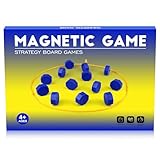
Overview: This magnetic dexterity game tasks players with placing magnetized stones upright along a taut rope without triggering attraction. The first to empty their stone pile wins, blending suspenseful physics with strategic placement for all ages.
What Makes It Stand Out: The palpable magnetic tension creates unique, heart-racing moments as stones hover near collapse. Its simplicity—place stones, avoid pulls—masks surprising strategic depth, while the compact kit (rope, 20 stones, storage bag) excels for travel, camping, or quick family challenges.
Value for Money: Exceptional for its portability and durability. At a budget-friendly price, it surpasses disposable travel games by offering endless replayability through skill-based competition, making it a smarter investment than single-use puzzles.
Strengths and Weaknesses:
Strengths: Highly portable and durable; thrilling risk-reward gameplay; fosters focus and fine motor skills; inclusive for ages 4+.
Weaknesses: Magnetic sensitivity can feel inconsistent; limited strategy compared to chess; rope tension requires careful setup.
Bottom Line: A captivating, travel-ready gem that turns physics into family fun—ideal for unplugged play on the go.
9. Asmodee Ticket to Ride Board Game (2025 Refresh) - A Cross-Country Train Adventure for Friends and Family, Strategy Game for Kids & Adults, Ages 8+, 2-5 Players, 30-60 Minute Playtime

Overview: In this refreshed classic, players collect train cards to claim railway routes across a vintage North American map, connecting cities to fulfill secret destination tickets. The updated edition retains timeless appeal while enhancing components for a smooth 30-60 minute strategic journey.
What Makes It Stand Out: The elegant balance of simplicity and depth—easy to grasp but rich in tactics—shines through route-blocking, card drafting, and multiple victory paths. Vibrant artwork and chunky miniature trains heighten immersion, while the 2-5 player count ensures flexibility for any gathering.
Value for Money: Justifies its premium price with exceptional replayability and durable, beautiful components. It outvalues monotonous party games by delivering consistent strategic satisfaction, rivaling heavier games at similar cost points.
Strengths and Weaknesses:
Strengths: Intuitive rules with deep strategy; stunning visual design; superb replayability; scales perfectly for families or gamers.
Weaknesses: Ticket failures can frustrate new players; map familiarity aids veterans; box storage could be optimized.
Bottom Line: A masterclass in accessible strategy—essential for game nights, offering enduring fun through every cross-country trek.
10. Ravensburger Labyrinth Board Game - A Strategic Maze Challenge for Family Nights - Find Treasures & Block Opponents - MESH Accredited - Great Birthday Gift - 2-4 Players - Kids Ages 7-10 and Older

Overview: Players navigate a shifting maze by sliding tiles to align pathways, racing to collect hidden treasures while sabotaging opponents. Ravensburger’s MESH-accredited design merges tactile strategy with quick 20-30 minute sessions, perfect for family nights.
What Makes It Stand Out: The dynamic, ever-changing maze creates fresh challenges each turn, demanding spatial planning and foresight. MESH accreditation underscores its educational value in developing critical thinking, while treasure-hunting mechanics make strategy tangible for younger players.
Value for Money: Delivers outstanding longevity through variable setups. Its high-quality components and skill-building focus offer superior worth over static board games, justifying the price for families prioritizing developmental play.
Strengths and Weaknesses:
Strengths: Brilliant replayability via modular maze; enhances planning and cause-effect reasoning; quick to learn; durable Ravensburger craftsmanship.
Weaknesses: Younger kids may struggle with foresight; tile-sliding can disrupt nearby pieces; treasure collection feels luck-dependent early on.
Bottom Line: A brilliantly evolving puzzle that makes strategy exciting for kids—highly recommended for fostering smart, competitive family fun.
Understanding Strategy Development in Young Minds
Children aren’t born with fully formed strategic thinking skills; these abilities blossom gradually through guided experiences. Recognizing the developmental stages helps parents choose activities that challenge without overwhelming.
The Building Blocks of Early Strategy (Ages 5-7)
Young children start with concrete, immediate thinking. Effective games for this group focus on simple cause-and-effect (“If I move here, what happens?”) and basic prediction. Look for mechanics involving matching, sequencing short steps, or making choices with visible, immediate outcomes. Turn-taking itself becomes a strategic exercise in patience and observation. Success here lays the groundwork for understanding that actions have consequences.
Advancing to Tactical Thinking (Ages 8-10)
As cognitive flexibility grows, kids can hold multiple possibilities in mind. Games introducing hidden information, simple resource allocation (like collecting specific items), or short-term planning (2-3 moves ahead) become engaging. This stage is crucial for developing “if-then” reasoning and learning to adapt when opponents disrupt initial plans. The focus shifts from just what to do next to why a particular choice might be better.
Developing Complex Strategic Planning (Ages 11+)
Pre-teens and teens can handle abstraction, longer time horizons, and weighing trade-offs. Games involving significant resource management, risk assessment, long-term goal setting, and anticipating multiple opponent strategies shine here. This level builds sophisticated skills like evaluating probabilities, managing opportunity costs, and formulating flexible backup plans—mirroring real-world decision complexity.
Key Strategic Skills Translated Through Gameplay
Board games aren’t just fun; they’re dynamic classrooms for essential cognitive muscles. Understanding which skills specific mechanics target helps match games to developmental goals.
Pattern Recognition and Prediction
Games requiring players to spot sequences, anticipate opponent moves based on past behavior, or identify emerging trends teach critical predictive skills. This isn’t just about winning the game; it’s training the brain to recognize structures in math problems, social situations, or even scientific data later on. Look for mechanics involving set collection, spatial arrangements, or recurring action patterns.
Resource Management Fundamentals
Whether managing physical tokens, action points, or time within a turn, learning to allocate limited assets wisely is a core life skill. Early games might involve simple “one action per turn” choices, progressing to balancing multiple resource types against competing objectives. This directly translates to budgeting time for homework, prioritizing chores, or understanding scarcity in economics.
Adaptive Problem-Solving in Action
True strategy isn’t rigid planning—it’s adjusting when the unexpected happens. Games where the board state shifts dramatically, opponents block plans, or random elements (used thoughtfully) introduce uncertainty teach resilience and flexibility. Children learn to analyze why a plan failed and pivot quickly, a vital skill for navigating group projects or unexpected real-life obstacles.
Choosing Games That Truly Teach, Not Just Entertain
Not all games claiming “educational value” deliver meaningful strategic development. Knowing what to look for ensures your investment pays off in genuine cognitive growth.
Avoiding the “Edutainment” Trap
Games that slap math problems onto a trivial race mechanic often feel like disguised homework, killing engagement. Authentic strategic games embed learning within compelling decisions intrinsic to winning. The challenge should arise from navigating the game’s systems, not from arbitrary quizzes. If the “learning” feels separate from the core fun, it’s likely not fostering deep strategic thinking.
Matching Complexity to Cognitive Readiness
A game slightly above a child’s current ability is ideal—frustratingly complex games shut down learning. Key indicators: Can they grasp the core objective quickly? Do the rules make logical sense once explained? Can they articulate one possible move and its likely effect? Start with minimal rules overhead and clear, immediate feedback on choices. Gradually introduce layers like hidden information or variable player powers.
The Importance of Player Interaction Dynamics
Pass-and-play roll-and-move games offer limited strategic depth. Prioritize games requiring meaningful interaction: negotiation, blocking opponents’ plans, cooperative problem-solving, or adapting to others’ actions. This social dimension forces players to consider multiple perspectives and anticipate others’ goals—essential for advanced strategy and real-world collaboration.
Essential Game Mechanics That Build Strategic Muscle
Specific mechanics serve as powerful training tools for distinct strategic competencies. Understanding these helps decode a game’s educational potential.
Turn Structure and Action Points
Games limiting actions per turn (e.g., “choose two of four possible actions”) force prioritization and trade-off evaluation. This teaches children it’s impossible to do everything, fostering focus on high-impact choices and understanding opportunity cost—a cornerstone of strategic resource allocation.
Spatial Reasoning Challenges
Mechanics involving tile placement, area control, or path building develop spatial logic. Players must visualize future board states, understand adjacency effects, and plan movements considering physical constraints. This strengthens geometric reasoning and the ability to think in interconnected systems.
Hidden Information and Deduction
Games using secret goals, hidden cards, or fog-of-war elements teach inference and probability assessment. Players learn to gather clues from observable actions, make educated guesses, and update beliefs with new information—directly building critical thinking and evidence-based reasoning skills.
Nurturing Strategic Growth Through Playful Guidance
Your role isn’t to dictate moves but to scaffold thinking. How you engage during gameplay transforms entertainment into a powerful learning accelerator.
Asking Open-Ended “Thinking Aloud” Questions
Instead of “You should move here,” try “What might happen if you take that path?” or “What’s one thing your opponent might do next?” Encourage verbalizing thought processes: “Tell me what you’re considering.” This externalizes internal reasoning, making abstract strategies concrete and allowing you to gently highlight overlooked factors.
Normalizing Strategic Experimentation
Frame “failed” plans as valuable data: “Interesting! That didn’t work as expected. What clue might we have missed?” Celebrate insightful questions and adaptive pivots more than wins. This reduces fear of mistakes and encourages risk assessment—essential for innovative strategic thinking.
Modeling Strategic Self-Talk
Verbally share your decision process during your turn: “Hmm, I need wood for my house, but if I take wood now, I might not get enough food later. Maybe I’ll take food first and hope wood is available next turn.” Hearing an adult weigh options demystifies strategic thinking for children.
Long-Term Strategic Development Pathways
Strategy isn’t a destination; it’s a journey. The right games create a progression ladder that grows with your child’s cognitive abilities.
From Concrete to Abstract Reasoning
Start with games where consequences are immediate and visible (e.g., placing a tile directly scores points). Gradually introduce games where actions have delayed payoffs or indirect effects (e.g., investing resources now for future advantages). This bridges the gap between tangible cause-effect and abstract long-term planning.
Scaling Player Count Complexity
Two-player games simplify opponent prediction. Introducing three or more players dramatically increases variables—players must track multiple agendas and potential alliances. This mirrors real-world complexity where situations rarely involve only two competing interests.
Integrating Cooperative and Competitive Elements
Games blending teamwork with individual goals (semi-cooperative) or pure cooperation teach nuanced strategy. Players learn to balance personal objectives with group success, negotiate effectively, and understand how individual actions impact collective outcomes—a vital skill for collaborative problem-solving.
Common Pitfalls to Avoid in Strategy Game Selection
Even well-intentioned choices can backfire. Steering clear of these ensures strategy development stays positive and effective.
Overemphasizing Luck Elements
While some randomness (like dice rolls) can be engaging, games where luck overwhelmingly determines outcomes undermine strategic agency. Children need to perceive a clear link between their decisions and results to develop genuine strategic confidence. Prioritize games where skill consistently influences the outcome over multiple plays.
Ignoring Emotional Tolerance for Competition
Intense direct conflict (e.g., constant player elimination or “take-that” mechanics) can trigger frustration, shutting down learning. Assess your child’s comfort with competition. Cooperative games or low-conflict competitive games are often better starting points for building strategic skills without emotional overload.
Underestimating Setup and Rule Complexity
A game with a 20-minute setup or convoluted rules will exhaust patience before strategy even begins. If explaining the rules takes longer than the first game session, it’s likely too complex. Prioritize games with intuitive core mechanics that can be grasped in under 10 minutes, allowing cognitive energy to focus on playing strategically.
Building a Lasting Strategic Mindset Beyond the Board
The ultimate goal isn’t just game mastery—it’s transferring these skills to everyday life. Seamless integration makes strategy a natural lens for understanding the world.
Connecting Game Decisions to Real-World Scenarios
After gameplay, draw parallels: “Remember how you saved coins for the big tower? That’s like saving allowance for a toy you really want!” or “Planning your route in the game is similar to figuring out the fastest way to school.” These concrete connections solidify abstract concepts.
Encouraging Strategic Reflection in Daily Routines
Frame everyday choices as strategic opportunities: “What’s the most efficient order to pack your lunchbox?” or “If we leave the house in 10 minutes, what steps do we need to take now?” This practice turns mundane moments into strategy-building exercises.
Fostering a Growth Mindset Through Iteration
Emphasize that strategic skill improves with practice, just like riding a bike. Compare their gameplay from weeks ago to now: “Look how much better you are at anticipating my moves now! That’s because you’ve played so much.” This reinforces perseverance and the value of iterative learning.
Frequently Asked Questions
How early can I start introducing strategic games to my child?
Focus on foundational skills like turn-taking, simple cause-and-effect (“if I do this, that happens”), and basic prediction from ages 4-5. Games involving sequencing, matching, or very short-term planning are ideal starting points. True multi-step strategic thinking typically blossoms around age 6-7, but early exposure to decision-making frameworks is valuable.
My child gets frustrated when they lose. How can we still work on strategy?
Start with cooperative games where everyone wins or loses together, removing direct competition. Emphasize effort and interesting decisions over winning. After games, focus reflection on “What was a smart choice you made?” rather than “Why did you lose?” Build resilience by normalizing that adjusting plans after setbacks is strategic thinking.
Aren’t video games just as good for teaching strategy?
While some video games develop strategic elements, physical board games offer crucial advantages: tangible manipulation of pieces enhances spatial reasoning, face-to-face interaction teaches reading social cues and negotiation, and the fixed pace encourages deeper contemplation without digital distractions or instant feedback loops that can shortcut thoughtful planning.
How do I know if a game is actually teaching strategy or just luck?
Observe if skilled players consistently outperform newcomers over multiple plays. If outcomes feel random even after understanding rules, luck dominates. Strategic games show clear skill progression—players develop better tactics, anticipate outcomes more accurately, and make more efficient decisions with experience. Look for meaningful choices with predictable (though not guaranteed) consequences.
Can cooperative games really teach strategy effectively?
Absolutely. Cooperative games often require sophisticated strategy, including shared goal-setting, role specialization, collective risk assessment, and managing group resources. Players must anticipate both the game’s mechanisms and their teammates’ thought processes, fostering communication and collaborative problem-solving—essential strategic dimensions.
What’s the biggest mistake parents make with strategy games?
Forcing games that are too complex too soon. This leads to frustration and disengagement. Always prioritize games where the child grasps the core objective and can make at least one meaningful decision per turn. Start simple, celebrate small strategic wins, and gradually increase complexity only when current games feel mastered.
How much guidance is too much during gameplay?
Avoid making decisions for your child. Instead, ask probing questions (“What are you hoping to achieve with that move?”). Let them experience natural consequences of choices. Excessive coaching prevents them from developing independent analysis skills. Your role is facilitator, not director—nudge thinking, don’t dictate moves.
Are there specific strategy skills critical for school success?
Yes. Pattern recognition aids math and reading comprehension. Resource management (time, materials) is essential for project completion. Adaptive problem-solving helps navigate group work and unexpected challenges. Strategic anticipation reduces test anxiety by fostering preparedness. These game-honed skills directly transfer to academic environments.
How do I balance strategic games with free play?
Integrate strategy naturally. Free play often involves emergent strategy (e.g., building complex block structures requires planning). Use short strategy game sessions (15-20 mins) as focused “skill workouts,” while valuing unstructured play for creativity. The goal is complementary development, not replacement—both build different but vital cognitive muscles.
How long until I see real strategic thinking improvements?
Noticeable shifts in game-specific tactics can occur in weeks. Broader transfer to daily life—like better homework planning or resolving playground conflicts thoughtfully—often takes months of consistent play. Focus on the process: are they asking “what if?” more often? Considering consequences before acting? These subtle changes signal developing strategic maturity.
See Also
- How to Solve Boring Game Nights with the 10 Best Strategy Board Games in 2026
- 10 Best Board Games for Families Who Love Strategy and Fun in 2026
- 10 War Board Games That Solve the Problem of Shallow Strategy in 2026
- 10 Essential Area Control Board Games Every Strategy Enthusiast Needs in 2026
- 10 Must-Have Kids Board Games for Developing Strategy Skills in 2026