Table of Contents
Deckbuilding isn’t just about shuffling cards; it’s the thrilling alchemy of strategy, adaptation, and that perfect “aha!” moment when your carefully crafted engine finally clicks. For aspiring enthusiasts diving into the vibrant world of strategy board games, the journey begins long before the first card is drawn—it starts with understanding the intricate dance between mechanics and mindset. Whether you’re captivated by the tactical depth of resource management or the cerebral challenge of outmaneuvering opponents through clever card synergies, the right game can transform a casual pastime into a deeply rewarding intellectual pursuit. This isn’t about luck; it’s about building systems that evolve, adapt, and ultimately reflect your unique strategic signature.
Yet, the landscape can feel overwhelming for newcomers. With countless mechanics vying for attention—from hand curation and action economy to variable player powers—the path to finding your ideal match is paved with nuanced decisions. Many beginners mistakenly focus solely on theme or artwork, only to discover later that the underlying structure doesn’t align with how they think strategically. The real magic lies in identifying which mechanical rhythms resonate with your problem-solving instincts: Do you thrive on aggressive tempo plays, or do you prefer methodical engine-building? Understanding these core preferences is the true compass for navigating the deckbuilding universe. Let’s dissect the essential elements that turn a good game into your perfect strategic companion.
Top 10 Strategy Board Games for Deck Building
Detailed Product Reviews
1. Rio Grande Games Dominion 2nd Edition Deck Building Strategy Card Game for 2-4 Players, Ages 13 Plus

Overview: Dominion 2nd Edition is the game that pioneered the deck-building genre, offering a streamlined strategic experience for 2-4 players. Players start with a basic deck and acquire new cards during play to build a more powerful engine, aiming to amass the most victory points in 20-30 minutes per game. What Makes It Stand Out: Its revolutionary “build-as-you-play” mechanic remains unmatched for elegance and accessibility. The sheer replayability, driven by millions of possible card combinations from its core set and numerous expansions, ensures no two games feel alike. Its award-winning (Spiel des Jahres 2009) design provides deep strategic choices without overwhelming complexity. Value for Money: Priced competitively for a genre-defining game, it offers exceptional longevity. The core set provides immense value on its own, far exceeding the cost per play hour compared to many modern games with similar components but less replayability. Strengths and Weaknesses: Strengths: Incredibly fast setup/playtime, perfect balance of luck and strategy, highly accessible rules, massive replayability. Weaknesses: Base game can feel slightly abstract without thematic context, some later expansions overshadow core cards for veterans. Bottom Line: An essential purchase for any board game enthusiast; it’s the perfect gateway into strategic gaming and a timeless classic that justifies its place as the foundation of the deck-building genre.
2. Fantasy Flight Games Star Wars The DeckBuilding Game | Strategy Card Game | Head-to-Head Tactical Battle Game for Adults & Kids | Ages 12+ | 2 Players | Average Playtime 30 Minutes (FFGSWG01)

Overview: This head-to-head game pits Rebel Alliance against Galactic Empire in a tactical 30-minute battle for control of the galaxy. Designed for two players, it focuses on base destruction using iconic Star Wars characters, ships, and locations. What Makes It Stand Out: Strong thematic integration is key; deploying the Death Star or Echo Base directly impacts strategy. The asymmetric faction design gives the Empire overwhelming power early game versus the Rebels’ resilient, adaptive tactics, creating distinct and engaging playstyles true to the source material. Value for Money: Offers solid value as a dedicated two-player duel game. While the card count is moderate, the high-quality Star Wars art and focused, tense gameplay deliver satisfying replayability within its niche, though it lacks Dominion’s broader scalability. Strengths and Weaknesses: Strengths: Excellent theme execution, quick to learn, strong asymmetry, uses beloved IP effectively. Weaknesses: Limited to two players only, replayability hinges heavily on faction mastery, less strategic depth than pure strategy deck-builders. Bottom Line: A must-have for Star Wars fans seeking a quick, thematic duel; highly recommended for casual pairs but less essential for hardcore strategy gamers seeking deep complexity.
3. Gwent - Official Licensed Version | Complete Set | Competitive Deck Building Strategy Game | Fantasy Card Battler From the Popular Video Game | Tactical Playing Cards | Ages 12+ | 1-5 Players | 20 min

Overview: Based on the popular video game mini-game, this complete physical set delivers the tactical dueling experience for 1-5 players. It features all five factions across over 400 cards, focusing on area control, bluffing, and hand management within three rounds. What Makes It Stand Out: Its unique “pass” mechanic and round-based structure differentiate it significantly from other deck-builders. The emphasis on bluffing, careful resource management per round, and faction asymmetry creates intense psychological play. The official license ensures authentic art and lore. Value for Money: Excellent value as a standalone, complete game with high component volume (400+ cards). It captures the digital game’s essence faithfully, offering immense replayability through faction matchups and strategic depth, justifying its price point for fans and new players alike. Strengths and Weaknesses: Strengths: Deep bluffing mechanics, strong faction identity, high replayability, portable, faithful adaptation. Weaknesses: Initial learning curve steeper than Dominion, “passing” mechanic can frustrate new players, limited player count scalability. Bottom Line: A top-tier choice for fans of tactical, asymmetric card battles; highly recommended for its unique mechanics and exceptional value as a full, portable game.
4. Rio Grande Games Dominion Nocturne Expansion, Strategy Board Game, Deck Building Card Game for 2-6 Players, 30 Minutes

Overview: The 11th expansion for Dominion, Nocturne adds 33 new Kingdom cards and 500 total cards, supporting 2-6 players in roughly 30 minutes. It introduces night cards, secret tokens, and unique mechanics like “Exile” piles, expanding the core game’s strategic landscape. What Makes It Stand Out: Nocturne innovates with persistent “Night” phases occurring after cleanup, enabling complex card synergies and interactions unseen in previous sets. Cards like Secret Cave or Lich introduce novel decision points and hidden information, significantly refreshing Dominion’s engine-building. Value for Money: A strong investment only for existing Dominion owners. While expensive as a standalone, its novel mechanics and high replayability multiplier for the base game offer excellent value per play. New players should prioritize the base game first. Strengths and Weaknesses: Strengths: Deep, innovative mechanics (Night phase, Exile), excellent card variety, high replayability boost for veterans. Weaknesses: Useless without base Dominion, some cards can slow game pace, less accessible for beginners. Bottom Line: An essential, brilliantly designed expansion that revitalizes Dominion for seasoned players; skip if you don’t own the base game, but highly recommended for veterans seeking fresh challenges.
5. Aeon’s End War Eternal - Cooperative Sci-Fi Fantasy Strategy Deck-Building Board Game for 1-4 Players Ages 14+ 60 Minute Playtime by Indie Boards and Cards

Overview: This standalone cooperative deck-builder (1-4 players, 60 mins) tasks players with defending the city of Gravehold from the Nameless hordes. Players assume unique character roles, managing spell rows, life totals, and hand limits to survive waves of enemies. What Makes It Stand Out: War Eternal excels with its intense, narrative-driven co-op gameplay where communication and role synergy are critical. The bomb timer (tracking damage to Gravehold) creates relentless pressure, while unique character abilities and modular scenarios foster deep strategic teamwork and emergent storytelling. Value for Money: Offers substantial value as a complete, high-quality co-op experience. The standalone nature, combined with compatibility with other Aeon’s End games, and significant replayability through varied enemies/scenarios, makes it a worthwhile investment for co-op fans. Strengths and Weaknesses: Strengths: Gripping co-op tension, strong character asymmetry, excellent replayability via scenarios, seamless integration with base game. Weaknesses: Longer playtime than pure competitive deck-builders, high difficulty curve, setup can be fiddly. Bottom Line: A superb standalone entry in the Aeon’s End series; highly recommended for cooperative game enthusiasts seeking a challenging, thematic, and replayable deck-building experience.
6. Mistborn Deckbuilding Game by Brotherwise Games | Fantasy Card Strategy with Allomantic Powers | Build Your Deck, Burn Metals, and Battle Through Cinematic Missions | 1 to 4 Players | Ages 13+

Overview:
This deckbuilder immerses players in Brandon Sanderson’s Mistborn universe, where strategic card play revolves around Allomantic metal-burning mechanics. Players recruit heroes, acquire metals like Steel or Pewter, and navigate cinematic missions solo or competitively, directly translating the novels’ magic system into tangible gameplay.
What Makes It Stand Out:
Its authentic integration of Allomancy is unparalleled—burning metals triggers unique abilities that dynamically alter tactics mid-game. The evolving narrative missions create a story-driven experience rarely seen in deckbuilders, while flexible play modes (solo, co-op, competitive) cater to diverse groups without sacrificing thematic depth.
Value for Money:
Priced competitively against premium deckbuilders, it offers exceptional replayability through layered objectives and metal synergies. Though niche, its rich Scadrial adaptation justifies the cost for fans and strategy enthusiasts seeking more depth than entry-level games provide.
Strengths and Weaknesses:
Strengths: Deep strategic engine-building; faithful lore integration; highly replayable missions; intuitive learning curve for new players.
Weaknesses: Niche appeal may deter non-fans; setup complexity increases in competitive mode; limited player count for larger groups.
Bottom Line:
A masterclass in thematic deckbuilding that honors its source material while delivering robust strategy. Essential for Mistborn fans and highly recommended for deckbuilding veterans seeking narrative-driven depth; less ideal for casual gamers.
7. Avatar: The Last Airbender: Aang’s Destiny, Cooperative Deck Building Strategy Board Game, Play as Aang, Katara, Appa & More, Fun for Family Game Night, Ages 10+, 2-4 Players, 60 Minutes

Overview:
This officially licensed cooperative game tasks players with embodying ATLA heroes to restore balance across the Four Nations. Through deckbuilding, teams complete missions, battle foes like Azula, and master bending elements in a streamlined 60-minute session perfect for family game nights.
What Makes It Stand Out:
Its pure cooperative design forces true teamwork—players share a deck and collectively strategize against escalating threats. The progressive unlockable content (7 boxes) and authentic journey through all Four Nations create a campaign-like adventure that resonates deeply with fans.
Value for Money:
An affordable gateway into cooperative strategy, especially for ATLA enthusiasts. While simpler than complex deckbuilders, its mission variety and fan-service elements offer strong replay value for its price point and target audience.
Strengths and Weaknesses:
Strengths: Perfect fan immersion; accessible rules for ages 10+; excellent cooperative tension; high replayability via unlockables.
Weaknesses: Limited strategic depth for hardcore gamers; linear mission structure; component quality feels budget-friendly.
Bottom Line:
A heartwarming, accessible cooperative experience that captures Avatar’s spirit flawlessly. Highly recommended for families, fans, and casual gamers seeking collaborative fun, but less suited for competitive or strategy-focused players.
8. Goblins & Glory Strategy Board Game – Fantasy Deck Building Adventure with Heroes, Monsters & Quests – Fun Card Game for Adults & Teens, Ages 14+, 3–5 Players, 30+ Minute Gameplay

Overview:
Set in Dragon’s Head Tavern, this competitive deckbuilder challenges 3-5 players to recruit heroes, gather gear, and slay monsters in a race for glory. Focused on fast-paced rivalry, it emphasizes tactical card combos and resource management within a compact 30-minute session.
What Makes It Stand Out:
The player-versus-player hunt mechanic creates dynamic tension as rivals compete for limited monster-battling opportunities. Its blend of Dominion-style deckbuilding with direct competition and high customization (via modular card combos) sets it apart in the genre.
Value for Money:
Offers exceptional replayability at a mid-range price, with numerous card synergies encouraging varied strategies. Though less narrative-driven than peers, its competitive depth and quick playtime provide strong value for group game nights.
Strengths and Weaknesses:
Strengths: Engaging competitive interaction; quick setup and play; high replayability; intuitive for Dominion fans.
Weaknesses: Limited thematic storytelling; player count affects balance (3 vs. 5); minimal strategic depth for hardcore gamers.
Bottom Line:
A lively, accessible competitive deckbuilder ideal for social gatherings. Recommended for groups seeking fast-paced rivalry and Dominion-like mechanics, but skip if you prefer cooperative or deeply narrative experiences.
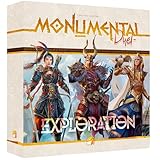
9. Funforge: Monumental Duel - Exploration - Civilization Deck-Building Board Game, Strategy Game, Combine Or Standalone, Ages 10+, 2 Players, 60-90 Min
Overview:
A streamlined two-player duel where rivals build civilizations through deckbuilding, balancing military, culture, and science. The “Exploration” module adds depth as players scout wilderness for resources, all within a tight 60-90 minute timeframe.
What Makes It Stand Out:
Its unique fusion of civilization-building (à la 7 Wonders) with deckbuilding mechanics creates a thoughtful, asymmetric duel. The modular box design—allowing expansion combinations—offers unparalleled customization, while exploration adds strategic resource tension.
Value for Money:
As a dedicated two-player experience, it’s pricier per player but justifies cost through exceptional depth and modularity. Expansion compatibility ensures long-term value, though standalone cost may deter casual dueling fans.
Strengths and Weaknesses:
Strengths: Elegant civ/deckbuilding hybrid; strong replayability via modules; beautiful components; perfect for head-to-head strategy.
Weaknesses: Niche 2-player focus; learning curve steeper than entry deckbuilders; exploration module feels underdeveloped.
Bottom Line:
A sophisticated duel for civilization and deckbuilding fans seeking strategic depth. Highly recommended for two-player enthusiasts, but avoid if you need larger-group support or simpler rules.
10. A Wild Venture Board Game - Engine-Building & Adventure Strategy Game, Whimsical Fantasy World with 100+ Unique Cards, Fast-Paced Gameplay for Kids & Adults, Ages 10+, 2 Players, 40-60 Min Playtime

Overview:
This two-player engine-builder tasks competitors with completing quests in a charming fantasy realm to win the Community Cup. Its twist? Players dismantle built engines to score points, creating a race to optimally “use up” cards before opponents seize key resources.
What Makes It Stand Out:
The ingenious engine-dismantling mechanic forces constant strategic pivots—victory requires exhausting cards, not just accumulating them. Shared decks and fast turns foster intense interaction, while 100+ unique cards ensure varied combos in every match.
Value for Money:
Compact yet packed with content, it delivers premium replayability at a fair price. The whimsical theme and dual-sided board enhance value, making it a standout dueling experience under $50.
Strengths and Weaknesses:
Strengths: Revolutionary dismantle mechanic; lightning-fast play; high replayability; gorgeous art; perfect two-player tension.
Weaknesses: Overly simplistic for hardcore strategists; limited scalability beyond duels; card text density may challenge younger players.
Bottom Line:
A clever, refreshing take on engine-building that excels as a two-player duel. Highly recommended for strategy duos and casual gamers seeking quick, interactive fun—skip only if you prefer complex solo/campaign play.
Core Mechanics That Define Deckbuilding Strategy
Understanding Action Economy Fundamentals
Action economy dictates how many meaningful choices you can make each turn, forming the backbone of strategic pacing. Games with tight action budgets force brutal prioritization—do you acquire a powerful card now or set up a combo for next round? Conversely, looser economies allow for complex multi-step plays but risk analysis paralysis. Assess how actions scale as your deck evolves; the best designs create meaningful tension between early-game survival and late-game dominance without abrupt power spikes.
Hand Management Depth and Fluidity
True strategic depth emerges in how you manipulate your hand beyond simple card draws. Look for systems where discarding, refreshing, or selectively drawing cards isn’t just functional but creates pivotal decision points. Games that let you cycle inefficient cards rapidly support aggressive strategies, while those emphasizing card retention reward patience and long-term planning. The fluidity of your hand directly impacts your ability to react to opponents’ moves—essential for dynamic multiplayer sessions.
Resource Generation and Conversion Systems
Resource mechanics separate superficial deckbuilders from deeply strategic ones. Sophisticated games implement multi-layered resource systems where base currencies (like coins or energy) convert into actions, card draws, or point generation. Crucially, evaluate how resources interact with your deck composition: Can you chain cards that generate resources and utilize them efficiently? Avoid designs where resource acquisition feels disjointed from your core engine-building loop.
Synergy Density and Combo Viability
The strategic heartbeat lies in how cards interconnect. High-synergy games reward recognizing emergent patterns—like pairing card-drawing effects with high-impact finishers—but beware of designs where only one “optimal” combo exists. The most replayable titles offer multiple viable synergy paths that shift based on available cards and opponents’ actions. Test whether combos feel earned through strategic foresight rather than random luck during setup.
Player Interaction and Competitive Dynamics
Direct vs. Indirect Conflict Mechanics
Consider how the game facilitates player rivalry. Direct interaction (like attack cards or shared resource pools) creates immediate tension but can lead to kingmaking. Indirect interaction (competing for limited cards or shared objectives) fosters strategic anticipation but may feel solitary. Aspiring strategists should identify their comfort zone: Do you relish head-to-head clashes, or do you prefer outmaneuvering opponents through superior efficiency in parallel play?
Tableau Development and Spatial Strategy
Many modern deckbuilders incorporate physical tableaus where played cards create persistent effects. This adds spatial strategy—positioning cards to maximize adjacency bonuses or block opponents’ opportunities. Evaluate how tableau growth impacts decision-making: Does it create meaningful “board state” awareness, or does it become visual clutter that obscures critical information? The best implementations make spatial choices integral to long-term planning.
Disruption and Counterplay Opportunities
Robust competitive balance requires meaningful counterplay. Look for mechanics that let you disrupt opponents’ engines without eliminating their agency—such as forcing discards, stealing key cards, or altering turn order. Avoid games where one dominant strategy emerges with no reasonable counters. Healthy disruption should feel like a tactical chess move, not a random swing that invalidates hours of planning.
Accessibility and Learning Curve Considerations
Rule Simplicity vs. Strategic Complexity
Beware the “easy to learn, hard to master” cliché. Truly great deckbuilders feature rules that can be grasped in 10 minutes but reveal strategic layers over dozens of plays. Prioritize games where initial decisions feel impactful even for beginners, with complexity emerging organically through card interactions—not through convoluted rule exceptions. A smooth learning curve ensures you’re strategizing rather than memorizing edge cases.
Visual Clarity and Component Legibility
Components must communicate mechanics instantly. Symbols should be intuitive, card text concise, and color schemes accessible. Test how easily you can parse card effects mid-game—especially under time pressure. Poor visual design creates cognitive load that distracts from strategic thinking. Transparent iconography lets you focus on planning your next move, not deciphering what a card does.
Solo Play Viability and AI Quality
For solo practitioners, the AI opponent’s behavior is non-negotiable. Avoid simplistic “robot modes” that merely follow preset patterns. Seek AI that adapts to your strategy—escalating aggression if you stall or protecting weak points when pressured. The best solo implementations create genuine tension, forcing you to refine tactics against an opponent that feels strategically aware rather than mechanically predictable.
Long-Term Engagement Factors
Scenario and Modularity Systems
Replayability hinges on meaningful variability. Look beyond random card setups to integrated scenarios that alter victory conditions or introduce asymmetric challenges. Modular boards or variable player powers that change core mechanics per session create fresh strategic landscapes. Avoid shallow “randomization” where each game feels structurally identical despite cosmetic differences.
Expansion and Content Evolution
Consider how the game supports long-term growth. Does it have a clear expansion philosophy that adds strategic dimensions rather than just more cards? The best systems introduce new mechanics that interact meaningfully with the base game—like alternate win conditions or persistent legacy elements—without invalidating your initial purchase. Evaluate community support for player-created content too.
Physical Components and Storage Solutions
Don’t underestimate ergonomics. Oversized cards, flimsy tokens, or poorly designed boxes sabotage immersion. Prioritize games with thoughtful storage—custom inserts that categorize cards by function save setup time and reinforce strategic understanding. Durable components withstand repeated plays, ensuring mechanics remain the focus rather than managing falling-apart parts.
Strategic Mindset Development
Risk Assessment and Probability Calculations
Advanced deckbuilding trains probabilistic thinking. Games that require calculating odds of drawing key cards, mitigating bad luck through redundancy, or knowing when to gamble deepen strategic maturity. Seek designs where probability isn’t abstracted away but integrated into meaningful choices—like knowing when to thin your deck versus adding more powerful, inconsistent cards.
Temporal Strategy and Pacing Control
Master strategists manipulate time itself within the game. Identify titles where controlling the game’s pace is a core skill: accelerating to trigger end-game before opponents stabilize, or deliberately slowing play to perfect your engine. The most sophisticated games let you choose between tempo plays and value plays, with clear trade-offs between immediate impact and long-term dominance.
Frequently Asked Questions
Frequently Asked Questions
How do I know if a deckbuilder matches my strategic thinking style? Observe whether the game rewards foresight (planning 3+ turns ahead) or adaptability (reacting to emerging opportunities). Play solo first to identify if you prefer methodical engine-building or aggressive tempo strategies without competitive pressure.
What’s the ideal player count for strategic depth in deckbuilders? Most pure deckbuilders shine at 2-3 players where direct interaction remains meaningful. Higher counts often dilute agency—look for games with player-scaling mechanics that maintain competitive tension without excessive downtime.
How long should a learning curve be for a quality strategy deckbuilder? You should grasp core decisions within 1-2 plays but discover new strategic layers over 5+ sessions. If fundamental choices remain unclear after three plays, the game likely has poor rule clarity.
Can deckbuilders effectively teach real-world strategic skills? Absolutely—they develop risk assessment, resource allocation, and systems thinking. The best titles create microcosms where consequences of decisions are immediate and transparent, reinforcing cause-effect reasoning applicable beyond gaming.
Do variable player powers create imbalance in competitive play? Not if well-designed. Powers should offer distinct strategic paths with comparable win potential. Test balance by rotating powers—if one consistently dominates, it indicates poor tuning rather than inherent imbalance.
How important is physical component quality for strategic immersion? Critical. Poor card stock or confusing icons create cognitive friction that distracts from decision-making. High-quality components ensure your mental energy focuses on strategy, not managing frustrating physical interactions.
Should I prioritize theme or mechanics when choosing a deckbuilder? Always mechanics first. A compelling theme enhances enjoyment, but weak mechanics will frustrate you long after the theme’s novelty fades. Mechanics define the strategic experience—you’re investing in systems, not just a story.
What red flags indicate a shallow deckbuilder? Watch for “runaway leader” problems, minimal player interaction, or solutions where one dominant strategy emerges consistently. Also avoid games where luck (like excessive random draws) outweighs strategic choices in determining outcomes.
How do I evaluate replay value beyond random setups? Look for legacy systems, scenario books, or modular rules that fundamentally alter strategic objectives. True replayability comes from shifting win conditions and asymmetric challenges—not just shuffled decks creating minor variations.
Is solo play mode essential for a serious strategy deckbuilder? Increasingly yes, as it allows focused skill development without social pressure. However, prioritize AI that adapts strategically—simple difficulty sliders often fail to replicate human-like decision-making crucial for growth.
See Also
- The 10 Best Strategy Board Games for Competitive Deck Builders in 2026
- The 10 Ultimate Best Strategy Board Games for Competitive Deck Builders in 2026
- 10 Expert-Recommended Advanced Strategy Games for Expert Deck Builders in 2026
- How to Solve Boring Game Nights with the 10 Best Strategy Board Games in 2026
- 10 Best Board Games for Families Who Love Strategy and Fun in 2026