Table of Contents
Gathering a room full of friends or colleagues for a game night should spark laughter, connection, and pure, unadulterated fun—not frustration over complicated rules or players feeling left out. Yet, finding the right game for a large crowd can turn that potential joy into a logistical headache. Too often, the classics fall short when the group swells past six or eight people, leaving some waiting endlessly for their turn or drowning in a sea of intricate mechanics. The magic ingredient for large-group success isn’t just the game itself; it’s understanding the unique dynamics of bigger assemblies and how to keep everyone actively engaged, laughing, and feeling like they’re part of the action from the first minute to the last.
The landscape of social gaming continues to evolve, especially as we move further into 2026, with a clear emphasis on fostering genuine human connection in an increasingly digital world. Games that excel with large groups aren’t necessarily the flashiest new releases; they’re the ones designed with scalability, ease of entry, and inclusive participation at their core. They minimize downtime, maximize interaction between all players (not just a few), and create moments that spark conversation long after the pieces are put away. Choosing wisely means moving beyond simple player count numbers and diving into the quality of the experience your group will actually have. Let’s explore the essential features that transform a simple game into the life of the party, no matter how many chairs you pull up.
Top 10 Party Board Games for Large Groups
Detailed Product Reviews
1. Herd Mentality: Udderly Funny Family Board Game | Easy & Fun for Big Groups of 4-20 Players | Includes 20 Extra Exclusive Questions

Overview: Herd Mentality delivers chaotic, inclusive fun centered around predicting group opinions, making it ideal for large family gatherings or holiday parties with 4–20 players. Its simple premise—guessing the majority answer to quirky questions—ensures quick setup and broad accessibility.
What Makes It Stand Out: The game uniquely accommodates massive groups without complex rules, a rarity in party games. The “pink cow of doom” mechanic adds hilarious tension, while the included 20 extra questions extend replayability significantly compared to standard editions.
Value for Money: Priced competitively under $25, it outperforms niche adult games by engaging all ages (10+). The extra questions and durable components justify the cost, especially for frequent hosters needing versatile, high-capacity entertainment.
Strengths and Weaknesses: Strengths: Effortless to learn; scales perfectly for big groups; encourages laughter and bonding. Weaknesses: Limited depth for strategy lovers; younger kids may struggle with abstract questions; reused questions lose novelty over time.
Bottom Line: An exceptional choice for family game nights or holidays, offering unmatched group scalability and consistent giggles. Highly recommended for casual players seeking stress-free, inclusive fun.
2. The Chameleon: Award-Winning Bluffing Board Game for Family, Adults & Friends | Includes 80 Extra Secret Words | Who is The Imposter?

Overview: The Chameleon is a rapid-fire social deduction game where one player—the Chameleon—secretly doesn’t know the hidden word, forcing others to subtly expose them through coded clues. Designed for 3–8 players (14+), it thrives on wit and observation.
What Makes It Stand Out: Its genius lies in the asymmetric roles and hidden communication. The 80 bonus words vastly expand gameplay, while the 15-minute runtime and minimal setup make it perfect for tight schedules. Award recognition underscores its polished design.
Value for Money: At $20, the included extras (80 words, quality components) offer tremendous replay value. It surpasses similar games like “Coup” by prioritizing verbal dexterity over luck, appealing to fans of “Codenames” or “Mafia.”
Strengths and Weaknesses: Strengths: Incredibly quick to teach; intense, engaging rounds; bonus words enhance longevity. Weaknesses: Less effective with shy players; Chameleon’s advantage can feel unbalanced; 14+ age limit excludes younger kids.
Bottom Line: A top-tier bluffing game that’s affordable, award-winning, and endlessly replayable. Ideal for teens and adults craving quick, brain-teasing fun—strongly recommended for game nights.
3. QUOKKA Party Games for Adults and Family - 250 Challenges I Fun Group or Family Activity with Teens, Kids, Friends - Great for Birthdays, Play Nights, Team Building Game for Work I 2-14 Playеrs
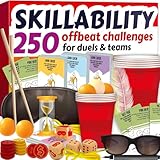
Overview: QUOKKA is a dynamic physical challenge game featuring 250 illustrated cards across five skill-based categories, designed for 2–14 players (ages 8+). It combines dexterity, speed, and creativity using included props like cups and balls.
What Makes It Stand Out: The sheer volume of challenges (250 across three difficulty tiers) ensures inclusivity for all ages. The “fun dice twist” (e.g., blindfolded rounds) injects unpredictability, while durable, reusable props support long-term use—uncommon in budget party games.
Value for Money: Priced around $25, it outshines single-concept games by offering years of variety. The robust components justify the cost for families or workplaces needing reliable, versatile entertainment beyond typical card games.
Strengths and Weaknesses: Strengths: Exceptional replayability; durable props; easy rules for mixed-age groups. Weaknesses: Requires physical space; setup between challenges slows momentum; some tasks feel repetitive after extensive play.
Bottom Line: A stellar investment for active households or team-building, blending physical comedy with adaptable challenges. Highly recommended for groups prioritizing laughter and movement over strategy.
4. OFF TOPIC Party Game for Adults - Fun Adult Board Games for Groups of 2-8 Players - Hilarious Game Night Card Game for Friends, Family & More

Overview: OFF TOPIC is a fast-paced wordplay game where players race to brainstorm creative answers starting with a random letter, testing wit under time pressure. Tailored for 2–8 adults (17+), it includes whiteboards, markers, and topic cards for 15–30 minute rounds.
What Makes It Stand Out: The 20-sided die and timed rounds create frantic, improv-style energy. Unlike trivia games, it rewards quick thinking over knowledge, with topics spanning pop culture to personal quirks—ideal for sparking unexpected conversations.
Value for Money: At $30, the premium components (8 whiteboards, 10 markers) provide lasting value. It’s cheaper per use than bar trivia nights and more engaging than app-based alternatives, especially for groups valuing mental agility.
Strengths and Weaknesses: Strengths: Fosters creativity and quick reflexes; perfect for small gatherings; high-quality accessories. Weaknesses: Niche appeal for non-verbal players; topic cards may feel shallow after reuse; timer pressure can frustrate casual players.
Bottom Line: A sharp, social game that transforms ordinary hangouts into lively brainstorming sessions. Best for wordplay enthusiasts—recommended for casual adult gatherings seeking mental stimulation.
5. Adult Party Board Game RUIN IT Hilariously Funny Game for Ages 18 +

Overview: RUIN IT challenges players to hilariously “ruin” topics in four words or less, convincing a judge why their snarky take wins the round. Designed for 3–8 adults (18+), it’s a rapid-fire comedy game with 255 topic cards and judging mechanics.
What Makes It Stand Out: Its ultra-concise format (4-word max) sets it apart from verbose party games, delivering punchy, instantly shareable humor. The included free SUPERFICIAL game doubles the value, while the 30-minute playtime ensures snappy sessions.
Value for Money: Priced at $25 with a free bonus game, it’s a steal for comedy-focused groups. The 255 cards and reusable whiteboards offer more longevity than similar $20 games, making it ideal for frequent game nights.
Strengths and Weaknesses: Strengths: Hilariously simple premise; minimal setup; free game adds exceptional value. Weaknesses: Humor can feel hit-or-miss; limited depth for strategy fans; judge bias may frustrate competitive players.
Bottom Line: A riotous, accessible game perfect for lighthearted adult gatherings. Despite shallow mechanics, its low barrier to entry and double-game bundle make it a top pick for quick, laughter-filled nights.
6. WHAT DO YOU MEME? Incohearent, The Guess The Gibberish Party Game by Relatable, A Funny Card Game for Adults, Great for Bachelorette Party Games or Game Night Games, Includes 300 Cards

Overview: Incohearent is a viral party game leveraging TikTok fame, where players decipher intentionally scrambled phrases written in gibberish. Designed for 3–8 adults (17+), it uses 300 cards across Party, Spicy, and Pop Culture categories to spark chaotic, laughter-filled guessing sessions.
What Makes It Stand Out: Its internet-driven popularity (750M+ social views) and clever category system create relatable, meme-infused humor. The simple “hold up gibberish, race to decode” mechanic ensures instant engagement, while the “Spicy” category adds cheeky appeal for adult gatherings like bachelorettes.
Value for Money: Priced competitively for a 300-card set, it outshines generic word games with fresh, updated content and broad social media validation. While niche for mature crowds, it’s a steal compared to pricier boxed games offering less replayability.
Strengths and Weaknesses: Strengths: Hilarious, easy to learn, high replay value via diverse categories, perfect for icebreakers. Weaknesses: Age restriction limits family use; “Spicy” content may not suit all groups; relies heavily on player energy to shine.
Bottom Line: An exceptionally fun, trend-driven game that delivers on its viral promise—ideal for adult game nights seeking lighthearted chaos. Highly recommended for its uniqueness and consistent entertainment value.
7. I should have known that! - A Trivia Game About Things You Oughta Know, Green
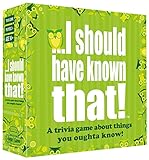
Overview: This compact trivia game challenges players’ general knowledge with questions about “common sense” facts adults should supposedly know. Targeting ages 14+, it accommodates 2+ players and arrives in a modest 6x6x2-inch box, emphasizing simplicity over spectacle.
What Makes It Stand Out: Its niche focus on universally expected—but often forgotten—knowledge creates relatable, self-deprecating humor. The minimalist design prioritizes portability, making it a convenient travel or coffee-table game for casual trivia fans.
Value for Money: Affordable due to its small footprint and basic components, but limited by sparse features (no category breakdowns or replay mechanics). It’s reasonably priced for a niche trivia filler but lacks depth compared to comprehensive trivia sets costing slightly more.
Strengths and Weaknesses: Strengths: Portable, accessible for teens/adults, sparks nostalgic “aha!” moments. Weaknesses: Thin content depth; no instructions for varied gameplay; untested replay value; origin (Poland) offers no quality assurance cues.
Bottom Line: A passable, budget-friendly trivia option for quick sessions, but its narrow scope and lack of innovation make it hard to prioritize over richer alternatives. Recommended only for trivia completists seeking ultra-portability.
8. CMYK Wavelength: The Mind Reading Party Game

Overview: Wavelength is a cooperative party game where teams interpret abstract spectrums (e.g., “Hot to Cold”) using a single clue word. Praised by Polygon and NYT Wirecutter, it accommodates 2–12+ players with near-instant setup and straightforward rules.
What Makes It Stand Out: Its ingenious spectrum mechanic fosters genuine “mind-reading” tension, while universal scalability makes it ideal for large groups or intimate gatherings. Critical acclaim highlights its unique blend of strategy and social deduction without elimination.
Value for Money: Justified by premium components, exceptional replayability, and versatility across group sizes. Though pricier than small card games, it outperforms most in longevity and crowd appeal—rivaling high-end games at a mid-tier price point.
Strengths and Weaknesses: Strengths: Inclusive (no player downtime), endlessly replayable, fosters teamwork, minimal setup. Weaknesses: Abstract concepts may confuse younger players; clue-givers can dominate; limited physical engagement beyond discussion.
Bottom Line: A must-own modern classic for group entertainment. Its brilliance in uniting diverse players ensures consistent value—highly recommended for anyone seeking a fresh, engaging party staple.
9. Rabble - A Party Game That Keeps You Guessing | 4-20+ Players, Party Games for Adults, Teens, Family, Friends, Large Group, Game Night, Bachelorette Party, Adult Party Games

Overview: Rabble is a high-energy team game for 4–20+ players, featuring three rounds of escalating clue-giving restrictions (freeform, one-word, charades) centered on guessing absurd words. It emphasizes chaos through “silly challenges” that disrupt opponents.
What Makes It Stand Out: The tiered round structure and disruptive challenges (e.g., “milk a cow” while guessing) create escalating hilarity. Its flexible player count and family/teen-friendly design cater to diverse gatherings, from bachelorettes to holiday reunions.
Value for Money: Solid for large groups, with durable materials and beautiful packaging justifying its cost. However, similar games (e.g., Codenames) offer deeper strategy at comparable prices, making Rabble better suited for pure fun-seekers than strategy lovers.
Strengths and Weaknesses: Strengths: Accommodates huge groups, encourages physical comedy, accessible rules, attractive unboxing. Weaknesses: Challenges can feel gimmicky; replayability hinges on card variety; strategy depth lags behind competitors.
Bottom Line: A reliably fun, visually appealing choice for boisterous group settings—especially where inclusivity and laughs trump complexity. Recommended for casual game nights prioritizing accessibility and energy.
10. HUES and CUES - Vibrant Color Guessing Board Game for 3-10 Players Ages 8+, Connect Clues and Guess from 480 Color Squares

Overview: HUES and CUES challenges players to connect color swatches using 1–2 word clues, then guess the correct hue from a 480-square grid. Designed for 3–10 players aged 8+, it blends creativity with visual perception in a vibrant, fast-paced format.
What Makes It Stand Out: The massive color array ensures near-limitless combinations, while strict clue constraints spark inventive thinking. Its all-ages accessibility and emphasis on non-verbal communication make it uniquely inclusive for families and mixed-age groups.
Value for Money: Excellent for the component count (480 hues, quality boards) and replay depth. It competes well against art-focused games, offering richer engagement than cheaper color-matching sets despite a modest premium.
Strengths and Weaknesses: Strengths: Visually stunning, highly replayable, encourages creative expression, quick to learn, family-friendly. Weaknesses: Colorblind players may struggle; clue limitations can frustrate competitive groups; storage bulkier than card-only games.
Bottom Line: A brilliantly innovative color-association game that transforms abstract perception into shared joy. Highly recommended for families and casual gamers seeking fresh, visually driven interaction.
Understanding Large Group Dynamics
Hosting a game for ten, twelve, or even fifteen people presents unique challenges compared to smaller gatherings. The sheer number amplifies issues like player downtime, rule complexity confusion, and the potential for cliques to form or individuals to disengage. Recognizing these inherent dynamics is the crucial first step in selecting a game that won’t just survive the crowd but truly thrive within it.
The Critical Role of Minimal Downtime
When players spend more time waiting than playing, boredom sets in rapidly, leading to side conversations, phone checking, or complete disengagement. Games designed for large groups must ingeniously minimize idle time. This often means simultaneous play phases where everyone acts at once, rapid-fire turns, or mechanics where players are constantly involved in observing, guessing, or influencing the action even when it’s not strictly “their turn.” The goal is to keep energy high and ensure no one feels like a spectator for more than a few seconds.
Managing Noise and Energy Levels Effectively
Large groups naturally generate significant noise and energy. A successful party game either harnesses this buzz productively or provides a counterbalance. Some games thrive on the controlled chaos of shouting guesses or frantic collaboration, using the noise as fuel. Others offer a more structured, perhaps slightly calmer, but still highly interactive experience that prevents the room from descending into pure cacophony where communication becomes impossible. Consider the venue and your group’s tolerance for volume when choosing.
Ensuring True Participation for All
It’s easy for quieter personalities or newcomers to get lost in the shuffle. The best large-group games have built-in mechanisms that actively pull everyone into the fray. This could be mandatory voting systems, team structures that require input from all members, or round-robin formats that guarantee each person has a moment in the spotlight. The game shouldn’t rely solely on the most extroverted individuals to carry the energy; it should create pathways for every voice to be heard and every player to contribute meaningfully.
Key Features for Large Group Success
Beyond basic player count suitability, certain features are non-negotiable for ensuring a game delivers a smooth and enjoyable experience with a substantial crowd. These elements directly address the pitfalls that plague unsuitable choices and form the foundation of a truly scalable party experience.
Scalable Player Count Mechanics
Don’t just look at the maximum player number on the box; scrutinize how the game scales. Does adding players simply extend the game time linearly, or does it fundamentally change the experience for the better? Truly scalable games often use modular components, adjustable difficulty settings based on headcount, or mechanics like team play that make 10 players feel like two dynamic teams of five rather than a single unwieldy mass. The ideal game feels equally engaging and well-paced whether you have eight players or fifteen.
Streamlined Setup and Rule Simplicity
Complex setup or a labyrinth of rules is the death knell for large-group fun. With many people, lengthy explanations lead to glazed eyes and lost attention spans before the game even starts. Prioritize games with intuitive, visual components and core mechanics that can be explained in under five minutes. Rulebooks should be concise, with clear examples, and the initial setup should take mere minutes, not require assembling intricate boards or sorting dozens of cards. The faster you get playing, the sooner the fun begins.
Short, Predictable Round Durations
Games with long individual turns or phases that stretch on indefinitely become unbearable with many participants. Look for games structured around short, defined rounds or turns. Ideally, no single action should take more than 30-60 seconds. This creates a natural rhythm, maintains momentum, and gives players clear expectations about how long they’ll need to wait. Predictable pacing prevents the frustration of endless delays and keeps the group’s collective energy focused and positive.
Fostering Inclusivity and Engagement
The most memorable large-group games are those where everyone, regardless of gaming experience, personality type, or background, feels welcomed and capable of contributing. Design choices that prioritize inclusivity turn a simple game into a powerful social catalyst.
Accessibility for Non-Gamers
Your group likely includes seasoned gamers and people who haven’t touched a board game since childhood. The perfect large-group game has a gentle learning curve. Core mechanics should be simple enough for a complete novice to grasp immediately, while offering enough depth or emergent fun through interaction to keep experienced players entertained. Avoid heavy text reliance, complex strategic layers upfront, or niche terminology that creates barriers to entry.
Encouraging Interaction Beyond Turn Order
Games where interaction only happens on your turn fail with large groups. Seek out mechanics that force or encourage connection between turns: bidding against others, forming temporary alliances, observing and reacting to opponents’ choices, collaborative puzzles requiring group discussion, or social deduction elements where everyone is constantly analyzing each other. The game should create natural conversation points and shared moments that bind the group together.
Mitigating Elimination and Player Conflict
Having players “die” or get eliminated early is disastrous in large groups, instantly turning active participants into bored onlookers. Similarly, mechanics that breed excessive direct conflict or “take-that” moments can sour the atmosphere, especially with mixed groups. Prioritize games with indirect competition, cooperative or semi-cooperative elements, or elimination-free designs where everyone remains engaged until the very end. Healthy competition is fun; personal animosity is not.
Practical Considerations for Your Space
Your physical environment plays a huge role in determining which game will actually work. Ignoring these practicalities can derail even the best-designed game for your group size.
Table Space and Physical Layout Requirements
Before buying, honestly assess your available space. Does the game require a huge central table everyone can reach, or can it function with players standing in a circle? Consider component size – tiny cards or minis are impossible to manage across a large table. Games that work well in a horseshoe formation, around multiple smaller tables (for teams), or even without a table at all (like some charades-style games) offer significant flexibility for cramped quarters or unconventional venues.
Component Durability and Management
With many hands handling components, durability becomes key. Flimsy cards, small pieces easily knocked over, or complex setups prone to disruption are a recipe for frustration. Look for sturdy cardstock, well-sized tokens, and components designed for quick resets. Games with fewer distinct components or those using simple, robust materials (like large cards or dry-erase boards) are often more practical. Consider how easy it is to quickly gather and reset between rounds with minimal supervision.
Game Length and Pacing Control
Know your group’s attention span and the context of the event. Is this a quick icebreaker before dinner, or the main event of the evening? Games with adjustable length – perhaps by changing a target score or the number of rounds – are invaluable. Avoid games with fixed, lengthy playtimes (e.g., 90+ minutes) unless you’re certain your large group is committed. Shorter, high-energy games (15-45 minutes) often work better, allowing for multiple rounds or switching games if needed, keeping the energy fresh.
Maximizing the Experience
Choosing the right game is only half the battle. How you introduce, facilitate, and adapt the game during play significantly impacts whether it resonates with your large audience.
Effective Teaching Strategies for Crowds
Teaching a game to ten people is an art. Start with the absolute core objective and the very first action players need to take. Use visual demonstrations with your own pieces. Break the explanation into tiny chunks, pausing for quick questions after each step. Enlist helpers – perhaps explain the basics to two people who then help explain to others nearby. Avoid deep dives into edge cases; clarify those as they arise during play. Keep it moving; momentum is your friend.
Facilitation and Energy Management
As the host, your role shifts from strict referee to energetic facilitator. Keep the pace brisk, gently nudge slow players, and actively encourage quieter members to participate. Be prepared to paraphrase rules quickly and consistently. If energy dips, inject enthusiasm! A well-facilitated game where the host helps manage the flow can overcome minor rule ambiguities, while poor facilitation can sink even the best game. Your positive energy sets the tone for the whole group.
Adapting Rules for Your Specific Group
Don’t be afraid to gently houserule for the sake of flow and fun, especially on the first play. If a rule causes consistent confusion or slows things down significantly, discuss a temporary tweak with the group. Maybe simplify a scoring element for the first game, or adjust a time limit. The goal is shared enjoyment, not rigid adherence to the rulebook. Document any changes that work well for future plays with similar groups.
Frequently Asked Questions
Frequently Asked Questions
How many players is generally considered “too many” for most standard board games? Most traditional board games become unwieldy beyond 6-8 players due to excessive downtime, complex turn management, and spatial constraints, making dedicated large-group party games essential for bigger crowds.
Can games designed for large groups still work well with a smaller number of players, like 4 or 5? Many large-group games lose their core dynamic or become too simplistic with very small groups; they often rely on the energy and interaction density that only a substantial crowd provides, so checking the minimum player count is crucial.
What’s the biggest mistake people make when choosing a game for a large party? Selecting a game based solely on its maximum player count without considering critical factors like downtime, setup complexity, rule accessibility, and how the mechanics actually scale with more people.
How important is physical space compared to the game’s mechanics for large groups? Physical space is critically important; even the best-designed game can fail if players can’t see the central action, reach components, or hear each other due to cramped or poorly arranged seating.
Are team-based games inherently better for very large groups than free-for-all formats? Team-based structures often excel with very large groups (10+) as they reduce individual downtime, foster camaraderie, simplify interaction networks, and make the social dynamics more manageable than pure free-for-all competition.
How can I prevent quieter guests from being overshadowed in a large, energetic game? Choose games with mandatory participation mechanics (like voting or required input), use team formats, and as a facilitator, gently draw quieter players into discussions or spotlight their contributions.
What’s a good rule of thumb for ideal game length with 10+ players? Aim for games with a core playtime of 20-45 minutes; longer durations risk fatigue and disengagement in large groups, while shorter games allow for multiple rounds or easy switching if needed.
Should I avoid games with complex themes or heavy text for large mixed groups? Absolutely; prioritize games with intuitive, visual mechanics and minimal text reliance to ensure quick comprehension and smooth play across varying gaming experience levels within a large crowd.
How do I handle rule disputes fairly when so many players are involved? Designate a quick, neutral reference (like a printed summary card), encourage group consensus on interpretations for the first play, and prioritize keeping the game moving over perfect rule adherence initially.
Is investing in a dedicated large-group game worth it if I only host big parties occasionally? Yes, because the right game transforms a potentially chaotic gathering into a cohesive, memorable experience; the social value and ease it provides during those key events far outweigh the cost for occasional use.