Table of Contents
Looking to elevate your next gathering from ordinary to unforgettable? Dexterity games bring a unique energy to parties that traditional board games simply can’t match. These hands-on challenges get people moving, laughing, and engaging in ways that break down social barriers and create lasting memories. Whether you’re hosting a casual get-together or a milestone celebration, the right physical skill games can transform your event into the highlight of everyone’s social calendar.
But not all dexterity games are created equal when it comes to party environments. The perfect party game balances accessibility with entertainment value, ensuring that both your competitive friend and your coordination-challenged cousin can participate equally. Understanding what makes these games work in social settings will help you build a collection that keeps guests coming back for more, regardless of their gaming experience or physical abilities.
Top 10 Dexterity Games for Party
Detailed Product Reviews
1. lartoys Rope Untangling Puzzle Game, Educational Strategy Board Game for Kids & Adults, Family Travel Party Games with Multi-Level Challenges, Gifts for All Ages(Manual on Box)

Overview: This tactile puzzle game transforms rope tangling into a strategic brain teaser for ages 6+. Players insert colorful ropes into a perforated board, creating knots that opponents must untangle by moving rope tips over others into empty holes. With 10 vibrant ropes and 22 holes, it offers escalating complexity from simple 3-rope challenges for children to intricate 10-rope mazes that test adult logic. The protected U.S. design patent (D1101871) validates its unique concept, while the integrated manual on the box ensures rules remain accessible during travel.
What Makes It Stand Out: The adjustable difficulty system is exceptional—scaling from beginner to expert with the same components provides genuine longevity. Unlike static puzzles, the dynamic rope mechanics create infinite configurations, making each round unique. The plastic-tipped ropes prevent fraying while maintaining flexibility, and the travel-ready case transforms it into a screen-free alternative for restaurants and road trips. The patent protection signals genuine innovation in a crowded puzzle market.
Value for Money: Comparable to quality board games ($20-30 range), this offers superior replay value through its difficulty scaling. Ten ropes provide thousands of unique combinations, effectively delivering dozens of puzzles in one package. The durable plastic components withstand repeated twisting, and the integrated storage prevents piece loss—common issues with travel games. It replaces disposable activity books and digital puzzle apps with a physical, reusable alternative.
Strengths and Weaknesses: Strengths: Infinite replayability; genuine skill progression; portable design; screen-free cognitive development; patent-protected unique mechanics; accessible rules on packaging. Weaknesses: Small plastic tips pose choking hazards for children under 3; two-player base game limits group play; can frustrate impatient players; rope tension may loosen over extensive use.
Bottom Line: An outstanding investment for families prioritizing cognitive development and screen-free interaction. The scalable difficulty ensures it remains challenging for years, making it ideal for multi-generational households seeking a portable, brain-building activity.
2. Funwares WobbleBall Marble Balance Game, 50 Marbles Included, Skill & Dexterity Games for Kids & Adults, Family Party Game for 1-4 Players, Ages 6+

Overview: WobbleBall challenges players to stack marbles on a convex, tilting base without triggering a collapse. The set includes 50 standard-sized marbles stored within the base itself, supporting 1-4 players in competitive or solo play modes. Designed for ages 6+, it develops fine motor control and concentration through simple rules that require minutes to learn but years to master. The patent-pending mechanism creates unpredictable movement, ensuring no two attempts feel identical.
What Makes It Stand Out: The integrated marble storage is a game-changer—eliminating the chronic problem of lost pieces in dexterity games. Fifty marbles provide exceptional value, allowing extended play without constant retrieval. The tilting base’s sensitivity is finely calibrated; too stable and it’s boring, too loose and it’s frustrating. The 1-4 player flexibility accommodates solo practice or party gameplay, while the 5-minute setup and rules make it instantly accessible across age groups.
Value for Money: At typical price points under $25, this significantly outperforms competitors like Jenga or classic marble runs. Fifty marbles alone retail for $10-15, making the engineered base an incremental cost. The durable ABS plastic construction withstands drops, and the self-contained design prevents piece loss—a hidden cost saver. Compared to digital dexterity games or subscription boxes, this one-time purchase delivers perpetual entertainment.
Strengths and Weaknesses: Strengths: Brilliant self-storage design; high marble count; scalable difficulty through player positioning; genuine skill development; mess-free cleanup; excellent for classrooms and therapy settings. Weaknesses: Marbles can still scatter during dramatic collapses; limited strategic depth beyond steady hands; older teens may find novelty wears quickly; base requires flat surface for fair play.
Bottom Line: A superb choice for families seeking quick, skill-building fun that won’t clutter the house. The storage innovation alone makes it worth the investment, particularly for parents tired of hunting under furniture for game pieces.
3. WEofferwhatYOUwant Chairs and Ladders Stacking Game – 44 Piece Balance Tower for Kids and Adults – Family Party Tabletop Game Night Fun – Dexterity Skill Building Travel Toy Ages 6+

Overview: This 44-piece set reimagines stacking games using 24 colorful chairs and 20 ladders instead of traditional blocks. Players construct precarious towers by interlocking pieces, either solo or in teams, creating unique architectural challenges. Designed for ages 6+, it merges classic balance mechanics with STEM education, enhancing spatial reasoning and fine motor skills. The BPA-free plastic construction and included silk poly travel bag make it suitable for home, classroom, or vacation use.
What Makes It Stand Out: The chair-and-ladder motif delivers fresh visual appeal and novel stacking geometry compared to standard rectangular blocks. Each piece features precise notches that require strategic thinking beyond simple placement. The dual-component system (chairs + ladders) exponentially increases configuration possibilities. The travel bag is genuinely premium—soft yet durable—addressing storage frustrations common with piece-heavy games. The explicit STEM labeling attracts educators and parents seeking purposeful toys.
Value for Money: Competing stacking games offer 30-40 wooden pieces at similar $20-25 price points, but this provides 44 plastic pieces with superior durability and washability. The educational positioning adds value for homeschooling families. BPA-free certification and smooth-edge design justify the cost for safety-conscious buyers. While plastic lacks wood’s aesthetic, it prevents chipping and water damage, extending lifespan in active households.
Strengths and Weaknesses: Strengths: Novel piece design; genuine STEM skill development; excellent portability; safe materials; versatile solo/team modes; affordable entry to balance games. Weaknesses: Plastic feels less premium than wood; 44 pieces increase loss risk; setup time longer than card games; color matching could be more vibrant; stability limited on soft surfaces.
Bottom Line: An excellent value for families wanting more than basic block stacking. The unique pieces and educational framing make it particularly valuable for parents integrating learning into playtime, though piece management requires diligence.
4. University Games, Pizza Party Dice Game, Dice Game for Kids and Families, Ages 6+

Overview: Pizza Party transforms dice rolling into a race to complete a six-slice pizza. Players roll dice to collect toppings, assembling their pizza card piece by piece. Marketed for ages 6+ and designed for exactly two players, it combines luck and light strategy in 10-15 minute rounds. The pizza theme and compact tin make it travel-friendly, while the simple “roll-and-match” mechanic ensures immediate accessibility for young children and non-gamers.
What Makes It Stand Out: The food theme is universally appealing, and the card-based pizza construction provides satisfying visual progress. The dice faces feature clear, iconic toppings (pepperoni, mushrooms) rather than abstract pips, reinforcing pattern recognition for younger players. The metal tin packaging is genuinely durable—surviving backpack transport better than cardboard boxes. The two-player design creates focused, head-to-head competition without downtime.
Value for Money: Typically priced under $10, this delivers solid value for two-player entertainment. However, the mandatory two-player limit creates hidden costs—families of four must purchase two sets. Compared to standard dice sets ($5-8) with generic rules, the themed cards and tin justify the slight premium. It’s cheaper than most pizza delivery, making it an impulse-buy-friendly gift. The durability ensures it outlasts paper-based travel games.
Strengths and Weaknesses: Strengths: Irresistible theme; ultra-portable tin; instant rules comprehension; affordable price point; perfect for grandparent-grandchild bonding. Weaknesses: Two-player limit is restrictive; luck dominates strategy; requires multiple sets for groups; pizza cards could be thicker; repetitive after extended sessions.
Bottom Line: Ideal for two-person households seeking quick, portable fun with younger children. The severe player limit makes it a niche purchase rather than a family staple—buy one for travel, but plan on duplicates for larger groups.
5. Oink Games DroPolter Fast-Paced Ghost Memory Party Game | Real-Time Pattern Recognition & Dexterity Challenge for Families and Kids | 2–5 Players | Ages 6+ | Portable Travel Game

Overview: DroPolter is a frantic real-time game where 2-5 players race to drop the correct item token when ghost cards reveal matching patterns. Each player manages five unique tokens, requiring rapid pattern recognition and steady hands to deposit them onto a central pile. The first to earn five bells wins. Oink Games’ signature tiny-box design makes it exceptionally portable, while the 6+ age rating and 10-minute playtime create accessible, high-energy family entertainment.
What Makes It Stand Out: The real-time dropping mechanic eliminates turn-taking downtime, creating constant engagement. The five distinct item shapes (ghost, pumpkin, etc.) require both visual matching and physical dexterity—a rare hybrid. Oink Games’ packaging is masterclass: a box smaller than a smartphone containing everything needed. The bell-scoring system adds satisfying auditory feedback. The scaling difficulty through faster card reveals adapts to different skill levels within the same family.
Value for Money: Oink Games command a premium ($15-20 for small boxes), but the component quality and design innovation justify it. The 2-5 player range eliminates the need for multiple purchases. Unlimited replayability through randomized card draws provides better value than single-solution puzzles. The durable cardboard tokens and compact design prevent piece loss, a common cost sink in dexterity games. For families seeking variety, it’s cheaper than a board game collection.
Strengths and Weaknesses: Strengths: Brilliant real-time mechanics; exceptional portability; genuine multi-age appeal; quick setup/teardown; unique dexterity-memory fusion; scalable difficulty. Weaknesses: Small bells are choking hazards for toddlers; chaotic pace may overwhelm anxious players; tokens can dent furniture if dropped forcefully; limited depth for hardcore strategists.
Bottom Line: A must-have for families craving energetic, laugh-out-loud moments. The brilliant design maximizes fun per cubic inch, making it perfect for travel, parties, or breaking up screen time with bursts of frantic, skill-building chaos.
6. Funwares Original 237 Minute of Fun Games - Minute to Win It Family Party & Travel for Kids & Adults, 2-12 Players! Ready to Play Right Out of The Box!
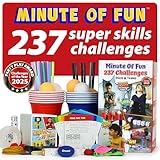
Overview:
The Funwares Original 237 Minute of Fun Games delivers exactly what its name promises—a massive collection of fast-paced, skill-based challenges inspired by the popular “Minute to Win It” format. This all-in-one party kit serves 2-12 players ages 8 and up with 237 unique one-minute games spanning nine skill categories. Everything needed for instant entertainment comes in the box, from ping pong balls and balloons to chopsticks and measuring tape.
What Makes It Stand Out:
The sheer volume of 237 challenges ensures endless replayability, while the nine distinct skill categories (aim, dexterity, balance, etc.) guarantee varied gameplay that tests different abilities. Unlike competitors that require separate purchases, this kit includes all physical supplies—122 cards, 237 challenges, and a comprehensive assortment of props. The self-contained design makes it truly “grab-and-go” for any event.
Value for Money:
At its typical retail price point, this represents exceptional value compared to purchasing individual party game components or specialized equipment. Similar kits offer far fewer challenges, often requiring household item scavenging. The inclusion of professional-grade supplies and organized card system justifies every penny for frequent entertainers.
Strengths and Weaknesses:
Pros include unmatched variety, true all-in-one convenience, broad age appeal, and indoor/outdoor versatility. Cons involve potential storage challenges with numerous small pieces, occasional supply quality inconsistencies, and some challenges that may feel repetitive after extensive play.
Bottom Line:
Perfect for families, party hosts, and youth leaders seeking high-energy, inclusive entertainment. The extensive content and complete packaging make it a worthwhile investment that outperforms piecemeal alternatives.
7. SLSESIN 100 Pieces 16MM Dice Set, 6 Sided Standard Colored Dices with Portable Plastic Box, Opaque 10 Colors Games Dice for Board Games, Parties, Classroom Math Bulk Dice

Overview:
The SLSESIN 100 Pieces 16MM Dice Set is a bulk collection of standard six-sided dice designed for versatility across gaming, educational, and entertainment contexts. This practical set includes 100 opaque acrylic dice in ten vibrant colors, each measuring 16mm with rounded corners, housed in a compartmentalized plastic storage box.
What Makes It Stand Out:
The organized storage solution with separate compartments for each color distinguishes this from bulk dice bags that create sorting headaches. The 16mm size hits the sweet spot—substantial enough for confident rolling while remaining portable. With ten distinct colors, it supports complex multiplayer board games, probability demonstrations, or party activities requiring color-coded systems.
Value for Money:
This set delivers outstanding bulk value, typically priced competitively per die compared to purchasing individual packs. The reusable storage container adds significant practical worth, preventing loss and maintaining organization—something cheaper bulk options often neglect. For educators, game designers, or avid gamers, the cost-per-use is minimal.
Strengths and Weaknesses:
Strengths include durable acrylic construction, clear pip markings, perfect weight distribution, and excellent organization. Weaknesses involve potential color fading with heavy use, the opaque design lacking premium aesthetics of translucent dice, and the basic plastic case that may crack under rough handling.
Bottom Line:
An essential, cost-effective solution for anyone needing dice in quantity. The thoughtful storage and quality construction make it superior to random bulk purchases, ideal for classrooms, game nights, and party planners.
8. Super Skills - Action Game for Competitive People - Beat Your Friends at 120 Challenges - Fun Group Activity for Family Night or Party with Kids, Teen

Overview:
Super Skills is a competitive action game that pits players against 120 physical and mental challenges in a race to complete ten tasks first. Designed for family nights and group gatherings, this award-winning game accommodates various play modes and age ranges, blending dexterity, speed, and problem-solving into a cohesive party experience.
What Makes It Stand Out:
The four distinct play modes—solo, cooperative, head-to-head, and group battle—provide remarkable flexibility for different social dynamics. Challenges like blindfolded cup stacking and behind-the-back ball bouncing offer genuine novelty beyond typical party games. The included sand timer and scoreboard introduce structured competition, while the blindfold adds a hilarious sensory twist.
Value for Money:
Positioned in the mid-range party game category, Super Skills justifies its price through quality components and the 120-challenge variety. Comparable games often offer fewer tasks or require additional purchases. The durable cups, balls, and chopsticks withstand repeated use, ensuring long-term entertainment value for regular game nights.
Strengths and Weaknesses:
Pros include diverse challenge types, scalable difficulty, quality props, and adaptable player counts. Cons involve a learning curve for some complex challenges, potential for repetitive tasks after multiple sessions, and the requirement for a hard floor surface that limits outdoor grass play.
Bottom Line:
Excellent for competitive groups seeking active entertainment beyond board games. The versatile modes and solid construction make it a reliable choice for families and adult gatherings alike, though casual players may prefer simpler options.
9. Tiny Laser Heist – Hilarious 3D Heist Game, Outsmart & Negotiate for The Loot, Fun Cooperative Board Game for Ages 12+, Perfect for Game Nights & Parties, 3-6 Players

Overview:
Tiny Laser Heist reimagines cooperative gameplay by forcing 3-6 players to execute a museum heist using comically small plastic hands. This 30-45 minute dexterity and strategy game for ages 12+ combines physical skill with negotiation as participants navigate elastic lasers and padlocks to steal jewels, turning a simple concept into chaotic fun.
What Makes It Stand Out:
The tiny hands mechanic creates unforgettable moments of fumbling and laughter, distinguishing it from standard dexterity games. The 3D laser frame adds visual spectacle and genuine tension, while the negotiation element introduces strategic depth. Sabotage cards and escalating difficulty ensure no two heists feel identical, blending party game chaos with legitimate strategy.
Value for Money:
While priced higher than basic card games, the unique 3D components and innovative concept deliver strong value for dedicated game collectors. The laser frame and detailed pieces feel substantial, justifying the premium over simpler dexterity games. For groups seeking distinctive experiences, the memorable gameplay outweighs the cost.
Strengths and Weaknesses:
Pros include hilarious concept, quality 3D components, quick setup, and perfect blend of skill and social deduction. Cons involve limited 3-6 player range, potential frustration for those lacking dexterity, and the tiny hands being prone to breaking with rough handling. The 12+ age rating may exclude younger family members.
Bottom Line:
A must-have for game enthusiasts craving novelty and laughter. Best suited for adult game nights and teen parties where the unique premise and cooperative chaos can shine brightest.
10. Mini Cube 20 Pack Magic Cube, Puzzle Party Favors for Kids Party Puzzle Game Toys Classroom Rewards & School Prize for Students, Stress Relief Toys Goody Bag Filler Birthday Easter Gift

Overview:
The Mini Cube 20 Pack provides twenty 1.18-inch 3x3 magic cubes designed as party favors, classroom rewards, or portable puzzles. These compact brain teasers challenge users to twist and rotate colored squares into alignment, serving dual purposes as entertainment and stress-relief tools for both children and adults.
What Makes It Stand Out:
The bulk quantity at an affordable price point makes this ideal for mass distribution at events. Unlike single cube purchases, this set ensures every participant gets their own puzzle, eliminating wait times. The miniature size enhances portability for travel, desk toys, or goody bags while maintaining functional turning mechanisms that serious puzzlers appreciate.
Value for Money:
Exceptional bulk value makes this set perfect for party planners and educators. Individual mini cubes often cost nearly as much as this entire 20-pack. While not competition-grade, the cost-per-cube is unbeatable for giveaways, and the eco-friendly ABS construction provides durability that cheaper alternatives lack.
Strengths and Weaknesses:
Pros include unbeatable bulk pricing, non-toxic materials, smooth operation for the size, and versatile applications. Cons involve smaller size being challenging for large hands, stickers potentially peeling with heavy use, and not suitable for speed-cubing competitions. Quality control may vary across 20 units.
Bottom Line:
Perfect for bulk needs like party favors or classroom prizes rather than serious cubers. The value proposition is outstanding for its intended purpose, making it a smart choice for event planners and teachers seeking engaging, affordable giveaways.
What Makes Dexterity Games Perfect for Parties?
Why Physical Skill Games Break the Ice
Dexterity games create natural conversation starters through shared physical experiences. When someone attempts a tricky maneuver and the tower wobbles or the piece goes flying, everyone reacts simultaneously. These moments of suspense and surprise dissolve awkwardness faster than any forced small talk. The physical nature of these games also means players aren’t staring down at their phones or individual game boards—they’re watching each other, making eye contact, and sharing genuine reactions in real-time.
The Social Dynamics of Hands-On Entertainment
Unlike strategy games that can isolate players in deep thought, dexterity games keep everyone present and engaged. Spectators become cheerleaders, coaches, or good-natured hecklers. The learning curve is often visual and immediate—people understand the goal by watching others play, making it easy for guests to jump in mid-game without lengthy explanations. This inclusivity means nobody feels left out when they arrive late or need to step away temporarily.
Key Features to Look for in Party Dexterity Games
Player Count Flexibility
The best party dexterity games accommodate variable player counts seamlessly. Look for titles that work with anywhere from two to eight or more participants. Games that support large groups eliminate the need to split your party into smaller factions, keeping the energy centralized. Some games achieve this through tournament-style play, while others have mechanics that keep everyone active simultaneously rather than taking turns.
Setup and Teardown Time
When the party’s in full swing, you don’t want to spend twenty minutes arranging components or reading rulebooks. Ideal party dexterity games set up in under three minutes and pack away just as quickly. Games with minimal setup also reduce the risk of losing small pieces during the excitement. Consider how many steps are involved in getting the game ready and whether you can pre-assemble anything before guests arrive.
Age Appropriateness and Accessibility
A truly great party game spans generations without excluding anyone. Look for games with simple core mechanics that a ten-year-old can grasp but with enough depth to keep adults engaged. Avoid games that require reading complex cards during fast-paced play or that have tiny pieces that could be hazardous around young children or pets. The best options allow you to modify rules on the fly for different skill levels.
Space Requirements
Your game choice needs to fit your actual party space, not an idealized version of it. Some dexterity games require a large, flat table surface, while others work better on the floor. Consider whether you’ll be playing around a dining table, in a living room with limited coffee table space, or potentially moving outdoors. Games that can adapt to different surfaces give you more flexibility as your hosting situation changes.
Component Durability
Party environments are inherently more chaotic than quiet game nights. Drinks get spilled, pieces get stepped on, and components are handled by people who may not be gentle. High-quality wooden pieces, thick cardboard, or durable plastic components will survive multiple parties. Check whether replacement parts are available from the publisher—inevitably something will get lost or damaged, and being able to order spare pieces extends the life of your investment.
Types of Dexterity Games for Different Party Vibes
Stacking and Balancing Challenges
These classics involve carefully placing pieces to build increasingly unstable structures. They create incredible tension as the tower grows higher and more wobbly. The visual spectacle of a towering construction in progress naturally draws spectators. These games work exceptionally well as centerpieces for your party—people can come and go, taking turns as they please. The slow build-up followed by dramatic collapse provides natural breakpoints for conversation and refreshments.
Aiming and Throwing Games
Games that involve tossing, flicking, or launching projectiles add active movement to your party. These work brilliantly for outdoor gatherings or spacious indoor areas. The physical comedy of missed shots and unexpected bounces generates constant laughter. Look for versions with soft, lightweight projectiles that won’t damage your home or injure guests. These games often allow for creative trick shots and house rules that emerge organically during play.
Speed and Reaction Games
Fast-paced challenges that test reflexes and quick thinking inject energy into flagging parties. These games typically involve grabbing, stacking, or reacting before opponents. They work best with smaller groups of 4-6 players to keep everyone physically close and the action intense. The rapid-fire nature means you can play multiple rounds in quick succession, allowing many guests to rotate through and experience the excitement.
Cooperative Dexterity Challenges
Not every party needs competition. Cooperative dexterity games have everyone working together toward a common goal, which builds camaraderie and reduces the risk of sore losers. These are perfect for mixed groups where some guests might feel intimidated by highly competitive play. The shared triumph of succeeding together creates a different but equally powerful bonding experience. They also allow skilled players to mentor newcomers without feeling like they’re throwing the game.
Silly and Wacky Physical Feats
Some dexterity games embrace absurdity, asking players to perform ridiculous physical tasks that guarantee laughter. These might involve wearing silly accessories, using non-dominant hands, or contorting into strange positions. While not for every crowd, they’re unbeatable for breaking down inhibitions at casual parties. The key is ensuring the humor comes from the situation, not from embarrassing individual players.
Setting Up the Perfect Gaming Environment
Table vs. Floor Play Considerations
Your playing surface dramatically affects which games work best. Tables provide stable, elevated surfaces that are easier on guests’ backs and knees. However, floor play allows for larger setups and more dramatic physical movements. Consider investing in a sturdy, portable card table that you can set up specifically for gaming. For floor games, ensure you have adequate padding or carpet to keep guests comfortable during extended play.
Lighting and Visibility Factors
Good lighting is crucial for dexterity games where precision matters. Overhead lighting can create shadows that obscure details, while dim mood lighting might look atmospheric but makes accurate play impossible. Position a bright floor lamp or adjustable table lamp near your gaming area. If you’re playing games with small components, consider having a magnifying glass handy for guests with vision challenges—it’s a thoughtful touch that keeps everyone included.
Creating Safe Play Zones
Clear a generous buffer zone around your gaming area. Move breakable decorations, secure loose rugs, and ensure there’s no risk of guests backing into furniture during enthusiastic play. For throwing or launching games, designate a specific direction where projectiles can safely land without hitting valuables. Communicate these boundaries clearly before starting—it’s much easier to set expectations upfront than to apologize for a broken vase later.
Managing Noise Levels
Dexterity games naturally generate excitement, which means noise. If you live in an apartment or have noise-sensitive neighbors, choose games that don’t involve loud crashes or repetitive banging. Consider placing a thick blanket or pad under games that involve dropping pieces to muffle sound. You can also schedule the loudest games earlier in the evening before quiet hours begin, or move them outdoors if weather permits.
Teaching Rules Quickly to Keep the Party Moving
The 2-Minute Rule Explained
Your party isn’t a gaming convention—guests want to play, not attend a rules seminar. Master the art of explaining core mechanics in under two minutes by focusing on what players do on their turn and how to win. Demonstrate rather than lecture; set up a quick practice round with volunteers while you narrate what’s happening. Most dexterity games are intuitive enough that people learn by watching, so get the first game started within minutes of opening the box.
Demonstration Techniques
Nothing kills party momentum faster than stopping to look up rules mid-game. Before your party, practice teaching each game by explaining it to a mirror or patient family member. Identify the three most common rules questions and have clear, concise answers ready. Use visual aids like reference cards or player aids if the game includes them. For complex games, consider making a quick cheat sheet that guests can reference without interrupting play.
Handling Rule Questions Mid-Game
When disputes arise, be the decisive host. Make a quick ruling, keep the game moving, and promise to look up the correct interpretation afterward. The party’s energy is more important than perfect rules accuracy. Have a small notepad handy to jot down questions that come up, showing guests that their concerns are heard but won’t derail the fun. You can always play “correctly” next time.
Scaling Difficulty for Mixed Skill Groups
Built-in Handicap Systems
Some dexterity games include official variants that level the playing field between skilled and novice players. These might involve giving beginners extra attempts, letting them stand closer for throwing games, or allowing them to use both hands while experts use only one. Before your party, familiarize yourself with these balancing mechanisms. They let competitive players play seriously while newcomers still feel they have a fighting chance.
Creating House Rules
Don’t be afraid to modify games to suit your specific group. If a particular challenge is too difficult for most guests, create a “party version” with relaxed rules. Maybe everyone gets three attempts instead of one, or teams can collaborate on particularly tricky moves. Announce these modifications upfront so everyone operates under the same expectations. The best house rules often emerge organically from player suggestions during the first game.
Team-Based Variations
Transform individual games into team events to reduce pressure on less-coordinated guests. Pair skilled players with beginners, or create family-style teams that mix ages and abilities. This approach builds mentorship moments and ensures everyone contributes. Team play also reduces downtime since players can strategize together between turns, keeping engagement high throughout the game.
Storage and Transportation Tips
Compact vs. Bulky Game Considerations
Your storage space dictates your game collection size. Some dexterity games come in enormous boxes but contain mostly empty space. Consider repackaging bulky games into smaller containers or plastic bins that store more efficiently. Label everything clearly, including a photo of the set-up so you remember how components fit together. For apartment dwellers, prioritize games that pack flat or stack neatly on shelves.
Protecting Components During Travel
If you bring games to other people’s parties, invest in small plastic containers or zip-top bags to organize pieces within the main box. This prevents the chaos of dumping everything out to find one specific component. For games with delicate parts, cut custom foam inserts or use bubble wrap. Keep a small repair kit with wood glue, super glue, and spare rubber bands for on-the-spot fixes.
Quick-Access Storage Solutions
Store your most-used party games in an easily accessible location, not buried in a closet. A dedicated shelf near your party space means you can grab games spontaneously as the mood strikes. Consider a decorative basket or ottoman with internal storage that keeps games handy but out of sight when not in use. This also signals to guests that you’re prepared for fun, making them more likely to suggest playing something.
Frequently Asked Questions
How many dexterity games should I have ready for a party? Aim for 2-3 different types of dexterity games for a typical 4-hour party. This gives you options if one game isn’t resonating with your group or if energy levels change. Having a quick 10-minute game, a medium 30-minute game, and a longer tournament-style game covers all scenarios. Rotate through them based on how many guests are interested and how much time you have between other party activities.
What’s the ideal group size for most dexterity games? Most party dexterity games work best with 4-6 active players, though many accommodate spectators who can rotate in. Games with simultaneous action can handle larger groups, while turn-based games work better with smaller numbers to avoid long waits between turns. Always check the player count range on the box, but remember that many games can be adapted for larger groups through team play or tournament brackets.
How do I prevent dexterity games from becoming too competitive? Set the tone early by emphasizing fun over winning. Consider playing a practice round where everyone helps each other, or implement a silly penalty for the winner that makes victory less serious. Cooperative dexterity games eliminate competition entirely. If you have particularly competitive guests, channel that energy into cheering for others rather than focusing on their own performance.
Are dexterity games suitable for outdoor parties? Many dexterity games work wonderfully outdoors, especially throwing or launching games. Wind is your biggest enemy, so choose heavier components or games that don’t rely on lightweight pieces. Have a plan for dealing with grass stains or dirt on components. Bring a large blanket or tablecloth to define your playing area and keep pieces from getting lost in the grass.
How do I clean game components after a party? Wipe down wooden pieces with a slightly damp cloth and mild soap, then dry immediately. Plastic components can handle more thorough washing. For cardboard pieces, use a dry microfiber cloth to remove fingerprints and spills. Always check manufacturer recommendations, but generally avoid submerging anything with printed surfaces. Let everything dry completely before storing to prevent mold or warping.
What if someone at my party has limited mobility? Choose games that can be played seated or with minimal movement. Many stacking and balancing games work perfectly well from a chair. Offer to be their partner in team games so they can direct strategy while you handle the physical components. The key is asking privately before the party what accommodations would help, then selecting games accordingly without drawing attention to the adaptation.
How long should a dexterity game session last at a party? Keep individual game sessions to 20-30 minutes maximum to maintain energy and allow rotation. You can always play multiple rounds if everyone’s engaged. Shorter 5-10 minute games work great as palate cleansers between other activities. Watch for signs of fatigue or frustration—when people start making careless mistakes, it’s time to switch activities.
Can I mix dexterity games with other party activities? Absolutely! Dexterity games make excellent transition activities between dinner and dancing, or as a way to keep early arrivals entertained before the full guest list arrives. They also work well as side activities during larger events—set up a game station where people can drift over and play a quick round without committing to a full game night experience.
What’s the best way to store dexterity games between parties? Store games vertically like books to prevent components from shifting and crushing each other. Use rubber bands or small bags to keep pieces organized within boxes. Keep games away from extreme temperatures and humidity, which can warp wooden components. A climate-controlled closet or shelf is ideal. Consider taking photos of the organized box so you can remember where everything goes when repacking.
How much should I expect to spend on quality party dexterity games? Quality dexterity games typically range from $20 to $50, with premium wooden games costing up to $80. Start with one versatile game in the $30-40 range that fits your usual party size and space. Build your collection slowly, adding games that offer different experiences rather than similar mechanics. A well-chosen game that gets played twenty times is a better investment than three games that collect dust.
See Also
- Stop Game Night Drag with the 10 Best Party Dexterity Games This Year
- 10 Must-Have Party Dexterity Games for Any Game Night Enthusiast in 2026
- 10 Top-Rated Party Dexterity Games According to Experts in 2026
- How to Solve Boring Game Nights with the 10 Best Party Dexterity Games in 2026
- The 10 Best Precision Challenge Games Every Adult Needs This Year