Table of Contents
Forget video games and streaming marathons for a moment. There’s a quiet renaissance happening right under our noses – teens are rediscovering the magic of physical card games. In an era dominated by screens, the simple act of shuffling, dealing, and interacting face-to-face offers a surprisingly potent antidote to digital fatigue. These compact boxes hold more than just cardboard; they’re gateways to laughter, strategic thinking, unexpected bonding, and a tangible sense of presence that pixels simply can’t replicate. For teenagers navigating complex social landscapes and cognitive growth, the right deck of cards can be a surprisingly powerful tool for connection and development.
Why the surge in popularity? It’s not nostalgia. Today’s card games are brilliantly designed for modern attention spans and social dynamics. They offer quick setup, variable playtimes perfect for after-school hangs or weekend gatherings, and mechanics that encourage interaction without forcing awkwardness. Unlike solitary online gaming, card games demand engagement with the people right in front of you – reading expressions, negotiating deals, celebrating wins, and weathering losses together. They’re the ultimate social equalizer, where the quietest kid might out-strategize the class clown, fostering respect and shared experiences that build genuine camaraderie in a way few other activities can.
Top 10 Card Games for Teens
![You Laugh You're Out [A Party Game with Hilarious Charades Family Card Games for Adults & Kids, 125 Prompt Cards Fun for Family Game Nights, Easter Basket Stuffers, Gatherings, & Parties Ages 14+]](https://m.media-amazon.com/images/I/41mWguGSU0L._SL160_.jpg)


Detailed Product Reviews
1. USAOPOLY Flip 7, The Ultimate Blend of Press Your Luck & Strategy, Fast-Paced Addictive Card Game,Quick to Learn & Easy to Teach,Perfect for Game Nights, 3+ Players, Ages 8 & Up, 20 Minutes Play Time

Overview: Flip 7 is a high-energy press-your-luck card game where players aim to reach 200 points by strategically revealing numbered cards without drawing duplicates. Its unique deck structure and quick 20-minute rounds make it ideal for family game nights seeking tension and replayability. What Makes It Stand Out: The meticulously designed deck—featuring decreasing multiples (twelve 12s down to one 1) alongside action cards like Flip Three and Freeze—creates dynamic risk-reward scenarios. Unlike generic luck games, the asymmetrical distribution forces calculated decisions, while modifier cards inject chaos without overwhelming complexity. Value for Money: Priced competitively for its component depth, Flip 7 delivers exceptional replay value through its unpredictable rounds. It surpasses simpler press-your-luck games by offering strategic layers absent in cheaper alternatives, justifying its cost for frequent game-night hosts. Strengths and Weaknesses: Strengths: Engaging risk mechanics, intuitive rules for ages 8+, high replayability from variable card distribution, and brisk pacing. Weaknesses: Can feel overly luck-dependent during duplicate streaks; the 200-point target may extend playtime slightly beyond advertised 20 minutes with larger groups. Bottom Line: Flip 7 excels as a thrilling, accessible strategy game that balances luck and decision-making. Highly recommended for families and groups wanting quick, competitive fun with genuine tension—just expect occasional variance from the deck’s design.
2. Taco Cat Goat Cheese Pizza Wildly Entertaining Card Game for Family and Group Game Night | Easy to Learn and Play with 10-15 Minute Rounds | Fun for Kids, Teens, Adults, and Families | 2-8 Players

Overview: Taco Cat Goat Cheese Pizza is a raucous matching game where players slap a central pile when spoken words align with card images. Designed for 2–8 players aged 7+, its 10–15 minute rounds and screen-free chaos make it a staple for lively gatherings. What Makes It Stand Out: The game’s brilliance lies in its absurdly simple yet physically engaging mechanic—chanting “Taco Cat Goat Cheese Pizza” while matching cards triggers frantic slap reactions. Surprise action cards amplify unpredictability, ensuring laughter-filled moments that transcend age barriers. Value for Money: Offering immense entertainment per dollar, its compact size and durability outperform pricier party games. While lacking deep strategy, it’s unmatched for quick, inclusive fun—superior to similar games like Slap Jack due to its thematic whimsy and tighter ruleset. Strengths and Weaknesses: Strengths: Effortless to teach, accommodates large groups, portable design, and excellent for developing reflexes/concentration. Weaknesses: Minimal strategic depth; repetitive after extended play; physical slapping may not suit all settings (e.g., quiet environments). Bottom Line: An essential, affordable addition to any game collection for instant crowd-pleasing energy. Perfect for families, classrooms, or travel—just ensure players enjoy physical comedy and controlled chaos.
3. Hasbro Gaming 5 Alive Card Game, Fast-Paced Game for Kids and Families, Easy to Learn, 2 to 6 Players, Fun Summer Activities, Vacation Travel Essentials, Ages 8+

Overview: 5 Alive challenges players to keep a shared number total under 21 while racing to discard cards. This fast-paced family game uses risk-taking and wild cards to create tension, ideal for 2–6 players during vacations or quick weeknight sessions. What Makes It Stand Out: The “under 21” arithmetic twist combined with life-counting (lose five lives to exit) sets it apart from standard shedding games. Wild cards like “Zap” introduce direct player interaction, turning cautious math into a psychological battle of forced risks. Value for Money: As a travel-friendly, durable card game under $15, it offers solid bang for buck. Though less innovative than premium strategy games, its simplicity and portability make it a better value than comparable kids’ card sets focused solely on luck. Strengths and Weaknesses: Strengths: Quick setup, intuitive rules for ages 8+, portable, and effectively blends math skills with excitement. Weaknesses: High luck dependency; wild cards can feel unbalanced; elimination mechanic may frustrate younger players awaiting turns. Bottom Line: A reliable, engaging choice for casual family fun that subtly reinforces mental math. Best for groups prioritizing accessibility over depth—highly recommended as a travel essential or stocking stuffer.
4. Bicycle Rider Back Playing Cards, Standard Poker Size Deck of Cards, Red & Blue (2 Pack), Classic Cards for Poker, Blackjack, Family Game Night & Card Games, Fun for All Ages

Overview: This 2-pack of Bicycle Rider Back cards delivers professional-grade standard decks trusted for over 140 years. Featuring iconic red and blue backs with Air Cushion Finish, it’s engineered for smooth shuffling and durability across countless card games. What Makes It Stand Out: Bicycle’s legendary quality—evident in the crisp linen texture and consistent card stock—ensures reliable handling for poker, magic, or family classics. The dual-color pack (red/blue) prevents deck confusion during multi-game sessions, a subtle but practical touch. Value for Money: Exceptional value given the brand’s reputation and dual-deck inclusion. While generic cards cost less, Bicycle’s longevity (resisting bends and smudges) and superior shuffle performance justify the modest premium for serious players and frequent hosts. Strengths and Weaknesses: Strengths: Unmatched durability, ideal weight for shuffling, timeless design, and versatile for all games. Weaknesses: Basic Rider Back art lacks novelty for collectors; no bonus features (e.g., jumbo indices) for visually impaired players. Bottom Line: The definitive standard deck for purists and casual players alike. A no-brainer purchase for game nights, travel, or as gifts—these cards represent the gold standard in reliability and performance.
5. Hasbro Gaming Clue Card Game, 3-4 Player Strategy Game, Fun Summer Activities, Vacation Travel Essentials, Ages 8+
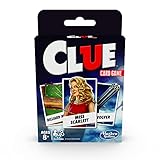
Overview: This compact Clue adaptation distills the classic whodunit mystery into a portable card game for 3–4 players. Using Evidence and Case File cards, kids deduce the culprit, weapon, and location through targeted questioning—perfect for travel or quick play sessions. What Makes It Stand Out: It cleverly translates Clue’s deduction mechanics into a card-based format, replacing notepads with cleared-card piles. The streamlined 15-minute gameplay retains the suspense of the board game while fitting in pockets, making mysteries accessible on the go. Value for Money: Priced as an impulse buy, it delivers solid entertainment for Clue fans seeking portability. However, its limited player count (3–4) and simplified deduction make it less versatile than the full board game, though excellent as a travel companion. Strengths and Weaknesses: Strengths: Faithful mystery-solving core, ultra-portable, easy setup, and ideal for ages 8+. Weaknesses: Narrow player range; lacks board game’s immersive atmosphere; deduction feels shallower with fewer variables. Bottom Line: A worthy travel-sized Clue experience for young fans, but not a full replacement for the classic board game. Recommended as a stocking stuffer or vacation distraction for puzzle-loving kids.
Why Card Games Resonate Powerfully with Teenagers
Fostering Essential Social Skills Offline
In a world saturated with digital communication, card games provide a crucial training ground for real-time social interaction. Teens practice reading non-verbal cues, managing emotions during competitive moments, negotiating trades, and collaborating towards shared goals – all within a low-stakes, fun environment. This builds empathy, conflict resolution skills, and the confidence to navigate complex group dynamics, translating directly to healthier relationships both in and out of the classroom.
Sharpening Cognitive Muscles Through Play
Don’t mistake fun for frivolous. Modern card games are intricate puzzles demanding critical thinking, pattern recognition, probability assessment, and forward planning. Whether deducing hidden information, optimizing limited resources, or adapting strategies on the fly, teens engage multiple cognitive functions simultaneously. This stealthy mental workout enhances problem-solving abilities, memory retention, and even mathematical reasoning, all wrapped in an engaging challenge that feels nothing like homework.
Creating Accessible and Inclusive Social Hubs
Card games break down social barriers with remarkable ease. They require minimal space, fit into most budgets, and don’t demand prior athletic skill or artistic talent. A single deck or compact box can transform any living room floor, park bench, or cafeteria table into a vibrant social hub. Their structured rules provide a clear framework for interaction, making it easier for shy teens to participate and for diverse friend groups to find common ground, fostering inclusivity naturally.
Key Features to Prioritize When Choosing
Optimal Player Count Flexibility
Teen gatherings are notoriously unpredictable – numbers can swell or shrink rapidly. Prioritize games that accommodate a range of players (ideally 3-6, or even more) without drastically altering the experience. Games that scale poorly often end up gathering dust. Look for clear instructions on how rules adapt for different group sizes, ensuring the fun remains consistent whether it’s a small study break or a larger weekend hangout.
Balanced Complexity and Approachability
The sweet spot lies between overly simplistic children’s games and intensely complex strategy behemoths. Teens need engaging depth without overwhelming rulesets. Aim for games where core mechanics can be grasped in 5-10 minutes, but strategic depth unfolds over multiple plays. Avoid games requiring extensive memorization of intricate rules upfront; intuitive design with “learn as you play” potential is key to preventing early frustration and abandonment.
Replayability Through Variable Setup
Monotony is the enemy of teen engagement. Seek games featuring significant randomness or variability in setup – different starting conditions, shuffled decks, or modular components. This ensures no two games play identically, maintaining excitement and encouraging repeated plays. Games relying solely on player skill without inherent variability often lose steam quickly once an optimal strategy is discovered.
Engagement Duration That Fits Real Life
Respect the teen attention span and schedule. Games ideally should have a defined playtime window of 15-45 minutes. This fits perfectly between homework sessions, after school, or as a pre-dinner activity. Avoid games notorious for “analysis paralysis” (where players take excessively long turns) or those that drag on past an hour unless they offer truly compelling, dynamic gameplay that sustains interest.
Thematic Resonance Over Generic Mechanics
While mechanics are crucial, theme matters immensely for teen buy-in. Does the game evoke a sense of adventure, mystery, humor, or social deduction that resonates with their interests? A compelling narrative or relatable scenario (even abstract ones with strong flavor) significantly boosts engagement and makes the strategic elements feel more meaningful and immersive than playing with purely abstract symbols.
Minimal Setup and Cleanup Hassle
Teens won’t gravitate towards games requiring elaborate board assembly, tracking numerous tokens, or complex initial configurations. The best options involve simply shuffling a deck, dealing cards, and diving in. Similarly, cleanup should be a matter of seconds – no hunting for tiny pieces. Low friction in starting and stopping is essential for spontaneous play sessions.
Encouraging Positive Social Dynamics
Observe the game’s inherent social flow. Does it foster enjoyable interaction, lighthearted negotiation, or cooperative problem-solving? Or does it primarily encourage backstabbing, excessive downtime for non-active players, or mechanisms that feel mean-spirited? Prioritize games that build camaraderie and leave players eager to play again, even if they lost the last round.
Physical Quality That Withstands Enthusiasm
Teens can be, well, energetic. Flimsy cards that bend, crease, or become marked after a few plays are a recipe for disappointment. Look for games using durable card stock with a smooth finish that shuffles well and resists wear. A sturdy tuck box or storage tray is also a plus for keeping components protected during transport between homes or school.
Age-Appropriate Content and Depth
While marketed for teens, scrutinize the actual content. Is the theme mature enough to feel “grown-up” without being inappropriate? Does the strategic depth feel substantial, avoiding the patronizing simplicity of younger children’s games? The best options strike a balance – feeling sophisticated and engaging for a teenage audience without unnecessary complexity or mature themes that might raise parental concerns.
Solo Play Variants as a Bonus
While the primary draw is social, some teens appreciate the option to practice mechanics or enjoy the puzzle alone. Games offering a well-designed solo mode or puzzle variant add significant value, allowing them to learn at their own pace or enjoy the game during downtime, potentially increasing overall usage and mastery.
Matching Games to Teen Personalities and Preferences
Catering to the Competitive Strategist
For teens who love chess or complex video game tactics, seek games emphasizing deep strategy, resource management, and long-term planning. Look for mechanics like tableau building, engine optimization, or intricate hand management where skill consistently outweighs luck. Clear paths to mastery and the ability to analyze past plays for improvement are major draws here.
Engaging the Social Butterfly
Teens who thrive on interaction and laughter need games bubbling with conversation, bluffing, and deduction. Prioritize social deduction games, cooperative challenges requiring constant communication, or light-hearted party games centered around creativity and quick thinking. The focus should be on the shared experience and the stories generated during play, not just the final score.
Winning Over the Casual Player
Not all teens are hardcore gamers. For those seeking low-pressure fun, choose games with extremely simple core rules, high luck elements to keep outcomes uncertain, and fast-paced action minimizing downtime. Quick card-drafting games, fast-paced set collection, or luck-driven trick-taking variants often work well. The barrier to entry must be virtually invisible.
Appealing to the Creative Thinker
Teens who love writing, art, or improvisation gravitate towards games with strong narrative elements, creative problem-solving, or open-ended mechanics. Look for storytelling games, games involving asymmetric roles with unique abilities, or those where players can express themselves through choices and interpretations within the rules framework.
Satisfying the Cooperative Spirit
With rising interest in collaborative experiences, cooperative card games are a goldmine. These require players to work together against the game system itself, fostering teamwork, communication, and shared triumph (or hilarious failure). Ensure the game avoids “alpha player” syndrome (where one person dictates all moves) and offers genuine shared decision-making.
Practical Considerations for Parents and Educators
Navigating Price Points Responsibly
Card games range significantly in cost. While premium components have value, recognize that many excellent, highly replayable games exist at accessible price points. Consider starting with smaller, focused card games before investing in larger boxed sets. Libraries and school clubs are also great resources for trying before buying.
Assessing Educational Value Beyond the Obvious
Look beyond just “math practice.” Quality card games develop executive function skills (planning, working memory, cognitive flexibility), emotional regulation (handling wins/losses), ethical reasoning (in negotiation games), and even language skills (in storytelling or deduction games). Understanding these subtle benefits helps justify the investment to skeptical adults.
Storage and Portability for On-the-Go Fun
Teens are mobile. Compact games that fit easily into a backpack are far more likely to be played consistently than bulky boxes. Prioritize games with minimal components that store neatly within their box. Tuck boxes that withstand being tossed in a bag are essential for real-world teen use.
Managing Group Dynamics Proactively
Be aware that certain game mechanics can exacerbate existing social tensions (e.g., constant player elimination or highly confrontational take-that elements). For mixed groups or sensitive dynamics, lean towards cooperative play, games with minimal direct conflict, or those with quick player turns to maintain engagement and reduce downtime frustration.
Facilitating Inclusive Play Sessions
Choose games that minimize exclusionary mechanics. Avoid games with long periods of inactivity for players. Games with simultaneous action selection, short rounds, or constant player involvement ensure everyone feels engaged throughout the session, crucial for maintaining group harmony and participation.
Frequently Asked Questions
Frequently Asked Questions
What’s the ideal age range for “teen” card games? Most suitable card games target ages 12-18, balancing theme sophistication with accessible rules. Always check specific game recommendations, as some “family” games skew younger, while others might have themes better for older teens.
How can I tell if a game is too complex before buying? Look for the “playing time” and “age recommendation” as initial guides, but focus on the “complexity” rating often found on retailer sites or board game databases. Descriptions mentioning “easy to learn” or “intuitive mechanics” are positive signs for teen adoption.
Are cooperative games better than competitive ones for teens? It depends entirely on the group. Cooperative games build teamwork and reduce direct conflict, great for mixed groups. Competitive games teach handling wins/losses and strategic rivalry. Many teens enjoy both; having options for different moods is ideal.
How important is the game’s theme really? Very important for teen engagement. A theme that feels juvenile or irrelevant will be rejected, no matter how good the mechanics. Look for themes involving strategy, mystery, adventure, humor, or social dynamics that resonate with teenage experiences.
Can card games actually help with schoolwork or focus? Absolutely. Games demanding concentration, pattern recognition, probability calculation, and strategic planning directly exercise cognitive skills applicable to math, logic, and even reading comprehension, often in a more engaging way than traditional drills.
What’s the biggest mistake parents make when choosing card games? Choosing based solely on age recommendation without considering the teen’s specific interests or the game’s actual social dynamics. A game perfect for a strategic thinker might bore a social butterfly, and vice versa.
How many players is actually ideal for most teen card games? Flexibility is key. Games accommodating 3-5 players cover the most common teen hangout sizes. Games requiring exactly 4 players often lead to frustration when someone can’t join. Always check the practical player range, not just the box minimum/maximum.
How do I handle a teen who loses badly and gets upset? Choose games with lower personal stakes (shorter playtimes, less direct conflict) initially. Emphasize the fun of the experience over winning. For highly competitive teens, discuss sportsmanship before playing. Cooperative games can also alleviate this pressure.
Are expensive games always better quality? Not necessarily. Many highly durable, engaging games are very affordable. Focus on component quality descriptions (thick card stock, good finish) rather than price alone. Sometimes a $20 game offers better teen appeal and longevity than a $60 one.
How can I encourage teens who are glued to their phones to try card games? Start with very quick, highly social games that force interaction (like light party games or fast deduction games). Play with them initially – don’t just hand them the box. Frame it as a shared activity, not a chore, and choose themes that feel relevant to their world.
See Also
- 10 Best Card Games for Teens Who Love Strategy in 2026
- 10 Tips for Finding the Perfect Card Games for Kids in 2026
- 10 Best Card Games for Kids After 6 Months of Testing in 2026
- How to Choose the 10 Best Portable Card Games for Travel in 2026
- 10 Best Card Games for Beginners Looking to Learn Deck Building in 2026