Table of Contents
Ever walked into a party where the energy was flat, and the only thing moving slower than the conversation was the ice melting in the drinks? You’re not alone. The right card game can be the spark that transforms a quiet gathering into a room buzzing with laughter, friendly competition, and genuine connection. Forget complicated rulebooks and setups that eat up half the evening – the magic lies in finding games designed for speed, simplicity, and immediate engagement. These aren’t just distractions; they’re social catalysts that get people interacting, thinking on their feet, and creating shared moments within minutes of shuffling the deck.
Fast-paced party card games thrive on immediacy. They ditch lengthy turns and intricate strategies in favor of quick decisions, constant player involvement, and mechanics that keep everyone leaning in, ready for the next twist. Whether you’re hosting a casual get-together, a game night with friends, or even a team-building event, choosing a game built for rapid-fire fun ensures the focus stays on the people, not the instructions. It’s about creating an environment where hesitation is the only real rule broken, and the next round starts before the last one’s laughter has even faded. Let’s dive into what makes these games tick and how to find the perfect fit for your next lively gathering.
Top 10 Card Games
Detailed Product Reviews
1. USAOPOLY Flip 7, The Ultimate Blend of Press Your Luck & Strategy, Fast-Paced Addictive Card Game,Quick to Learn & Easy to Teach,Perfect for Game Nights, 3+ Players, Ages 8 & Up, 20 Minutes Play Time

Overview: Flip 7 is a high-energy press-your-luck card game where players strategically draw cards to accumulate points without revealing duplicate numbers, risking a “bust” that ends their turn. Designed for quick sessions (20 minutes), it targets families and game nights with its accessible rules for ages 8+. What Makes It Stand Out: Its uniquely weighted deck—featuring twelve 12s down to one 1—creates dynamic probability shifts. Action cards like Flip Three, Freeze, and Second Chance inject constant unpredictability, transforming simple number collection into a tense strategic dance between caution and aggression. Value for Money: Priced competitively for a specialized card game, Flip 7 offers exceptional replayability through its variable deck composition and quick rounds. It outshines generic press-your-luck games by integrating layered risk mechanics without complexity, justifying its cost for frequent game-night hosts. Strengths and Weaknesses: Strengths: Highly addictive risk/reward loop; easy to teach; action cards prevent stagnation; compact and portable. Weaknesses: Luck-dependent outcomes may frustrate strategy purists; limited player count (3+ means 2-player games aren’t ideal); point-tracking required outside the box. Bottom Line: Flip 7 excels as a thrilling, accessible game-night staple. Its blend of tension, simplicity, and innovative deck design makes it a standout press-your-luck experience worth purchasing for casual and family gamers seeking quick, engaging fun.
2. Play Nine The Card Game of Golf

Overview: Play Nine reimagines golf as a card game where players aim for the lowest score by managing hand values over nine “holes.” With straightforward draw/discard mechanics, it’s tailored for family play (ages 8+) during game nights or gatherings, emphasizing simplicity and quick rounds. What Makes It Stand Out: The golf metaphor is cleverly executed—discarding high-value cards mimics avoiding strokes, while strategic card swapping creates genuine tension. Its universal theme makes scoring intuitive, and the focus on minimizing points differentiates it from most high-score-win card games. Value for Money: As an affordable, niche-themed card game, Play Nine delivers solid value through broad appeal and reusability. While not as mechanically deep as dedicated strategy games, its low price point and family-friendly design make it a worthwhile addition to casual game libraries. Strengths and Weaknesses: Strengths: Effortless rules for all ages; strong thematic integration; promotes strategic thinking via card management; portable for travel. Weaknesses: Limited strategic depth for seasoned gamers; repetitive after extended play; lacks player interaction beyond turn-based moves; no included scorepad noted. Bottom Line: Play Nine is a charming, accessible game perfect for introducing younger players to card mechanics or light family competition. Its golf twist and simplicity earn it a recommendation for households seeking stress-free, thematic entertainment.
3. Bicycle Rider Back Playing Cards, Standard Poker Size Deck of Cards, Red & Blue (2 Pack), Classic Cards for Poker, Blackjack, Family Game Night & Card Games, Fun for All Ages

Overview: This 2-pack offers Bicycle’s legendary Rider Back playing cards—red and blue decks—in standard poker size. Crafted for durability and smooth handling, they’re the industry standard for poker, blackjack, and everyday card games, trusted by both professionals and families for over a century. What Makes It Stand Out: The Air Cushion Finish ensures effortless shuffling and longevity, while the timeless Rider Back design guarantees readability and aesthetic consistency. Dual-deck inclusion (red/blue) prevents confusion in multi-game settings, and Bicycle’s 140-year reputation for quality sets it apart from generic alternatives. Value for Money: Exceptional value for two premium decks. Though slightly pricier than bargain packs, their resistance to wear, consistent performance, and versatility across countless games make them a cost-effective investment for regular players or gift-givers. Strengths and Weaknesses: Strengths: Unmatched durability and shuffle feel; iconic, non-distracting design; ideal for all card games; perfect for magic tricks; great gift potential. Weaknesses: Standard artwork may lack novelty for collectors; no custom features (e.g., jumbo indices) for specific needs. Bottom Line: Bicycle Rider Back decks are the definitive choice for reliable, high-performance playing cards. Essential for serious gamers and casual users alike, this 2-pack is a no-brainer purchase for anyone seeking enduring quality.
4. Regal Games Card Games for Kids - Go Fish, Crazy 8’s, Old Maid, Slap Jack, Garbage Monster, War - Simple & Fun Classic Family Table Games - Games May Vary (6 Set)

Overview: This 6-game set delivers classic kid-friendly card games (Go Fish, Old Maid, etc.) in one bundle, featuring oversized cards designed for children aged 4+. Focused on portability and education, it turns travel or downtime into engaging learning opportunities. What Makes It Stand Out: The extra-large card size accommodates small hands, while vibrant, clear illustrations simplify gameplay. Each game subtly builds skills—color/number recognition, memory, and reading—without feeling instructional, making it ideal for developmental play. Value for Money: Outstanding value with six distinct games in one affordable package. The durability of the cards and educational benefits justify the cost, especially compared to buying individual kids’ decks, and its portability enhances practicality for on-the-go families. Strengths and Weaknesses: Strengths: Excellent for skill development; highly portable; bright, engaging art; large cards prevent frustration; broad age range (4+). Weaknesses: “Garbage Monster” rules may confuse younger kids; some games (like War) lack strategic depth; card stock slightly thinner than premium adult decks. Bottom Line: Regal Games’ set is a top-tier starter kit for young children, blending fun, education, and convenience. Highly recommended for parents seeking screen-free, skill-building entertainment that travels well.
5. Mattel Games Phase 10 Card Game with 108 Cards, Great Game for Kids, Family or Adult Game Night, Ages 7 Years and Older
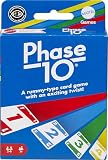
Overview: Phase 10 challenges players to complete 10 sequential phases (like sets or runs) before opponents, blending rummy mechanics with escalating objectives. This 108-card game accommodates 2–6 players ages 7+, featuring Wild and Skip cards to disrupt strategies in fast-paced rounds. What Makes It Stand Out: The phased progression—where players advance only upon completing specific combinations—creates compelling momentum. Crucially, its color-blind accessibility (using symbols alongside colors) ensures inclusivity, a rare and commendable feature in mainstream card games. Value for Money: A strong value proposition given its replayability and broad audience appeal. The specialized deck justifies its price over standard cards, especially considering its unique phase-racing mechanic and accessibility features that outclass similar rummy variants. Strengths and Weaknesses: Strengths: Addictive phase-completion drive; highly accessible rules; color-blind friendly; Wild/Skip cards add chaos; scales well for groups. Weaknesses: Luck-heavy draws can overshadow strategy; setup slightly complex for absolute beginners; limited player count flexibility at extremes. Bottom Line: Phase 10 is a must-have for family game nights, offering strategic depth, inclusive design, and energetic competition. Its innovative structure and thoughtful accessibility make it an easy recommendation for diverse player groups.
6. Five Crowns – Card Game for Kids and Adults, Travel and Family Game Night Favorite, The Game isn’t Over Until the Kings Go Wild, 5 Suited Rummy Style Card Game, 1-7 Players, Ages 8+

Overview:
Five Crowns offers a clever twist on traditional rummy, introducing a fifth “star” suit that reshapes strategy and accessibility. Designed for 1-7 players aged 8+, it excels as a flexible family game night staple or travel companion, emphasizing adaptable gameplay where rounds evolve as wild cards rotate.
What Makes It Stand Out:
The rotating wild card mechanic—where the wild suit changes each round (e.g., 3s, then 4s)—creates dynamic, unpredictable strategy shifts. Combined with the unique fifth suit, it prevents stalemates and rewards adaptive thinking. Its scalability from solo to 7 players and compact deck make it ideal for impromptu gatherings or road trips.
Value for Money:
Priced competitively against standard card games, Five Crowns delivers exceptional replayability. Unlike static rummy variants, its evolving rules sustain engagement over years, justifying the cost better than single-mechanic games. The durable deck withstands frequent travel use, outperforming cheaper alternatives.
Strengths and Weaknesses:
Strengths: Highly adaptable for varied group sizes; easy to learn but strategically deep; travel-friendly design; encourages planning and flexibility. Weaknesses: Rotating wilds may overwhelm very young children (closer to 10+ for full comprehension); limited visual appeal compared to illustrated games.
Bottom Line:
A brilliantly innovative rummy variant that balances simplicity with strategic richness. Its flexibility and durability make it a top-tier investment for families seeking a screen-free, endlessly replayable game—highly recommended for regular game nights or on-the-go fun.
7. Taco Cat Goat Cheese Pizza Wildly Entertaining Card Game for Family and Group Game Night | Easy to Learn and Play with 10-15 Minute Rounds | Fun for Kids, Teens, Adults, and Families | 2-8 Players

Overview:
Taco Cat Goat Cheese Pizza (TCGCP) is a high-energy slap game where players race to match shouted words (“Taco!”) with corresponding cards. Designed for 2-8 players aged 7+, it delivers frantic, 10–15-minute rounds of laughter, making it perfect for parties, travel, or quick family breaks.
What Makes It Stand Out:
The game’s genius lies in its simplicity: chant the title while playing cards, then slap the pile when a match occurs. Action cards (“Nopes,” “Attack”) escalate chaos, ensuring no two rounds feel alike. Its lightning-fast pace and physical engagement create infectious, inclusive fun that transcends age barriers.
Value for Money:
At a modest price, TCGCP offers unparalleled entertainment density. Rounds are short yet intensely engaging, maximizing enjoyment per play session. It outperforms pricier party games by requiring zero setup and delivering instant laughs—ideal for group gifting or stocking stuffers.
Strengths and Weaknesses:
Strengths: Effortless to learn; wildly inclusive for all ages; superb travel size; boosts reflexes and focus; minimal rules reduce friction. Weaknesses: Physical slapping may frustrate sensitive players; repetitive after extended play; card durability concerns with aggressive use.
Bottom Line:
A near-perfect party game that transforms any gathering into a laughter-filled frenzy. Its blend of simplicity, speed, and universal appeal makes it a must-have for families and social hosts—purchase it for guaranteed crowd-pleasing fun.
8. Bicycle Jumbo Index Playing Cards , 2 Pack Large Print Poker Size Deck of Cards for Easy Reading, Family Card Games, and Casino Play
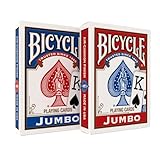
Overview:
Bicycle’s Jumbo Index Playing Cards solve a common pain point: hard-to-read standard decks. This 2-pack features oversized numbers and suits on poker-sized cards, catering to seniors, kids, or anyone needing clarity during games like poker, rummy, or family favorites.
What Makes It Stand Out:
The jumbo index (nearly double standard size) ensures instant readability from across the table, eliminating squinting. Paired with Bicycle’s legendary Air-Cushion Finish for smooth shuffling, it merges accessibility with professional-grade handling—rare in large-print decks.
Value for Money:
The dual-deck bundle offers exceptional value, providing backups for travel or multi-game households. While slightly pricier than basic decks, Bicycle’s USA-made durability and lifetime replacement guarantee justify the cost, outlasting flimsy alternatives.
Strengths and Weaknesses:
Strengths: Unmatched readability; premium shuffle/handling; versatile for all card games; durable finish; ideal for vision-impaired players. Weaknesses: Bulky for advanced cardistry; minimal aesthetic flair; overkill for experienced players with sharp vision.
Bottom Line:
An essential upgrade for accessible, frustration-free gameplay. Whether for senior centers, family nights, or casual poker, these decks deliver Bicycle’s trusted quality with vital inclusivity—highly recommended for practical, long-term use.
9. Mattel Card Game Set (Skip Bo, Uno & Phase 10)

Overview:
This Mattel trio bundles three iconic card games—Skip-Bo, Uno, and Phase 10—into one value-packed set. Each offers distinct mechanics: Skip-Bo focuses on sequencing, Uno on color/number matching, and Phase 10 on completing card sets, covering a broad spectrum of family-friendly fun.
What Makes It Stand Out:
Owning three bestsellers in one box eliminates decision fatigue for game nights. Skip-Bo’s stacking strategy, Uno’s chaotic action cards, and Phase 10’s progressive challenges provide varied experiences, ensuring fresh entertainment without additional purchases.
Value for Money:
Priced lower than buying games individually, this set is a budget-savvy gateway to classic gameplay. It’s ideal for new game enthusiasts or families wanting versatile options, offering years of replayability across different skill levels and group sizes.
Strengths and Weaknesses:
Strengths: Diverse gameplay styles; trusted Mattel rules; compact storage; great for teaching game fundamentals; appeals to ages 7+. Weaknesses: No innovative twists on originals; Phase 10/Skip-Bo rules may confuse very young kids; cards lack premium finish.
Bottom Line:
A smart, economical starter kit that delivers three timeless games in one package. Perfect for households seeking reliable, screen-free entertainment—recommended for families wanting proven fun without complexity.
10. Mattel Games UNO Card Game in Travel & Storage Tin for Kid, Adult & Family Nights & Parties, Color Blind Accessible & Customizable Deck (Amazon Exclusive)

Overview:
This UNO edition reimagines the classic matching game with two key innovations: color-blind accessibility (via suit-like symbols) and a portable tin. Designed for 2–10 players, it retains UNO’s core “match colors/numbers” rush while solving common play barriers.
What Makes It Stand Out:
The color-accessible design (e.g., diamonds for red, squares for yellow) is revolutionary, inclusively welcoming color-blind players without altering gameplay. The travel tin doubles as storage and a card shuffler, while three blank Wild Cards let families invent custom rules—boosting replay value.
Value for Money:
Priced slightly above standard UNO, the tin’s durability and inclusive features justify the premium. The customizable cards add unique longevity, making it a superior investment over disposable paper decks, especially for frequent travelers.
Strengths and Weaknesses:
Strengths: Truly inclusive design; sturdy, portable tin; creative potential with blank cards; retains UNO’s addictive simplicity. Weaknesses: Tin limits card-shuffling space; symbols initially distract non-color-blind players; blank cards require rule consensus.
Bottom Line:
A thoughtfully evolved UNO that sets a new standard for accessibility and portability. Essential for inclusive game nights and travelers—highly recommended for modernizing a timeless favorite.
Understanding the Core Appeal of Speed in Party Card Games
Why Pace Makes the Party
The true value of a fast-paced card game lies in its ability to sustain momentum and inclusivity. When turns are short and consequences immediate, players who might feel intimidated by complex strategy games stay engaged. There’s no downtime to check phones or drift away; the constant flow of action pulls everyone back into the fold. This relentless pace creates a shared rhythm, a collective heartbeat for the group, making victories feel earned in the moment and losses easy to brush off with a laugh. Speed isn’t just about playing quickly; it’s about maximizing interaction and keeping the social energy consistently high.
The Psychology of Instant Gratification
Fast-paced mechanics tap into a fundamental human preference: immediate feedback. When a player makes a choice and sees the result – a point scored, a rival thwarted, a hilarious outcome – within seconds, it triggers a satisfying dopamine hit. This constant reinforcement loop keeps players invested and eager for the next play. Unlike games requiring deep planning where the payoff is delayed, these card games deliver frequent, small wins (or amusing setbacks) that maintain excitement and lower the barrier to entry for casual players. It’s this instant cause-and-effect that transforms a simple card play into a memorable, shared experience.
Essential Features for Lightning-Fast Gameplay
Simultaneous Action Selection
Games where players make choices at the exact same time, rather than taking sequential turns, are the undisputed champions of speed. This mechanic eliminates waiting entirely. Everyone acts independently but concurrently, then reveals their choices together, creating moments of surprise and collective reaction. This approach not only drastically cuts down round time but also fosters a unique tension – you’re strategizing based on what you think others will do, all within a matter of seconds. The lack of turn order means no one feels sidelined, keeping the entire group perpetually in the game.
Minimal Setup and Reset Time
The best party card games get you from “let’s play” to “game on” in under a minute. This means incredibly straightforward initial setup – often just shuffling a single deck and dealing a few cards. Crucially, resetting between rounds or games must be equally swift. Games relying on complex board setups, intricate token placement, or lengthy scoring procedures sabotage the very speed they promise. Look for designs where clearing the play area and dealing the next hand happens almost instinctively, allowing the fun to cascade seamlessly from one round to the next without disruptive pauses.
Streamlined Rule Sets
Complexity is the enemy of pace. Truly fast games boast rule sets that can be explained in two to three concise sentences, often grasped intuitively through the first round of play. Core mechanics should be immediately apparent: “Match colors,” “Play higher than the last card,” or “Grab the token when the condition is met.” Ambiguous edge cases or layers of exceptions bog things down. The ideal game has a single, crystal-clear objective supported by mechanics so intuitive that players feel confident making decisions within seconds, not minutes. Simplicity here isn’t a lack of depth; it’s a design triumph enabling speed.
Optimizing for Player Groups and Dynamics
Flexible Player Count Sweet Spots
While many games tout a wide range (e.g., 2-10 players), true party speed often shines within a specific “sweet spot” – usually 4 to 8 participants. Too few players can make simultaneous mechanics feel sparse, while too many can lead to slight delays in coordination or reduced individual interaction frequency. The best designs maintain their breakneck pace across their entire intended range by adjusting core mechanics subtly (like card distribution or win conditions) rather than just adding more seats. Pay attention to reviews or descriptions highlighting how the game feels at different counts, not just the numbers listed on the box.
Accommodating Mixed Experience Levels
The hallmark of a great party game is its ability to seamlessly integrate seasoned gamers and complete newcomers. Fast-paced card games achieve this through intuitive actions and low-stakes consequences. Mistakes should be funny, not frustrating, and the rules simple enough that a first-timer can grasp the next play within a single round. Avoid games where deep strategic knowledge from previous plays creates a significant advantage; the focus should be on the immediate, shared moment. This inclusivity ensures everyone feels part of the action, not just spectators waiting for experts to finish their turns.
Encouraging Active Participation Over Observation
Downtime is the kryptonite of party energy. Games requiring players to wait passively while others take extended turns inevitably lose engagement. The fastest, most engaging games ensure every participant has a meaningful decision or action every single round, often within seconds of the previous play concluding. Mechanics like constant hand management, rapid reaction elements, or ongoing sub-objectives prevent anyone from checking out. When every player feels perpetually “in the game,” the energy remains high, conversations stay vibrant, and the pace never dips.
Physical Design Elements That Accelerate Play
Card Size and Handling Ergonomics
The physicality of the cards matters more than you might think. Oversized cards can be cumbersome to hold and shuffle quickly, especially with a full hand. Standard poker-sized cards are often ideal for rapid handling, fitting comfortably in most hands and allowing for quick fanning and selection. Smooth cardstock with a good finish ensures cards slide easily during shuffling and dealing, preventing frustrating snags or jams that kill momentum. Think about how the cards feel in your hand during a frantic round – they should be tools for speed, not obstacles.
Visual Clarity at a Glance
When decisions need to be made in seconds, players can’t afford to squint or decipher tiny icons. Fast-paced games demand exceptional visual design: large, bold numbers and symbols; high-contrast colors; and uncluttered card layouts. Critical information (like a card’s value, suit, or special action) must be instantly recognizable from across the table, even in typical party lighting. Avoid games with intricate artwork that obscures functional elements or requires close inspection. Clear, immediate visual communication is non-negotiable for maintaining breakneck speed and reducing rule disputes.
Components That Enable Instant Resolution
Beyond the cards themselves, consider any additional components. Tokens or markers should be large enough to grab quickly and placed in central, accessible locations. Games relying on physical dexterity elements (like slapping a pile) need components that respond reliably and safely at high speed. Even the direction of play matters – clockwise/counter-clockwise flow should feel natural and unambiguous to avoid hesitation. Every physical aspect, from card thickness to token shape, should be optimized for actions that happen in the blink of an eye, ensuring the game mechanics translate smoothly into real-world speed.
Thematic and Social Elements Fueling the Fire
Themes That Enhance, Not Hinder, Speed
A strong, relatable theme can significantly boost engagement without slowing things down. Abstract mechanics are fine, but themes like “quick-thinking auction,” “lightning-fast matching race,” or “simultaneous bidding chaos” provide immediate context that aids understanding. The key is that the theme directly supports the core fast-paced mechanic, making actions feel intuitive (“Oh, I’m racing to match the pattern!”). Avoid overly complex narratives or thematic elements that require referencing charts or remembering lore; the story should emerge from the rapid gameplay itself, not precede it.
Built-In Social Catalysts
The fastest games often incorporate mechanics that force interaction, negotiation, or playful chaos between players. Simple elements like “steal a card,” “force a player to draw,” or “simultaneously bet against each other” create instant moments of connection, laughter, and friendly rivalry. These aren’t deep social deduction layers, but quick, low-stakes interactions that happen organically within the rapid flow of play. Look for games where the mechanics naturally spark conversation, teasing, or shared surprise every single round, turning individual plays into group experiences.
Embracing the Chaos of Speed
Part of the fun of ultra-fast card games is the controlled chaos they generate. The best designs anticipate and embrace the slight messiness that comes with rapid play – cards flying, simultaneous shouts, quick grabs. Rules should be robust enough to handle this energy without constant arbitration, perhaps using clear visual cues or simple resolution hierarchies. A game that feels fragile or overly precise under pressure will frustrate players when the pace quickens. Seek out designs where the inherent energy of fast play is part of the intended, enjoyable experience, not a bug to be avoided.
Practical Considerations for Your Next Gathering
Space Requirements for Frenetic Fun
Don’t underestimate how much room a fast-paced game might need, especially with multiple players. Games involving slapping central piles, throwing cards, or reaching across the table demand a clear, uncluttered surface. Measure your intended play area beforehand. A cramped coffee table might work for a slow strategy game but will become a hazard during a rapid-reaction card slapping match. Ensure there’s ample space for cards to be played centrally, for players to move hands quickly, and for inevitable moments of excited leaning in. Comfortable spacing prevents accidental disruptions to the game flow.
Noise Level and Environmental Fit
That roaring laughter and simultaneous shouting are great signs… unless you’re in a quiet library or a small apartment late at night. Consider the acoustic footprint of the game. Games relying on quick verbal calls, auctions, or reactions will naturally be louder than silent matching games. Be realistic about your venue and time of day. A game perfect for a backyard BBQ might be disastrous in a hotel room at 11 PM. Choose a game whose inherent energy level – including its expected noise – complements, rather than clashes with, your specific party environment.
Budget and Long-Term Value
While cost shouldn’t be the sole factor, it’s worth considering the value proposition of a fast-paced card game. A higher-quality deck that withstands years of shuffling, dealing, and the occasional enthusiastic slam offers better long-term value than a flimsy box that falls apart after a few parties. However, avoid assuming price equals suitability for speed. Some incredibly effective, rapid-play games are remarkably affordable. Focus on the core mechanics and component durability relative to how often you’ll actually play it at high speed. A $20 game you pull out constantly for quick fun beats a $50 game gathering dust because it’s too slow or complex.
Finding Your Perfect Fast-Paced Match
Leveraging Trusted Review Sources
When searching for these games, bypass generic “top 10” lists. Seek out reviews from sources known for deep dives into gameplay mechanics, specifically mentioning “pace,” “downtime,” “simultaneous play,” and “setup time.” Look for phrases like “gets everyone playing immediately,” “rounds fly by,” or “no one checks their phone.” Board game podcasts or YouTube channels focusing on “filler games” or “party games” are often goldmines, as these categories prioritize brevity and speed. Pay attention to reviewers describing the physical experience of playing fast – the sound, the movement, the lack of hesitation.
The Power of Demo Days and Game Stores
Nothing beats actually playing a game before buying it, especially for assessing pace. Seek out local game stores that host open play nights or demo days. Watching a group play a game is also incredibly informative – observe how long turns take, where players hesitate, and the overall energy level. Notice if people are leaning in, reacting instantly, or if there are lulls. A game that looks fun on paper can feel sluggish in practice. Hands-on experience is the best way to judge whether the speed and energy match your party vision. Don’t be shy to ask store staff for recommendations specifically for “quick setup, constant action” games.
Avoiding Common Speed Traps
Beware of games masquerading as fast-paced that have hidden slowdowns. Watch out for: games with “simple rules” that have numerous confusing exceptions; those requiring frequent scoring that interrupts flow; “simultaneous” play that actually involves complex multi-step decisions; or themes so heavy they necessitate constant rule referencing. Also, be skeptical of games claiming “30-second setup” if resetting between rounds takes minutes. Scrutinize descriptions for verbs: “players quickly…” is good; “players carefully consider…” or “the group discusses…” often signals slower pace. True speed is relentless, not intermittent.
Frequently Asked Questions
Frequently Asked Questions
How many players is ideal for the fastest-paced card game experience? Most games designed for pure speed shine brightest with 4 to 7 players. This range provides enough interaction and potential chaos to fuel the energy without causing significant delays in simultaneous actions or creating players who feel less involved. Fewer players can sometimes feel too sparse, while very large groups (8+) might introduce slight coordination hiccups, though excellent designs minimize this.
Can truly fast-paced card games work well with mixed ages, like teens and adults? Absolutely, and this is a major strength. The key is finding games with intuitive mechanics and low-stakes outcomes where complex strategy isn’t king. Games relying on quick reflexes, simple pattern matching, or simultaneous bidding often level the playing field. Avoid games with mature themes or where deep experience creates a huge advantage; focus on immediate, accessible actions that anyone can grasp and enjoy within the first round.
What’s the biggest mistake people make when choosing a “fast” party card game? Overlooking reset time between rounds. A game might have a quick first setup, but if clearing the table, re-shuffling extensively, or recalculating scores takes longer than the actual round, the momentum dies. True speed requires the entire cycle – from the end of one round to the start of the next – to be seamless and swift, often under 15 seconds. Always check if reviews mention how smooth the transition between rounds is.
Do these fast games lack depth or replayability compared to slower strategy games? Not necessarily. Depth in fast-paced games comes from emergent chaos, player interaction, and the challenge of adapting instantly to changing situations within simple frameworks. Replayability stems from high variability in each round (due to card draws or player choices), the social dynamics of different groups, and the sheer fun of the rapid mechanics. They offer a different kind of depth – immediate, social, and dynamic – rather than long-term strategic planning.
How can I tell if a game’s “simple rules” are actually easy to grasp during a fast game? Look for rule explanations that emphasize the core action in one sentence: “Play a card matching the top pile’s color or number,” “Grab the token when the symbol matches,” “Bid secretly using your cards.” Avoid games where the core explanation requires multiple conditional statements (“If X happens, then do Y, unless Z is true…”). The best fast-game rules feel intuitive after seeing just one example round, with minimal need for reference during play.
Are there fast-paced card games suitable for quieter settings or smaller groups? Yes, though the energy will differ. Look for games focused on quick simultaneous deduction, silent bidding, or rapid pattern completion without shouting. Games designed for 2-4 players often achieve speed through very short individual turns or direct head-to-head mechanics. The pace remains high, but the volume and physicality might be lower, making them suitable for cafes, libraries (during open hours!), or intimate gatherings where loud chaos isn’t appropriate.
What physical space do I realistically need for a fast card game with 5 people? A clear, flat surface of at least 3x2 feet is generally sufficient. This allows for a central play area (for discards, tokens, or a draw pile), enough room for each player to hold a small hand of cards, and space for quick movements like reaching for a central pile. Avoid cluttering the edges with drinks or snacks that could get knocked over during enthusiastic plays. Comfortable seating with unobstructed access to the center is key.
How important is card quality for maintaining speed during repeated plays? Crucially important. Flimsy cards that bend easily, stick together, or are hard to shuffle become major speed bumps during a frantic game. Thicker cardstock with a smooth, durable finish ensures cards fan easily, deal quickly, slide during play, and withstand the inevitable shuffling and handling of multiple rounds in one night. Don’t skimp here – poor card quality directly undermines the game’s intended pace and can ruin the experience.
Can fast-paced card games work effectively as icebreakers for new groups? They are often perfect icebreakers. The shared focus on the rapid game mechanics provides instant common ground and a reason to interact. The low barrier to entry (simple rules, quick rounds) prevents new players from feeling overwhelmed, while the inherent fun and laughter break down social barriers faster than forced conversation. The fast pace also means awkward silences are rare, as the game constantly propels the interaction forward.
How do I handle rule disputes without killing the fast pace? Choose games with unambiguous resolution! The best fast-paced designs minimize disputes through clear visual cues on cards, simple priority rules (“highest number wins,” “play clockwise”), and mechanics where outcomes are instantly visible to all (like simultaneous reveal). Before playing, quickly agree on the one tiebreaker rule. If a rare dispute arises, make a quick, fair call (“let’s flip a card for it!”) and move on immediately – preserving the game’s energy is more important than absolute precision in a casual party setting.