Table of Contents
Breathing new life into your favorite card games often comes down to one critical factor: expansions that fundamentally transform the replay experience. Whether you’re staring at a well-worn deck that’s become predictable or seeking fresh challenges with your regular gaming group, the right expansion can turn a static collection into an ever-evolving strategic landscape. This year, the design philosophy behind card game expansions has shifted dramatically toward modular, mix-and-match content that rewards repeated play while respecting your initial investment.
Understanding what makes an expansion truly replayable requires looking beyond simple card count or flashy new mechanics. The most valuable additions create emergent gameplay—where combinations you never anticipated become possible, and each session reveals new strategic depths. From variable setup systems that change the game’s foundation to asymmetric player powers that demand completely different approaches, modern expansions are built with longevity as their primary goal. Let’s explore the essential elements that separate transformative expansions from forgettable add-ons.
Top 10 Card Game Expansions
Detailed Product Reviews
1. Unstable Games - Happy Little Dinosaurs: Dating Disasters Expansion Pack - Cute Card Game for kids, teens, & adults - Dodge life’s disasters! - 2-4 players, Ages 8+ - Great for game night

Overview:
The Dating Disasters expansion injects 54 new cards into the Happy Little Dinosaurs universe, transforming the meteor-dodging survival theme into the equally perilous world of modern romance. Designed for 2-4 players and compatible with the base game, this add-on maintains the original’s charming artwork and family-friendly appeal while exploring awkward first dates, friendzone entrapments, and premature “I love you” declarations. With a 30-60 minute runtime, it seamlessly integrates into game night rotations.
What Makes It Stand Out:
This expansion brilliantly translates the base game’s disaster-avoidance mechanic to relatable dating scenarios that resonate across generations. The humor stays appropriately cheeky for ages 8+ without crossing into mature territory, making it rare among card game expansions. Cards like “Giant Catfish” and premature declarations capture contemporary dating culture in a way that’s accessible to teens yet amusing for adults. The thematic consistency preserves the core game’s appeal while offering fresh narrative angles.
Value for Money:
At 54 cards, this is a modestly priced expansion that delivers targeted content rather than bulk volume. Compared to generic expansions, its specialized theme provides higher replay value for groups who enjoy storytelling elements. The quality illustration work and thoughtful scenario writing justify the premium over basic card packs. For regular players of the base game, it effectively doubles the dating-related content without redundancy.
Strengths and Weaknesses:
Strengths: Family-appropriate dating humor; clever thematic integration; high-quality card stock and artwork; extends base game replayability. Weaknesses: Requires the main game; limited card count may feel slight for the price; humor won’t land for players seeking edgier content; dating theme has limited appeal for younger children.
Bottom Line:
An essential add-on for Happy Little Dinosaurs enthusiasts wanting to freshen their deck with relatable, laugh-out-loud dating scenarios. Best suited for families with teens or adult groups preferring wholesome humor.
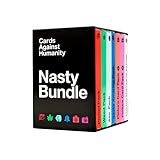
2. Cards Against Humanity: Nasty Bundle • 6 Nasty Themed Packs + 10 All-New Cards
Overview:
The Nasty Bundle consolidates six of Cards Against Humanity’s most provocative themed packs into one comprehensive expansion, augmented with ten exclusive cards. This collection includes the Period Pack, Weed Pack, Ass Pack, Saves America Pack, and both Picture Card Packs—content deemed too risqué for mainstream retail. Requiring the main game and restricted to ages 17+, this bundle deliberately pushes boundaries for mature audiences.
What Makes It Stand Out:
This compilation offers unprecedented thematic depth for dedicated CAH players, covering everything from bodily functions to political satire. The ten brand-new exclusive cards provide immediate value over buying packs individually. The Picture Card Packs introduce visual elements that transform gameplay dynamics beyond text-only cards. It’s essentially a “greatest hits” of CAH’s most controversial content, curated for groups who believe the standard deck isn’t transgressive enough.
Value for Money:
Purchasing these six packs separately would cost significantly more, making the bundle economically sensible for collectors. The ten exclusive cards add rarity value, while the Picture Cards represent a gameplay evolution worth the investment. For regular players who’ve exhausted standard expansions, this offers the highest shock-per-dollar ratio available. However, the niche appeal means casual players won’t utilize the full breadth of content.
Strengths and Weaknesses:
Strengths: Massive thematic variety; exclusive content; picture cards add visual dimension; cost-effective bundle pricing. Weaknesses: Extremely niche humor; high potential to offend; requires main game; some themed packs may never see play depending on group preferences; not for casual players.
Bottom Line:
Perfect for hardened CAH veterans seeking the edgiest, most specialized content. Avoid if your group has any sensitivity boundaries—this bundle exists specifically to demolish them.
3. Cards Against Humanity: Hot Box • 300-Card Expansion • Most Recent one

Overview:
The Hot Box represents Cards Against Humanity’s latest massive content infusion, delivering 300 fresh cards marketed as their most scorching expansion yet. Positioned as a new era for the franchise, this substantial addition promises extra-spicy humor while maintaining the classic fill-in-the-blank format. Like all CAH expansions, it requires the base game and carries the standard 17+ age restriction, targeting seasoned players seeking volume and novelty.
What Makes It Stand Out:
The sheer volume alone distinguishes the Hot Box from typical 100-card expansions, essentially tripling the injection of new content in one purchase. The “extra spicy” branding suggests edgier, more contemporary humor reflecting current cultural moments. As the most recent major expansion, it contains the company’s latest writing sensibilities, potentially resonating better with modern audiences than older packs. The 300-card count makes it a one-stop deck refresh.
Value for Money:
On a per-card basis, the Hot Box offers superior value compared to smaller expansions, effectively providing three standard boxes in one. For groups playing CAH regularly, this single purchase can make the game feel brand new without buying multiple separate expansions. The premium pricing is justified by both volume and the development of fresh, timely content. It’s the most efficient way to significantly expand your deck’s variety.
Strengths and Weaknesses:
Strengths: Exceptional card volume; contemporary humor; excellent cost-per-card value; refreshes gameplay for veteran groups. Weaknesses: Requires base game; “extra spicy” may alienate some players; lacks thematic focus; no exclusive rarity factor; large addition can imbalance deck ratios.
Bottom Line:
The Hot Box is the definitive expansion for active CAH players wanting maximum content with minimum purchases. Its volume and freshness make it the smartest single expansion investment available.
4. Dutch Blitz: Purple Expansion Pack - Use Alone Or w/ Original Deck to Play w/ 2-4 Players, 4 New Card Colors, Fast Paced Fun, Card Game, Ages 8+

Overview:
The Purple Expansion Pack for Dutch Blitz introduces four new card colors and symbols, enabling expanded player counts while functioning as a standalone 2-4 player game. This versatile addition embodies Dutch Blitz’s signature high-energy, pattern-recognition gameplay, allowing up to eight players when combined with original decks. Designed for ages 8+, it maintains the frantic pace that makes the base game a party favorite while solving the common problem of player limitations.
What Makes It Stand Out:
Unlike typical expansions that merely add content, this fundamentally transforms Dutch Blitz’s social dynamics by doubling maximum player capacity. The new purple-themed symbols provide visual clarity when managing eight simultaneous piles, preventing the confusion that often plagues expanded player counts. Its ability to function independently as a complete game provides unmatched flexibility—you’re essentially getting a bonus game plus an expansion in one package, a rarity in the card game market.
Value for Money:
The standalone capability delivers immediate value, essentially providing a complete second game for the price of an expansion. For owners of the original, the ability to host 5-8 player games dramatically extends the game’s utility for larger gatherings. Compared to buying a second full copy, this expansion is more economical while offering the new symbols that improve gameplay at higher counts. It’s a strategic purchase for party game hosts.
Strengths and Weaknesses:
Strengths: Enables 8-player games; standalone functionality; new symbols improve clarity; extends game longevity. Weaknesses: Requires original deck for full 8-player experience; increased player count reduces individual playtime; can become chaotic; colorblind accessibility concerns with new hues.
Bottom Line:
Essential for Dutch Blitz fans who regularly host larger groups. The standalone bonus makes it worthwhile even for casual players, but maximum value requires owning the original deck.
5. More Cards Against Humanity • 600-card Essential Expansion • Includes The Best Cards from The Red, Blue, & Green Boxes

Overview:
More Cards Against Humanity delivers a massive 600-card compilation that essentially doubles the size of the base game, harvesting the best content from the original Red, Blue, and Green expansions while adding 50 entirely new cards. This essential collection is positioned as the ideal starting point for expansion purchases, though its volume technically enables standalone play. It represents a curated “greatest hits” approach, distilling years of CAH content into one comprehensive package.
What Makes It Stand Out:
The compilation strategy provides exceptional quality control, ensuring every card meets a higher standard than random expansion packs. The inclusion of 50 brand-new cards gives even veteran collectors fresh content, while the 550 curated cards eliminate the filler that plagues some expansions. Its potential to function as a standalone game—though not officially recommended—makes it uniquely versatile. The “shiny” packaging and presentation add collector appeal.
Value for Money:
This offers the best per-card value in the CAH ecosystem, effectively providing six standard expansions in one. For newcomers, it’s the only purchase needed to achieve endless replayability. For existing owners, it consolidates the best of early expansions while adding exclusives. The curation means zero waste—every card has been community-tested and proven effective. No other expansion delivers this efficiency, making it the smartest CAH investment regardless of ownership status.
Strengths and Weaknesses:
Strengths: Unmatched card volume; curated quality; 50 exclusive cards; standalone potential; best price-per-card ratio. Weaknesses: May duplicate cards for existing collectors; no thematic organization; requires substantial storage; lacks the “new era” feel of recent expansions.
Bottom Line:
The definitive CAH expansion purchase. Whether you’re a first-time buyer or seasoned player, this compilation offers unmatched quantity and quality that will revitalize any game night.
6. Pandasaurus Games Sea Salt & Paper: Extra Pepper Card Game Expansion - Add 12 Effect Cards for Dynamic New Rules and Surprising Twists for Kids & Adults, Ages 8+, 2-4 Players, 45 Minute Playtime

Overview: The Extra Pepper expansion for Sea Salt & Paper adds 12 effect cards that fundamentally alter the base game’s elegant simplicity. This mini-expansion introduces random rule modifications that apply globally each round, then follow individual players afterward, creating dynamic strategic layers. Designed for ages 8+ and requiring the base game, it promises to refresh gameplay for 2-4 players.
What Makes It Stand Out: Unlike typical expansions that just add content, Extra Pepper transforms the game’s DNA. Each round begins with a random effect card that modifies scoring, actions, or conditions for everyone. The twist comes when that effect “follows” a player into the next round, creating ongoing strategic implications. This dual-layer approach ensures no two games feel alike.
Value for Money: As a modestly priced expansion, it punches above its weight. Twelve cards may seem limited, but their systemic impact provides exceptional replayability. Compared to buying a whole new game, this offers a cost-effective way to dramatically refresh your Sea Salt & Paper experience.
Strengths and Weaknesses: Strengths include high replayability, simple integration, and clever design that maintains the base game’s accessibility while adding depth. The ongoing player effects create memorable moments and new strategies. Weaknesses: requires the base game; some purists may find the randomness detracts from the original’s elegance; limited card count might disappoint those expecting more content.
Bottom Line: Essential for Sea Salt & Paper enthusiasts who’ve mastered the base game. The clever effect system breathes new life into every session. However, casual players who enjoy the original’s simplicity might find it unnecessarily complex. Perfect for groups seeking variety without learning an entirely new game.
7. Cards Against Humanity

Overview: Cards Against Humanity is the infamous adult party game that built its reputation on provocative, dark humor. Version 2.0 delivers 600 total cards (500 white answer cards, 100 black question cards) with over 150 new additions, maintaining its position as the go-to game for irreverent entertainment among consenting adults.
What Makes It Stand Out: The game’s genius lies in its simplicity and shock value. Players fill in blanks on black cards with often inappropriate white cards, creating combinations that range from hilariously absurd to genuinely offensive. The included alternate rules booklet encourages players to invent their own variants, extending longevity beyond standard gameplay.
Value for Money: With 600 cards for a reasonable price point, the replayability is virtually unlimited. The sheer volume of card combinations ensures fresh experiences across countless sessions. Compared to other party games, it offers exceptional content density and remains competitively priced despite its market dominance.
Strengths and Weaknesses: Strengths include massive replayability, easy-to-learn rules, and unmatched potential for laughter in the right group. The writing quality remains consistently sharp and topical. Major weakness: the humor is deliberately offensive and absolutely not suitable for all audiences, workplaces, or family gatherings. Some cards may feel dated or cross personal boundaries even for open-minded players.
Bottom Line: A must-own for adult game nights with like-minded friends who appreciate boundary-pushing humor. Its cultural impact is undeniable. However, know your audience—this will alienate or offend many. If your group enjoys edgy comedy, it’s unbeatable. Otherwise, steer clear entirely.
8. Dutch Blitz: Original and Expansion Combo, Fast Paced Card Game, Fun for Everyone, Great Family Game, Combine Packs to Play With 2-4 Players, For Ages 8 and Up

Overview: Dutch Blitz is a high-velocity card game that combines elements of solitaire and speed. This combo pack includes both the original game and its expansion, allowing 2-4 players to compete simultaneously. With a mere 15-minute playtime, it’s designed as an accessible family game for ages 8 and up.
What Makes It Stand Out: The game’s relentless pace creates genuine adrenaline-fueled excitement. Players race to empty their “Blitz” pile by playing cards in sequence to central piles, simultaneously building personal stacks. The simultaneous play eliminates downtime, keeping everyone engaged throughout. The Amish-themed artwork adds unique cultural flavor.
Value for Money: Purchasing this combo is more economical than buying the base game and expansion separately. For families seeking quick, replayable entertainment, it offers excellent value. The short playtime encourages multiple rounds in a single sitting, maximizing entertainment per dollar spent.
Strengths and Weaknesses: Strengths include lightning-fast gameplay, easy rules, genuine skill development (pattern recognition, speed), and broad age appeal. The simultaneous action prevents boredom. Weaknesses: the physical card quality can suffer with heavy use; some may find the Amish theme dated; player count is limited to 4 maximum even with both sets; can be overwhelming for those who prefer strategic depth over speed.
Bottom Line: Ideal for families seeking energetic, quick-play card games. It excels as a warm-up game or palate cleanser between heavier titles. While not strategically deep, its pure kinetic fun is infectious. Consider this combo over individual purchases if you regularly game with 3-4 players.
9. Dutch Blitz: Expansion Pack, Use Expansion Pack Alone or with Original Deck to Play with 2-4 Players, 4 New Card Colors, Fast Paced Fun for Everyone, for Ages 8 and Up

Overview: The Dutch Blitz Expansion Pack adds four new card colors to the original game, enabling play for up to 8 players when combined with the base set. Alternatively, it functions as a standalone 2-4 player game with modified rules. This versatility makes it a flexible addition to the Dutch Blitz ecosystem.
What Makes It Stand Out: The expansion’s clever design allows it to work independently or integrated, effectively giving you two games in one. The new colors (with swapped symbols: carriage, bucket, pump, plow) maintain visual clarity even with larger groups. This scalability transforms Dutch Blitz from a family game into a party game capable of handling bigger gatherings.
Value for Money: As a modestly priced expansion, it offers strong value for those wanting to increase player count. The standalone capability provides backup entertainment if you don’t own the original. However, if you already have the base game and rarely play with more than four, its utility diminishes.
Strengths and Weaknesses: Strengths include versatility (standalone or expansion), quality components matching the original, and the ability to scale to 8 players. The design maintains gameplay integrity at higher counts. Weaknesses: requires original for optimal 8-player experience; adding more players increases chaos and reduces individual agency; some may find the theme variations confusing; doesn’t add new mechanics, just more capacity.
Bottom Line: Essential for Dutch Blitz fans who regularly host larger groups. The standalone feature is a nice bonus. For those satisfied with 2-4 player games, it’s skippable. Consider your typical player count before purchasing—this solves a specific problem rather than enhancing gameplay depth.
10. Cards Against Humanity: 2000s Nostalgia Pack • Mini Expansion

Overview: The 2000s Nostalgia Pack is a mini-expansion for Cards Against Humanity featuring 30 cards dripping with early millennium references. From chunky highlights to Bush-era conspiracy theories, it targets millennials seeking to relive their formative years through the game’s signature irreverent lens. Requires the base game.
What Makes It Stand Out: This pack’s specificity is its strength. The cards capture 2000s culture with surgical precision—bootcut jeans, Miranda from Sex and the City, and “dude, where’s my car?” references create instant recognition for the target demographic. It doesn’t just add cards; it adds a thematic time capsule that resonates deeply with a specific generation.
Value for Money: As a mini-expansion, it’s priced accordingly but offers less raw content than full expansions. Thirty cards for a few dollars is standard for CAH expansions. The value depends entirely on whether you and your friends lived through and remember the 2000s fondly. For the right group, the nostalgia factor justifies the cost.
Strengths and Weaknesses: Strengths include perfectly targeted humor, seamless integration with base game, and refreshing content for veteran players tired of older cards. The cultural references are sharp and specific. Weaknesses: extremely niche appeal—Gen Z players may be lost; requires base game; limited card count means impact diminishes quickly; some references may feel dated or obscure.
Bottom Line: A worthy purchase for millennial CAH fans who’ve exhausted other expansions. It injects fresh, generation-specific humor that hits perfectly for the right audience. Skip if your group spans generations or if you don’t strongly identify with 2000s culture. It’s a specialty seasoning, not a main course.
Understanding Replayability in Card Games
What Makes a Card Game Replayable?
Replayability stems from dynamic decision trees that branch differently each session. A truly replayable card game offers meaningful choices that aren’t solvable through memorization or optimal patterns. Expansions enhance this by introducing controlled randomness, layered objectives, and player-driven narrative elements that ensure no two games feel identical. The key is balancing familiarity with surprise—players should leverage core knowledge while adapting to new variables that shift the strategic landscape.
Core Mechanics That Drive Repeated Play
Variable card combinations create the foundation for replayability. When expansions add cards that interact in non-obvious ways with existing content, they generate combinatorial complexity that mathematically prevents repetition. Look for mechanics like conditional triggers, chain reactions, and meta-currency systems that change value based on game state. These systems reward exploration and punish rote strategies, forcing players to remain mentally engaged across dozens of sessions.
The Role of Player Count in Longevity
Expansions that gracefully scale across different player counts exponentially increase replayability. A modular design that adds special two-player rules, introduces neutral “dummy” players for solo modes, or includes alliance mechanics for larger groups ensures your investment pays off regardless of who shows up to game night. The best expansions include player count-specific setup adjustments that maintain game balance and pacing across all configurations.
Key Features of Expansion Content
New Card Types and Mechanics
Transformative expansions introduce card categories that operate on fundamentally different principles than the base game. Rather than just more of the same, they might add persistent effect cards that remain in play, multi-use cards with difficult trade-off decisions, or timing-based cards that trigger on opponent actions. These additions should create new strategic archetypes rather than simply power-creeping existing options. The goal is expanding the possibility space, not just the card count.
Modular Components That Mix and Match
The gold standard for replayability involves expansions designed as interchangeable modules. Separate decks, tiles, or rule variants that can be toggled on or off independently create a custom game experience each time. This “cafeteria-style” approach lets players adjust complexity, game length, and strategic focus based on their mood or group preferences. Five modules that can be used individually or combined create 31 unique gameplay configurations—mathematics that guarantees fresh experiences.
Variable Setup Configurations
Expansions that randomize the starting conditions prevent repetitive opening moves. Look for systems that alter the available card pool, change initial board states, or modify victory conditions before the first turn. This might include draftable setup cards, randomized scenario decks, or “kingdom builder” elements where players collectively construct the play environment. These systems ensure strategic planning begins before the game even starts.
Scenario-Based Content Layers
Narrative scenarios that overlay mechanical frameworks provide contextual replayability. While the core card interactions remain consistent, scenario-specific rules, win conditions, and event triggers create distinct gameplay experiences. The best implementations include branching storylines where player decisions in one session affect future setups, creating campaign-like continuity without requiring linear progression that feels restrictive.
Types of Expansions That Boost Replayability
Faction and Character Additions
Asymmetric content fundamentally changes how each player approaches the game. Expansions that introduce new factions with unique card pools, special abilities, and alternative victory paths force everyone to relearn the game’s dynamics. This type of content shines when factions have internal synergy that creates distinct playstyles while maintaining competitive balance. The replayability multiplier comes from mastering multiple asymmetric options and exploring faction matchups.
Campaign and Legacy Elements
Progressive expansions that introduce permanent changes and evolving narratives create long-term engagement. These systems might include sticker sheets that modify cards, sealed envelopes containing future content, or persistent upgrade tracks that carry between sessions. While traditionally associated with “legacy” games, many expansions now incorporate lighter campaign elements that can be reset or replayed with different choices, providing narrative structure without destroying components.
Draft and Deck-Building Modules
Expansions that shift from fixed decks to draftable or constructed formats dramatically increase variety. Adding a drafting phase where players build their card pool each game ensures unique card combinations and emergent strategies. For deck-building games, expansions that introduce new market configurations, rotating card rows, or “black market” side decks prevent the optimal purchase path from becoming stale and obvious.
Solo and Cooperative Modes
Adding single-player or fully cooperative options multiplies your opportunities to play. Quality solo modes include automa decks that simulate opponent decisions with surprising sophistication, variable difficulty settings that scale the challenge, and win condition gradients that let you compete against your own high scores. Cooperative expansions should introduce true teamwork mechanics where players share resources, coordinate strategies, and face collective threats that require communication.
Asymmetric Player Powers
Beyond simple factions, deep asymmetry involves unique player dashboards, exclusive action types, and personalized progression tracks. Expansions that grant individual player boards with custom abilities create experiences where each participant plays a different game that happens to interact with others. This design ensures that switching roles between sessions feels like learning a new game entirely, while the shared framework maintains group cohesion.
Evaluating Expansion Value
Content-to-Cost Ratios
Assess replayability per dollar by examining how many unique sessions an expansion can generate. An expansion with 100 cards that must all be used together offers less variety than one with 50 cards designed as 10 interchangeable modules. Consider the “session uniqueness threshold”—how many plays before you see all card combinations. Expansions that create exponential rather than linear variety growth provide better long-term value, even at higher price points.
Compatibility With Base Game
The best expansions integrate seamlessly without requiring base game card replacements. Look for designs that slot into existing systems rather than overhauling them. Check whether the expansion includes necessary components to make old cards relevant again or if it creates power disparity that makes base content obsolete. True replayability enhancements build upon your existing knowledge rather than invalidating it.
Storage Solutions and Organization
Replayability suffers when setup becomes a chore. Expansions that include thoughtful storage solutions—molded inserts, labeled dividers, or integrated storage boxes—reduce friction between wanting to play and actually playing. Consider how the expansion affects overall component count and whether it requires separate storage or integrates into the base game box. Organization systems that speed up setup and teardown directly increase how often you’ll replay the game.
Community and Official Support
Active community engagement and official support extend replayability beyond the box. Expansions that inspire fan-created content, have official online scenario generators, or receive periodic rules updates from the publisher stay fresh longer. Look for design teams that engage with player feedback and release balance updates or variant rules. This ongoing development keeps the strategic meta evolving and prevents solved gameplay.
Strategic Considerations
Balancing Complexity and Accessibility
The most replayable expansions add depth without creating insurmountable learning curves. They introduce advanced modules clearly marked as optional, include “learning game” setups that gradually introduce new mechanics, and maintain logical consistency with base game rules. Consider your group’s tolerance for complexity—expansions that offer both lightweight and heavyweight modes within the same box serve broader audiences and adapt to different energy levels.
Integration With Existing Strategies
Quality expansions create new strategic avenues while leaving old approaches viable. They should answer questions like: “What if I try the opposite of the usual strategy?” rather than simply making previous tactics obsolete. The best designs introduce counter-strategies and alternative paths to victory that make you reconsider everything you thought you knew without making past experience worthless.
Meta-Game Evolution
For competitive groups, expansions should shift the strategic meta over time. This happens through cards that are situationally powerful but not universally dominant, creating cyclical counter-strategies. Look for expansions that introduce “hate drafting” elements, where you can select cards specifically to block opponents’ strategies. This player interaction layer ensures the meta-game stays dynamic as players adapt to each other’s evolving tactics.
Teaching New Players With Expansions
Replayability depends on being able to introduce the game to newcomers. The best expansions include “first game” setups that use simplified rules or curated card sets to teach fundamentals before layering in complexity. Some even include tutorial scenarios that teach through play rather than rulebook reading. Consider whether the expansion makes the game more or less approachable for new players joining an experienced group.
Long-Term Engagement Factors
Tournament and Competitive Play Support
Expansions designed with organized play in mind often have superior balance and replayability. They include official tournament formats, rotating card pools that keep the competitive scene fresh, and clear rules for tiebreakers and timed play. Even for casual groups, these design considerations result in tighter gameplay and better long-term engagement as you discover deeper strategic interactions.
User-Generated Content Potential
Some expansions include design-your-own card kits, blank templates, or official guidelines for creating custom content. This open-ended approach turns players into co-designers, generating infinite replayability. Look for expansions that embrace community creativity through design contests, official fan content showcases, or modular systems that easily accommodate house rules without breaking balance.
Digital Integration and Companion Apps
Modern expansions increasingly include digital components that add replayability through randomization, hidden information management, or procedural content generation. Companion apps might generate unique scenarios, track campaign progress across sessions, or introduce timed events that would be cumbersome to manage physically. This hybrid approach leverages technology for tasks that increase variety without adding physical component bloat.
Seasonal and Thematic Rotations
Expansions that embrace seasonal content release schedules or thematic rotations create recurring interest. This might involve limited-time scenarios, holiday-themed card variants, or “rotation ready” designs where certain modules cycle in and out of regular play. This approach prevents burnout by creating natural breakpoints and anticipated returns to the game when new content themes align with player interests.
Frequently Asked Questions
How do I know if an expansion will actually increase replayability versus just adding more cards?
Look for expansions that introduce new mechanical systems rather than just additional cards of existing types. Check reviews focusing on whether the expansion creates new strategic archetypes or simply power-creeps old content. Modular designs that can be mixed and matched independently offer more variety than static additions. Ask yourself: “Does this let me play the game differently, or just more of the same?”
Should I buy multiple expansions at once or introduce them gradually?
Introduce expansions one at a time, allowing your group to master each addition before layering in more complexity. This approach prevents overwhelming new players and lets you appreciate how each module changes the game. Many expansions include recommended integration sequences—follow these to maintain balance and ensure each addition feels impactful rather than lost in noise.
Do expansions ever decrease replayability?
Poorly designed expansions can absolutely harm replayability by creating dominant strategies that make other content obsolete, adding excessive complexity that slows the game to a crawl, or fragmenting the player base if some own the expansion and others don’t. They can also make storage and setup so cumbersome that you play less frequently. Always research whether an expansion maintains the base game’s elegant design principles.
How important is expansion compatibility with future releases?
Forward compatibility significantly impacts long-term value. Expansions designed as part of a planned series often include placeholder components or rules hooks for future content. Check the publisher’s track record for supporting game lines and whether the expansion’s design philosophy seems extensible. Avoid expansions that feel like dead ends or complete systems that can’t incorporate later additions.
Can expansions fix a base game I find repetitive?
Sometimes, but be realistic. Expansions can add variety to solid foundations but rarely fix fundamental design flaws. If the base game lacks interesting decisions or has solvable strategies, an expansion might bandage these issues temporarily. However, the best expansions enhance already-replayable games rather than rescue stale ones. Evaluate whether your boredom stems from content exhaustion or core mechanism limitations.
What’s the ideal expansion size for maximum replayability?
There’s no universal answer, but expansions offering 20-40% new content relative to the base game often hit the sweet spot. Too small and the additions get lost; too large and you lose the game’s original identity. Focus on expansions where each new component creates multiple interactions with existing content. A 20-card expansion where every card combos with 10 base game cards offers more variety than a 50-card expansion with isolated effects.
How do I store multiple expansions efficiently?
Invest in unified storage solutions early. Many hobbyists use customizable insert systems or third-party organizers designed for the specific game line. Keep base game and expansion content integrated and sorted by type rather than boxed separately. Label everything clearly and maintain an inventory list. The easier it is to set up, the more likely you’ll experience the full replayability the expansions offer.
Are digital adaptations good indicators of physical expansion replayability?
Digital versions can excellent testing grounds for whether an expansion’s mechanics interest you. They often include the expansion content at lower cost and automate complex interactions, letting you focus on strategic novelty. However, digital play hides physical setup complexity and component quality issues. Use digital implementations to evaluate mechanical interest, but research physical-specific factors like component organization and rule clarity separately.
How do expansions affect game balance and fairness?
Quality expansions undergo extensive playtesting to maintain competitive balance. They should introduce new viable strategies without making old ones obsolete. Be wary of expansions that add high-variance “swingy” cards that reduce skill impact. Good expansions increase the skill ceiling by adding decision complexity while keeping the skill floor accessible. Check community discussions about whether expansions maintain fair win rates across different strategic approaches.
Should I prioritize expansions that add solo play or focus on multiplayer enhancements?
This depends entirely on your playing habits. If you frequently have difficulty gathering groups, solo modes dramatically increase your ability to actually play and explore the game’s depth. However, solo-focused expansions sometimes add mechanics that don’t translate well to multiplayer. Conversely, multiplayer enhancements might sit unused if you primarily game alone. Honestly assess your typical player count before investing, or prioritize expansions that enhance both solo and group play equally.
See Also
- 10 Best Deck Building Game Expansions for Card Variety This Year
- Stop Boredom with the 10 Best Card Game Expansions This Year
- 10 Best Card Game Expansions for More Replay Value This Year
- 10 Best Deck Building Game Expansions for Solo Play This Year
- 10 Best Deck Building Game Expansions for Richer Card Combos in 2026