Table of Contents
Ever felt that spark of excitement when stepping into a board game store, only to be overwhelmed by choices and sticker shock? You’re not alone. For new players diving into the vibrant world of tabletop gaming, finding that perfect first thematic experience can feel like searching for buried treasure—especially when you’re working with a modest budget. The good news? Today’s market is brimming with accessible, story-driven games that won’t drain your wallet, proving you don’t need to spend a fortune to embark on epic adventures, solve thrilling mysteries, or build your dream civilization. The real magic lies in discovering how these affordable gems can transform game night from a casual pastime into an unforgettable journey, all while keeping your finances firmly in check.
Forget the outdated myth that immersive, thematic board games are exclusively for deep-pocketed enthusiasts or seasoned veterans. The landscape has shifted dramatically, with designers prioritizing approachability and rich storytelling without the premium price tag. In 2026, more than ever, budget-friendly titles are leading the charge in innovation, offering streamlined mechanics wrapped in compelling narratives that hook players from the very first turn. This guide cuts through the noise, focusing not on fleeting “best of” lists, but on the timeless principles that make a thematic game truly shine for beginners. We’ll explore how to identify genuine value, avoid common pitfalls, and ensure your first foray into thematic gaming sets the stage for a lifelong love of the hobby—all while staying comfortably under that crucial $50 threshold.
Top 10 Thematic Board Games for New Players
Detailed Product Reviews
1. Scorpion Masqué Sky Team | Voted Game of The Year 2024 | Best 2 Player Game | Work Together to Land The Plane | Ages 14+ | 20 Minutes

Overview: Sky Team is a cooperative dice-placement game where two players embody pilot and co-pilot, racing against a timer to safely land a plane. Players must synchronize actions like managing speed, altitude, and runway clearance under intense pressure within a tight 20-minute playtime. What Makes It Stand Out: Its brilliant tension stems from forced interdependence: players strategize between rounds but execute dice rolls in silence, demanding absolute trust. The immersive cockpit board, thematic modules (like ice or leaks), and 20 unique global airport scenarios create unparalleled narrative urgency and replayability, justifying its Game of the Year accolade. Value for Money: At a premium price, it offers exceptional depth for a micro-game. The high-quality components, scenario variety, and intense 20-minute sessions provide far more strategic richness than similarly priced quick-play games, though the niche 2-player focus limits broader appeal. Strengths and Weaknesses: Strengths: Unmatched cooperative tension, perfect pacing, innovative silent-execution mechanic, beautiful components. Weaknesses: Steep price point for a small box, very limited player count (strictly 2), modules can occasionally feel unbalanced. Bottom Line: An essential, award-winning masterpiece for dedicated duos seeking intense, thematic cooperation; its brilliance outweighs the cost, but broader households may find it too specialized.
2. Asmodee Sid Meier’s Civilization: A New Dawn Board Game - Rewrite History Your Way! Strategy Game for Kids & Adults , Ages 14+, 2-4 Players, 1-2 Hour Playtime

Overview: A streamlined board game adaptation of the iconic video game series, Civilization: A New Dawn condenses empire-building into 60-90 minutes. Players choose unique civilizations, gather resources, construct wonders, and pursue one of three victory paths—Science, Culture, or Domination—on a modular map. What Makes It Stand Out: It masterfully simplifies complex 4X strategy into accessible, player-driven turns using action dice and a shared round tracker. Multiple viable victory conditions prevent kingmaking, while the elegant “proposal” system for shared actions fosters dynamic player interaction without excessive downtime. Value for Money: Priced competitively for its scope, it delivers significant strategic depth and high replayability through variable civs and map setups. It offers far more substance than lighter strategy games at this cost, though experienced gamers might crave deeper complexity. Strengths and Weaknesses: Strengths: Excellent accessibility for new players, strong player agency, minimal downtime, beautiful miniatures. Weaknesses: Can feel overrun in 4-player games, late-game “runaway leader” potential, setup time slightly high for claimed playtime. Bottom Line: A superb entry point into 4X strategy that captures Civilization’s essence; highly recommended for families and casual strategy fans, though hardcore veterans may desire more intricacy.
3. The Chameleon: Award-Winning Bluffing Board Game for Family, Adults & Friends | Includes 80 Extra Secret Words | Who is The Imposter?

Overview: A rapid-fire social deduction game where players share a secret word on a topic card—except one hidden “Chameleon” who doesn’t know it. Players give single-word clues, and the Chameleon must blend in while others identify the imposter before time runs out. What Makes It Stand Out: Its genius lies in simplicity and speed: clues are one word only, creating brilliant ambiguity. The included 80 extra words vastly extend replayability. The tense 15-minute rounds, minimal setup, and reliance on subtle social cues make it a party-game standout. Value for Money: An outstanding bargain. The ultra-low price point for such a polished, award-winning experience (including abundant extra content) crushes competitors. It outperforms pricier bluffing games in pure fun-per-minute, ideal for frequent game nights. Strengths and Weaknesses: Strengths: Extremely easy to learn, lightning-fast setup/play, high replayability with extra words, thrives with 5-8 players. Weaknesses: Less engaging with only 3 players, clue ambiguity can frustrate some, limited depth for strategy-focused gamers. Bottom Line: A near-perfect party game; essential for groups seeking quick, engaging social deduction. Its value and accessibility make it a must-buy for casual and family gatherings.
4. Spy Alley - Mensa Award-Winning Strategy Game - Social Deduction & Bluffing Board Game - Family Game Night Fun - Ages 8+ for 2-6 Players

Overview: A classic hidden-identity deduction game where players move around a central board as spies collecting gear while concealing their secret country. The goal: gather all necessary items for your nation without revealing your identity or getting caught bluffing. What Makes It Stand Out: Decades of refinement shine through its elegant blend of deduction, bluffing, and light strategy. The Mensa award is well-earned for its accessible yet clever mechanics. Its true strength is cross-generational appeal, working equally well for kids and adults in mixed groups. Value for Money: Excellent long-term value due to immense durability and replayability. While component quality feels dated compared to modern games, its timeless design and ability to engage players for 30+ years justify the modest price as a family staple. Strengths and Weaknesses: Strengths: Truly multi-generational appeal, simple rules with strategic depth, high replayability, durable (if basic) components. Weaknesses: Thematic elements feel thin, artwork is outdated, limited player interaction beyond deduction. Bottom Line: A proven, reliable choice for family game nights seeking light strategy and deduction; its enduring legacy makes it a worthwhile investment despite lacking modern flair.
5. Asmodee The Lord of The Rings: Duel for Middle-Earth Board Game - Epic Strategy Game of Power and Conquest for Kids and Adults, Ages 10+, 2 Players, 30 Minute Playtime

Overview: A two-player strategy duel set in Middle-earth, where one player controls the Fellowship seeking to destroy the One Ring, and the other embodies Sauron aiming for conquest. Players use cards and strategic placement across three chapters to fulfill unique victory conditions. What Makes It Stand Out: It brilliantly adapts the acclaimed 7 Wonders Duel engine into Tolkien’s world, using “High Places” instead of wonders. The triple-path victory system (Quest, Peoples, Domination) creates dynamic, thematic tension. Fast-paced 30-minute sessions offer deep decisions without overwhelm. Value for Money: Priced fairly for a dedicated 2-player experience. It delivers more strategic richness per minute than most duels at this cost, leveraging its 7 Wonders foundation effectively. Ideal for LOTR fans seeking competitive depth without excessive complexity. Strengths and Weaknesses: Strengths: Strong thematic integration, excellent pacing, meaningful player asymmetry, accessible rules with strategic depth. Weaknesses: Limited appeal for non-LOTR fans, asymmetry can feel unbalanced to new players, minimal component variety. Bottom Line: A top-tier duel experience for Tolkien enthusiasts and strategy fans; highly recommended for two-player collections despite niche thematic reliance.
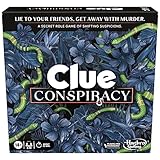
6. Hasbro Gaming Clue Conspiracy Board Game for Adults and Teens, Secret Role Strategy Games, Ages 14+, 4-10 Players, 45 Minutes, Mystery & Party Games
Overview:
Clue Conspiracy revitalizes the classic murder mystery formula into a dynamic social deduction game for larger groups. Set on a tropical island resort, players assume secret roles on opposing teams—either loyal “Friends” protecting Mr. Coral or the murderous “Conspiracy”—requiring bluffing, deception, and strategic teamwork to win.
What Makes It Stand Out:
The game shines with its unique team-based deception mechanic, where hidden alliances force constant psychological play. Unlike traditional Clue, players actively sabotage or defend against traps, lie to allies, and race to uncover plots. The tropical setting and multiple win conditions (disarming traps vs. executing murder) add refreshing complexity and replayability.
Value for Money:
Priced competitively for a premium strategy game, it justifies its cost through high engagement for 4–10 players and robust components. While pricier than basic party games, its niche blend of Clue’s deduction and Werewolf-style deception offers superior depth compared to simpler alternatives, making it ideal for dedicated game nights.
Strengths and Weaknesses:
Strengths: Exceptional replayability due to variable roles; masterful tension from hidden teams; intuitive yet strategic gameplay. Weaknesses: Complex rules may overwhelm casual players; requires 6+ for optimal team dynamics; limited physical components (e.g., minimal trap tokens).
Bottom Line:
A must-have for strategy enthusiasts seeking immersive social deduction. Its clever twist on Clue delivers intense, laughter-filled nights, though beginners should practice with smaller groups first. Highly recommended for teens and adults craving brainy party fun.
7. Wit’s End — A Smart, Mind-Bending Trivia & Brain Teaser Game That Will Challenge Your Wits & Knowledge — Adult & Family Night Fun

Overview:
Wit’s End elevates trivia with four cerebral categories designed to test logic and knowledge beyond standard Q&A. Players tackle riddles, sequences, odd-one-outs, and wildcard puzzles, creating a fast-paced battle of wits perfect for families and trivia buffs aged 14+.
What Makes It Stand Out:
The innovative category structure—particularly “Sequence” (ordering events) and “Odd-1-Out” (identifying mismatches)—demands critical thinking over rote memorization. Rhyming “Teaser” riddles and unpredictable “Wild Card” challenges keep gameplay fresh, avoiding trivia fatigue while accommodating varied skill sets.
Value for Money:
At mid-range pricing, it offers exceptional depth with 576+ questions and durable components. Unlike single-mechanic trivia games, its multi-faceted approach provides lasting value, outperforming budget options in replayability and cognitive engagement for repeat family or adult game nights.
Strengths and Weaknesses:
Strengths: Brilliant category diversity sparks lively discussion; accessible yet challenging for mixed ages; compact and portable. Weaknesses: Some “Wild Card” questions feel gimmicky; limited player count (max 6); fewer pop-culture references may alienate younger players.
Bottom Line:
An outstanding choice for intellectually curious groups. It transforms trivia into a dynamic mental workout, though trivia traditionalists might prefer simpler formats. Ideal for educators or families prioritizing brainy fun over luck-based play.
8. USAOPOLY The Original TAPPLE, The Fast-Paced Family Board Game,Choose a Category & Race Against The Timer to be The Last Player,Learning Word Game for Ages 8 & Up, 2-8 Players, 15-20 Minute Play Time

Overview:
TAPPLE delivers adrenaline-pumping wordplay in a compact wheel-based game. Players race against a 10-second timer to shout words fitting a category (e.g., “fruits”) starting with a specific letter, pressing the corresponding tab to lock it in before time runs out.
What Makes It Stand Out:
The tactile, built-in timer wheel creates frantic urgency unmatched by app-based competitors. Its portability and lightning-fast rounds (15–20 minutes) make it perfect for travel or quick breaks, while the 144 categories ensure near-limitless variety—from “countries” to “TV shows.”
Value for Money:
Priced affordably, TAPPLE excels as a durable, screen-free alternative to digital word games. The included 36 category cards offer massive replay value compared to similar-priced games, and its universal appeal (ages 8+) justifies the cost for families seeking quick, educational fun.
Strengths and Weaknesses:
Strengths: Unbeatable portability; addictive, inclusive gameplay; zero setup time. Weaknesses: Timer can feel inconsistent; limited depth for hardcore word nerds; letter tabs occasionally jam during intense play.
Bottom Line:
A near-perfect party and family game that energizes any gathering. Its simplicity and speed make it accessible, though occasional mechanical quirks slightly detract. Essential for road trips or classrooms wanting vocabulary-building excitement.
9. Herd Mentality: Udderly Funny Family Board Game | Easy & Fun for Big Groups of 4-20 Players | Includes 20 Extra Exclusive Questions

Overview:
Herd Mentality turns group psychology into hilarious chaos. Players predict the majority’s answers to quirky questions (e.g., “What’s the worst place to get a splinter?”), aiming to blend in and avoid the dreaded “pink cow of doom” for being the odd one out.
What Makes It Stand Out:
Its genius lies in simplicity: no reading or complex rules, just rapid-fire social deduction. The pink cow penalty and focus on real-group dynamics spark roaring laughter, while scalability (4–20 players) makes it unmatched for large gatherings like holidays or parties.
Value for Money:
An exceptional buy for big-group entertainment, offering more versatility per dollar than most party games. The included 20 extra questions extend longevity, and its ease of play reduces the need for frequent replacements, outshining pricier alternatives for casual hosts.
Strengths and Weaknesses:
Strengths: Effortless setup; hysterical group interactions; inclusive for all ages (10+); thrives with large crowds. Weaknesses: Shallow strategy may bore hardcore gamers; question repetition after extended play; minimal physical components beyond cards.
Bottom Line:
The ultimate icebreaker for chaotic family fun. While not for strategy seekers, its laugh-out-loud moments and scalability make it indispensable for Thanksgiving, game nights, or team-building events. Highly recommended.
10. Outsmarted Ultimate Edition - 10 Exciting Bonus Categories | Kids, Teens & Adults | Next-Level Game Night for Family & Friends | 2–24 Players | Age 8+ | 10,000+ Questions | 2026 Edition

Overview:
Outsmarted merges classic quiz-show excitement with smart app integration, adapting question difficulty by age so kids and adults compete fairly. Players answer trivia across categories like “Movie Music” or “Breaking News” via their devices, racing to win rings and conquer a final round.
What Makes It Stand Out:
Its AI-driven difficulty adjustment and 10,000+ updatable questions eliminate generational knowledge gaps, while real-time scoring and multimedia (song clips, images) mimic TV-show immersion. Remote play for global participants and 80+ category expansions via app set it apart as a tech-forward game-night revolution.
Value for Money:
The Ultimate Edition’s price is justified by massive content (10 bonus categories) and device compatibility (iOS, Android, Windows). Though requiring smartphones/tablets, its endless updates and remote features offer superior long-term value over static board games, especially for dispersed families.
Strengths and Weaknesses:
Strengths: Seamless multi-device support; brilliantly adaptive difficulty; exceptional replayability via updates. Weaknesses: Dependent on stable Wi-Fi; setup complexity for non-tech users; “Breaking News” questions date quickly.
Bottom Line:
A groundbreaking pick for modern families valuing connectivity and fairness. Despite minor tech hurdles, its inclusive design and evolving content make it the future of trivia—ideal for game nights bridging generational or geographical gaps.
Why Theme Matters for New Players
Building Instant Engagement Through Narrative
A strong theme isn’t just window dressing; it’s the secret sauce that transforms abstract rules into an intuitive, captivating experience. For newcomers, a well-integrated story—whether exploring ancient ruins, running a bustling bakery, or negotiating interstellar trade—provides immediate context. Instead of memorizing “place a cube here for victory points,” you’re “hiring a chef to expand your café.” This narrative layer makes decisions feel meaningful and reduces the cognitive load, helping players grasp mechanics organically through the lens of the story. Games where the theme and mechanics work hand-in-hand prevent that frustrating “why am I doing this?” feeling, turning learning curves into natural parts of the adventure.
Lowering the Barrier to Entry with Familiar Concepts
Themes rooted in everyday experiences or widely recognized genres (like fantasy adventures, city-building, or cooperative rescue missions) act as instant on-ramps for beginners. If you’ve ever watched a heist movie or baked cookies, a game mirroring those concepts feels instantly less intimidating. Designers leverage this familiarity to simplify complex systems—turning resource management into “gathering ingredients” or set collection into “assembling a team of specialists.” This relatability means less time spent decoding dry rulebooks and more time diving into the fun, making the initial investment of time and money feel worthwhile from the very first play.
Creating Memorable Moments That Hook Players
Let’s be honest: new players need that “wow” factor to stick with the hobby. Thematic games excel at generating standout moments—a narrow escape from a collapsing temple, the triumphant completion of a legendary quest, or the hilarious chaos of a poorly planned heist. These emotionally charged experiences, deeply tied to the game’s narrative, are what transform a casual player into a dedicated enthusiast. Budget-friendly thematic titles often focus intensely on delivering these pivotal, story-driven moments without complex subsystems, ensuring even a short session leaves a lasting impression that fuels the desire to play again and explore more of the hobby.
Key Features to Prioritize for Beginner-Friendly Thematic Games
Rulebook Clarity and Visual Learning Aids
Don’t underestimate the power of a well-written, visually intuitive rulebook. For new players, a guide filled with clear examples, step-by-step illustrations, and minimal jargon is non-negotiable. Look for games that use iconography consistently and provide quick-reference sheets outlining turn structure and core actions. The best budget titles often invest heavily in these learning tools, understanding that a confusing rulebook is the fastest way to derail a new player’s experience. A rulebook that teaches through the theme (e.g., “On your turn, act as the captain: first navigate, then trade”) significantly smooths the onboarding process.
Playtime Under 90 Minutes for Sustainable Engagement
Respect your time and attention span. Games consistently finishing in 60-90 minutes are ideal for newcomers. Longer sessions risk fatigue, rule confusion, and frustration—especially when learning mechanics. Shorter playtimes allow players to experience a complete narrative arc (beginning, middle, end) in one sitting, reinforcing the theme and making the session feel satisfyingly conclusive. Crucially, this duration fits neatly into casual game nights without demanding an entire evening, lowering the commitment barrier and making repeat plays more feasible. Budget games excelling here often trim unnecessary complexity while preserving thematic punch.
Player Count Flexibility for Real-World Scenarios
Your ideal game shouldn’t demand a fixed number of players. Prioritize titles playable with 2-4 (or even 1-5) people without drastic rule changes. Life is unpredictable—you might gather three friends one week and play solo the next. Games that scale smoothly across player counts using adjustable difficulty, variable setups, or solo modes ensure your purchase gets consistent use. Thematic games achieving this often use modular boards or narrative-driven scenarios that adapt organically, keeping the story cohesive whether you’re a lone explorer or leading a full party.
Minimal Setup and Cleanup Hassles
The dream: open the box, set up in under 5 minutes, play, and pack away just as fast. Games requiring intricate component sorting, complex board assembly, or lengthy setup rituals create immediate friction for new players (and their potential future opponents). Budget-friendly thematic standouts often feature clever tray designs, limited component types, or rule-assisted setup (“Deal each player two character cards and place the market tokens here”). This speed lets you spend maximum time immersed in the game world and minimal time wrestling with bits, making spontaneous game nights genuinely possible.
Approachable Core Mechanics with Gradual Complexity
Avoid games built on overly abstract or niche systems (like heavy stock market simulations or intricate deck construction) for your first thematic dive. Instead, seek out foundational mechanics presented accessibly: set collection, dice drafting, simple worker placement, or cooperative pattern matching. The magic happens when these mechanics serve the theme—collecting artifact sets to fund an expedition, drafting crew members for a heist. Look for games introducing complexity incrementally, perhaps through optional rules or scenario-based progression, allowing players to start simple and deepen their understanding over multiple plays without feeling overwhelmed upfront.
Understanding True Value Beyond the Price Tag
Component Quality That Withstands Repeated Play
Don’t equate “budget” with flimsy. Assess components critically: Are cards thick enough to shuffle without damage? Do tokens feel substantial, not like cheap plastic? Does the board resist creasing? Poor quality leads to frustration and replacement costs down the line, negating the initial savings. Many modern $50-and-under games use strategic material choices—like a single double-sided board instead of multiple inserts, or well-sized cards—to maintain durability without inflating costs. A game with slightly fewer, but sturdier, components often offers better long-term value than one packed with flimsy bits.
Replayability Through Variable Setups and Scenarios
A single, rigid path gets old fast. True budget value comes from games offering diverse experiences through modular boards, randomized objectives, unique player roles, or branching narrative scenarios. This variability ensures the theme stays fresh—exploring different dungeon layouts, facing unique challenges in your bakery, or navigating shifting political landscapes. Look for mechanisms that change core dynamics between plays without needing expansions. Games designed with inherent replayability maximize your investment, providing dozens of unique story sessions from one box, keeping new players engaged long after the initial novelty wears off.
Community Support and Accessibility Resources
A vibrant player community is an often-overlooked asset. Check if the game has active online forums, helpful YouTube tutorial videos, or designer-run FAQ pages. Strong community support provides troubleshooting for confusing rules, house rule suggestions, and fresh scenario ideas—all extending the game’s life and usability. For beginners, accessible resources like official 10-minute rule explanation videos or printable reference sheets can be the difference between frustration and mastery. Budget titles with robust community backing effectively offer ongoing “free” support, enhancing the perceived value far beyond the purchase price.
Smart Strategies for Evaluating Budget Games Before You Buy
Leveraging Demo Days and Local Game Stores
Nothing beats hands-on experience. Seek out local game stores (LGS) hosting open gaming nights or demo events. Playing a game guided by experienced staff or fellow enthusiasts reveals nuances no box description can—how intuitive the setup is, if the theme truly resonates, and whether the pace drags. Many stores even offer “try before you buy” programs. This direct interaction helps avoid costly mistakes and builds relationships with your local gaming hub, a vital resource as you dive deeper into the hobby. Don’t skip this step; it’s the ultimate reality check for any budget-conscious beginner.
Decoding Marketing Hype vs. Genuine Beginner Suitability
Be wary of flashy terms like “deep strategy” or “highly replayable” on the box. For new players, focus on concrete details: “Learn in 15 minutes,” “Plays in 45-60 minutes,” or “Cooperative storytelling.” Watch gameplay videos specifically tagged for beginners—not just high-skill speedruns. Look for reviews emphasizing the learning curve and thematic integration, not just strategic depth. Publishers increasingly label games with “Gateway” or “Starter” tags; while useful, verify these claims by checking if the rules explanation time aligns with true accessibility. Cut through the noise to find what actually suits a newcomer’s needs.
Assessing Long-Term Play Potential for Your Group
Think beyond the first play. Ask: “Will my regular gaming group still want to pull this out after five sessions?” Consider factors like player interaction (does it encourage banter or silent number-crunching?), luck balance (is there a fun element of chance, or punishing randomness?), and emotional payoff (do wins feel earned and exciting?). A game fostering laughter, shared tension, and memorable stories will see repeated plays, maximizing your $50 investment. Conversely, a game that feels tedious or overly luck-dependent after the novelty fades offers poor long-term value, no matter the initial price.
Ensuring Lasting Enjoyment and Hobby Growth
The Role of Solo Modes in Skill Building
Don’t overlook games with robust solo variants. A well-designed single-player mode isn’t just a backup; it’s a powerful training ground. It allows new players to learn rules at their own pace, experiment with strategies risk-free, and deeply absorb the theme without pressure. This builds confidence and competence, making the eventual transition to multiplayer smoother and more enjoyable. Many modern thematic games integrate solo play narratively (e.g., “You are the last survivor completing the mission”), adding value without extra cost. For budget buyers, this feature effectively doubles the utility of your purchase.
How Beginner Games Can Evolve With Your Skills
The best entry-point games aren’t dead ends—they’re springboards. Seek titles with built-in pathways for growth: optional advanced rules, modular complexity layers, or natural progression into similar but deeper games within the same genre. For instance, a simple dice-chucking adventure might introduce concepts later used in complex campaign games. A game teaching set collection through collecting recipe ingredients lays groundwork for more strategic set-based games. This “hobby trajectory” aspect ensures your first purchase isn’t a disposable toy but a foundational step toward a richer, more varied gaming future, protecting your long-term investment in the hobby.
Building Confidence for Future Hobby Investments
Your first thematic game sets expectations. A positive, accessible experience builds confidence and excitement to explore further. Conversely, a confusing, frustrating, or overly complex first game can scare newcomers away entirely. Choosing a budget title that delivers a smooth, engaging, and thematically rich experience creates a strong foundation of trust in the hobby itself. It demonstrates that board gaming can be welcoming, imaginative, and worth the time and money, making players far more likely to invest in future games, expansions, or even convention trips. This psychological payoff is invaluable—it transforms a $50 purchase into the catalyst for a lifelong passion.
Frequently Asked Questions
Can thematic games under $50 really offer deep storytelling?
Absolutely. Modern design focuses on integrating narrative efficiently. Look for games using scenario-based play, evolving board states, or player-driven choices that create emergent stories without expensive components. The depth comes from mechanics reinforcing the theme, not just text-heavy cards.
How do I know if a game’s theme is well-integrated or just superficial?
Check gameplay videos focusing on actual turns. If component actions directly mirror the theme (“drafting crew members” instead of “taking cube actions”), and player decisions impact the narrative flow, integration is strong. Avoid games where the theme feels like generic artwork slapped onto abstract mechanics.
Will I quickly outgrow a budget game as a new player?
Not necessarily. Prioritize games with high replayability through variable setups or modular rules. Many entry-level titles include “expert variants” or have natural progression paths into more complex games. Focus on core engagement—if the fundamental loop is fun, it stays enjoyable even as your skills grow.
Are cheaper components a dealbreaker for thematic immersion?
Not always. While flimsy bits can detract, strong thematic integration and engaging gameplay often overshadow modest components. Focus on whether the components serve the story (e.g., unique tokens representing story elements) rather than pure material quality. Many beloved games thrive with minimalist components.
How important is player interaction in a beginner thematic game?
Crucial for enjoyment, but balance is key. Too little interaction (multiplayer solitaire) feels isolating; too much direct conflict (constant card-stealing) can frustrate newcomers. Look for positive interaction—shared goals, light negotiation, or complementary roles—that enhances the theme without causing tension. Cooperative or semi-cooperative structures often hit this sweet spot.
Can I find good solo-play options in this price range?
Yes, and it’s increasingly common. Many publishers include free solo rules or apps. Prioritize games where solo play feels narratively coherent (“you’re the hero completing the quest alone”) rather than just an AI opponent tacked on. Check publisher websites for downloadable solo modules before purchasing.
What red flags indicate a game might not be beginner-friendly despite the price?
Beware of rulebooks over 10 pages, playtimes consistently exceeding 90 minutes, or mechanics labeled “highly strategic” or “complex engine-building” on the box. Also, avoid games requiring significant setup organization or where player elimination is possible. Trust beginner-focused reviews over generic hype.
How do I assess replay value without playing first?
Look for concrete replay drivers: modular boards, randomized objectives, unique character asymmetry, or scenario packs. Avoid vague claims like “infinite replayability.” Specifics matter—a game offering 10 distinct starting setups or 30 variable missions demonstrates tangible replay potential versus one relying solely on player decisions in a static framework.
Are expansions worth considering for budget thematic games?
Proceed with caution as a new player. Only consider expansions after you’ve deeply enjoyed the base game multiple times. Ensure the expansion addresses a genuine limitation (e.g., adding needed player count support) rather than just more of the same. Many excellent base games offer complete experiences without expansions, maximizing your initial $50 value.
How can I ensure the game works well with non-gamers or casual players?
Focus on games emphasizing shared experience over cutthroat competition. Cooperative titles, legacy-lite systems with persistent stories, or games with strong “table presence” (visually engaging boards/components) often resonate best. Check if the game has a strong “hook” moment early in play that grabs casual players’ attention and keeps them invested through the full session.
See Also
- 10 Best Thematic Board Games for New Players in 2026
- 10 Best Budget Thematic Board Games Under $60 for Casual Gamers in 2026
- 10 Best Thematic Board Games for Families with Teens in 2026
- 10 Thematic Board Games Recommendations for Date Nights in 2026
- 10 Thematic Board Games That Solve Lack of Engagement in 2026