Table of Contents
Ever feel like bringing people together for genuine laughter and connection is harder than solving a Rubik’s Cube blindfolded? You’re not alone. In a world buzzing with digital distractions, the simple joy of sharing a physical space and playing a game that doesn’t require a PhD in rulebooks is a precious commodity. The best part? You absolutely don’t need to drain your wallet to create those magic moments. Forget the myth that memorable game nights demand expensive, complex boxes gathering dust on a shelf. Affordable party games under $25 are the unsung heroes of social bonding, proving that laughter, creativity, and friendly competition thrive on clever design, not hefty price tags.
Imagine effortlessly pulling out a game that instantly dissolves awkward silences, sparks hilarious debates, and has everyone leaning in with genuine excitement – no prior gaming experience required. Budget-friendly party games excel at this because they prioritize accessibility and pure fun over intricate strategy or lavish components. They’re the perfect antidote to a tired movie night or the same-old conversation around the dinner table. Whether you’re hosting a casual get-together, a family reunion, or just a small gathering with your nearest and dearest, finding the right affordable game can transform an ordinary evening into one everyone talks about. Let’s dive into how to spot these hidden gems and make every game night a guaranteed hit without breaking the bank.
Top 10 Party Board Games
Detailed Product Reviews
1. HUES and CUES - Vibrant Color Guessing Board Game for 3-10 Players Ages 8+, Connect Clues and Guess from 480 Color Squares

Overview: HUES and CUES is a dynamic color-association board game where players give one- or two-word clues to guide others toward specific hues on a vibrant 480-square color board. Designed for 3–10 players aged 8+, it transforms color perception into a collaborative guessing challenge perfect for family nights or parties.
What Makes It Stand Out: Its genius lies in the infinite replayability—no two games feel identical due to the vast color palette and open-ended clue system. The game uniquely blends creativity with observation, forcing players to think abstractly (“sunset,” “moss”) rather than literally. The compact design and simple rules (learn in under 5 minutes) make it accessible yet deeply engaging.
Value for Money: Priced competitively for a high-component game, it offers exceptional longevity with 480 hues ensuring fresh experiences. It outshines cheaper color games by avoiding repetitive mechanics, justifying its cost for frequent game-night households seeking inclusive, screen-free fun.
Strengths and Weaknesses:
Strengths: Incredibly inclusive for mixed ages; sparks creativity; minimal setup; high replay value; fosters teamwork.
Weaknesses: Color-blind players may struggle; clue-givers can dominate if not moderated; storage of loose components feels flimsy.
Bottom Line: A must-have for social gamers craving novelty—it’s clever, vibrant, and universally appealing. Ideal for breaking the ice or revitalizing game night, earning its spot as a modern classic.
2. USAOPOLY BLANK SLATE, Where Great Minds Think Alike, Fun Family-Friendly Board Game, Word Association Party Game, Easy to Learn, Fun to Play Family Game Night, 3-8 Players, Ages 8+
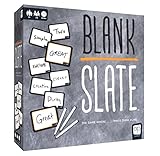
Overview: BLANK SLATE challenges players to predict collective thinking by matching single-word responses to phrase prompts (e.g., “Cold ______”). With 250 double-sided cue cards and dry-erase slates, this word-association game for 3–8 players aged 8+ thrives on laughter and surprising consensus.
What Makes It Stand Out: The thrill comes from guessing exactly what others wrote—a rare “mind-meld” moment in party games. Its simplicity (write one word, reveal simultaneously) creates instant, chaotic fun. Unlike trivia-based games, it relies on universal cultural touchpoints, making wins feel serendipitous and hilarious.
Value for Money: At mid-range pricing, it delivers robust replayability through diverse prompts and group dynamics. Cheaper than complex board games but richer than basic card decks, it’s a steal for large gatherings where minimal rules maximize engagement.
Strengths and Weaknesses:
Strengths: Effortless to learn; scales perfectly for big groups; generates contagious laughter; compact storage.
Weaknesses: Shallow strategy limits depth for hardcore gamers; repetitive after extended play; slates smudge easily.
Bottom Line: An unbeatable icebreaker for casual players. While not for strategy enthusiasts, its ability to unite crowds in giggles makes it a worthy staple for family game rotations.
3. Hasbro Twister Party Classic Board Game for 2 or More Players,Indoor and Outdoor Game for Kids 6 and Up,Packaging May Vary

Overview: Twister remains the iconic physical party game where players contort on a large mat, placing hands and feet on colored circles spun by a wheel. Designed for ages 6+ (indoor/outdoor), it’s a high-energy test of flexibility and balance that turns any space into a laughter-filled arena.
What Makes It Stand Out: Its timeless appeal lies in pure, unscripted physical comedy—no strategy, just spontaneous challenges like “left hand blue.” The team-play variant and tournament tips add versatility, while the mat’s durability withstands generations of enthusiastic play. It uniquely transforms passive gaming into active, social bonding.
Value for Money: An affordable investment for active play, especially considering its decades-long relevance. Though cheaper alternatives exist, Twister’s quality mat and brand trust justify the price for families prioritizing screen-free, movement-based fun.
Strengths and Weaknesses:
Strengths: Unmatched physical engagement; inclusive for all ages; simple rules; excellent for burning energy indoors.
Weaknesses: Requires significant floor space; awkward for shy players; mat storage is bulky; spinner mechanism feels dated.
Bottom Line: An essential, nostalgia-driven purchase for active households. Despite minor flaws, its ability to create unforgettable moments cements Twister as a non-negotiable game-night classic.
4. WHAT DO YOU MEME? Incohearent, The Guess The Gibberish Party Game by Relatable, A Funny Card Game for Adults, Great for Bachelorette Party Games or Game Night Games, Includes 300 Cards

Overview: Incohearent is a viral adult card game (17+) where players decode phonetically scrambled phrases (e.g., “Sew a Loop” = “Sour Loop”) within a time limit. With 300 cards across Party, Spicy, and Pop Culture categories, it’s a fast-paced, laughter-inducing challenge for 3–8 players.
What Makes It Stand Out: Leveraging TikTok fame (750M+ views), it brilliantly merges meme culture with wordplay. The gibberish mechanic forces creative vocal contortions, while category variety keeps gameplay fresh—from clean humor to cheeky “Spicy” prompts. Setup is instant, and rounds last mere minutes, ideal for chaotic game nights.
Value for Money: Priced accessibly for 300 high-quality cards, it offers immense replayability through social media trends and player improvisation. It outperforms similar card games with its viral relevance and consistent humor density, making it a standout gift or party staple.
Strengths and Weaknesses:
Strengths: Hilariously engaging; minimal setup; great for ice-breaking; categories cater to diverse groups.
Weaknesses: “Spicy” content may alienate conservative players; short phrases limit depth; timer pressure frustrates some.
Bottom Line: A near-perfect party game for adults seeking lighthearted, shareable moments. Highly recommended for casual gamers—but verify group comfort with suggestive humor first.
5. CMYK Wavelength: The Mind Reading Party Game

Overview: Wavelength tasks teams with interpreting abstract spectrum-based clues (e.g., “Hot to Cold”) to pinpoint a hidden target. This telepathic party game for 2–12+ players uses a spinning dial and clue-giving to foster “aha!” moments, blending strategy with intuitive guessing in under 30 minutes.
What Makes It Stand Out: Its innovative spectrum mechanic creates profound group synergy—clues like “Wizard to Not a Wizard” spark hilarious debates. Praised by Polygon and NYT Wirecutter, it excels in scalability (works for tiny or massive groups) and effortless setup. The dial’s tactile feedback enhances the mind-reading illusion, making wins deeply satisfying.
Value for Money: Premium-priced but justified by unmatched versatility and replayability. Unlike niche party games, Wavelength thrives across contexts (family dinners, corporate offsites), offering years of use—far surpassing cheaper, less adaptable alternatives.
Strengths and Weaknesses:
Strengths: Brilliant for large groups; encourages deep discussion; intuitive rules; stunning visual design; highly re-playable.
Weaknesses: Limited solo/team differentiation; abstract concepts confuse younger players; dial calibration can be finicky.
Bottom Line: An elite party game that transforms group dynamics. Worth every penny for its magic-like connection—it’s not just played, but experienced. A top-tier recommendation.
6. Telestrations 8 Player 2nd Edition Board Game, Award Winning Hilarious and Unpredictable Must Have Party Game with a New Look, Sketch What Your Read Then Guess What You Saw, 4-8 Players, Ages 10+

Overview: Telestrations 8 Player 2nd Edition is a laugh-out-loud party game centered around the hilarious chain of miscommunication that occurs when players alternately sketch and interpret written prompts. Passing booklets around the table, each player draws what they read, then the next player writes a caption for that drawing, creating an absurd evolution from the original phrase. Its updated design and massive prompt library make it a modern staple.
What Makes It Stand Out: The game thrives on unpredictability and player creativity (or lack thereof!), guaranteeing unique, side-splitting outcomes every round. The fresh 2nd Edition look and inclusion of over 2,000 card prompts (mixing classics with new content) significantly boost replayability. Its genius lies in requiring zero artistic skill—the worse the drawing, the funnier the result—making it instantly inclusive for any group size between 4-8 players.
Value for Money: Priced competitively for an 8-player set, it offers exceptional longevity thanks to the vast prompt pool and purely social, screen-free entertainment. Compared to similar party games, Telestrations delivers more consistent, group-wide laughter per play session without complex rules or components, just booklets, markers, and erasers.
Strengths and Weaknesses: Strengths: Effortlessly fun, incredibly easy to learn, fosters hilarious group interaction, highly replayable, minimal setup. Weaknesses: Limited to 8 players (fewer can feel less dynamic), drawing space in booklets is small, replacement markers/erasers may be needed long-term.
Bottom Line: An essential, award-winning party game that transforms miscommunication into pure comedy gold. Its simplicity, massive replay value, and guaranteed laughter make it a top-tier investment for family gatherings or friend parties, easily justifying its price point for consistent, high-energy fun.
7. USAOPOLY The Original TAPPLE, The Fast-Paced Family Board Game,Choose a Category & Race Against The Timer to be The Last Player,Learning Word Game for Ages 8 & Up, 2-8 Players, 15-20 Minute Play Time

Overview: TAPPLE is a rapid-fire word association game where players race against a built-in timer to name items within a given category starting with a specific letter. The tension builds as the clock ticks down, forcing quick thinking and often resulting in frantic, memorable moments. Its compact, wheel-based design houses all components for easy storage and portability.
What Makes It Stand Out: The ingenious physical Tapple wheel, integrating the timer and letter tabs, creates a uniquely tactile and suspenseful experience. The 144 diverse categories across 36 cards ensure broad appeal, while the 15-20 minute playtime makes it perfect for quick game sessions or as an energetic opener. The portable design is a major plus for on-the-go fun.
Value for Money: Offering substantial replayability through numerous categories at a mid-range price, TAPPLE provides excellent value for a dedicated word game. It surpasses simpler card-based word games in engagement due to the physical timer pressure, though the category count, while good, may see repetition with frequent play among large groups.
Strengths and Weaknesses: Strengths: Incredibly fast-paced and exciting, simple rules for all ages, highly portable, great for building vocabulary, minimal components. Weaknesses: Timer can feel overly harsh (no pauses), category repetition possible with heavy use, limited depth for hardcore word game enthusiasts.
Bottom Line: A brilliantly executed, award-winning word game that injects adrenaline into family game night. TAPPLE’s unique timer mechanic, portability, and quick play make it a standout choice for accessible, high-energy fun, highly recommended for groups seeking a fast, engaging challenge.
8. The Chameleon: Award-Winning Bluffing Board Game for Family, Adults & Friends | Includes 80 Extra Secret Words | Who is The Imposter?

Overview: The Chameleon is a social deduction game where all players know a shared secret word on a board, except one hidden “Chameleon” player who doesn’t. Players take turns giving a single, subtle clue related to the word, while the Chameleon must bluff convincingly. The goal is for the group to identify the imposter before the round timer ends.
What Makes It Stand Out: Its brilliance lies in the intense, subtle social dynamics created by the single secret word and the need for coded clues. The 80 extra secret words vastly extend replayability beyond the base deck. Winning requires keen observation and careful word choice, generating incredible “aha!” moments and laughter as players try to blend in or unmask the Chameleon. Its 15-minute playtime is perfect.
Value for Money: Packed with components including the board, many word cards, and role cards, it offers exceptional replay value for its price, especially with the bonus words. Compared to similar deduction games, it’s faster to learn and plays quicker than heavyweights like Werewolf, making it ideal for casual or frequent play without sacrificing depth.
Strengths and Weaknesses: Strengths: Incredibly fast setup and play, generates intense social interaction and bluffing, highly replayable, minimal components, award-winning for good reason. Weaknesses: Age 14+ might exclude younger families, requires at least 4 players for best experience, relies heavily on group dynamics.
Bottom Line: A masterclass in simple yet deeply engaging social deduction. The Chameleon delivers award-winning, laugh-out-loud moments in a tiny package, making it a must-have for adult and teen game nights seeking quick, clever, and highly replayable fun.
9. USAOPOLY Flip 7, The Ultimate Blend of Press Your Luck & Strategy, Fast-Paced Addictive Card Game,Quick to Learn & Easy to Teach,Perfect for Game Nights, 3+ Players, Ages 8 & Up, 20 Minutes Play Time

Overview: Flip 7 is a high-stakes, press-your-luck card game where players sequentially reveal cards from a unique deck, aiming to accumulate points without drawing duplicate numbers. Each round involves the tense decision to “flip” another card for more points or stop safely before busting with a repeat number, with special action cards adding chaos.
What Makes It Stand Out: The ingeniously designed deck, featuring decreasing quantities of each number (twelve 12s down to one 1), creates inherent risk calculus. Action cards like “Flip Three,” “Freeze,” and “Score Modifier” inject constant, game-changing surprises. The blend of simple core mechanics with strategic depth and high tension as the bust risk grows makes each round addictive and unpredictable.
Value for Money: For a compact card game, Flip 7 offers remarkable strategic depth and replayability through its unique deck composition and variable action cards. It competes well against more complex press-your-luck games, providing intense, quick sessions (20 mins) at a very accessible price point, ideal for frequent game nights.
Strengths and Weaknesses: Strengths: Simple rules with deep risk/reward decisions, incredibly fast-paced and tense, high replayability due to deck structure, special cards keep gameplay fresh, scales well beyond 3 players. Weaknesses: Luck plays a significant role, scoring can become cumbersome at high player counts, component quality is basic (standard cards).
Bottom Line: An exceptionally fun and tense press-your-luck experience that masterfully balances simplicity with strategic depth. Flip 7’s unique deck and action cards deliver consistently thrilling 20-minute games, making it a highly recommended, affordable addition to any game night repertoire.
10. Lucky Egg Official Grab The Mic – Family Karaoke Board Game w/Foam Mic, 8+ Ages, 2-10 Players - Games for Bad Singers w/ 240 Lyrics (120 Cards) (First Edition)

Overview: Grab The Mic is a hilarious karaoke party game designed specifically for non-singers, where players race to grab a foam microphone and sing a song lyric containing a randomly revealed keyword. It transforms musical knowledge (or guesswork!) into fast-paced, competitive fun centered around quick recall and comedic performances under pressure.
Overview: Grab The Mic is a hilarious karaoke party game designed specifically for non-singers, where players race to grab a foam microphone and sing a song lyric containing a randomly revealed keyword. It transforms musical knowledge (or guesswork!) into fast-paced, competitive fun centered around quick recall and comedic performances under pressure.
What Makes It Stand Out: The genius is its accessibility—no singing talent needed, just knowing any song with the keyword. The physical foam mic adds tangible excitement to the grabbing mechanic. Multiple game modes on the board and 240 lyric prompts (via 120 double-sided cards) ensure varied play, generating guaranteed laughter as players fumble for lyrics or butcher tunes.
Value for Money: Priced affordably, it delivers immense entertainment value through sheer replayability (120 cards) and inclusive fun for large groups (2-10 players). Compared to traditional karaoke setups requiring skill or apps, it’s a more engaging, social party game that leverages shared musical culture without pressure, making the foam mic and board worthwhile components.
Strengths and Weaknesses: Strengths: Hilarious for all skill levels, incredibly fast-paced, accommodates large groups, foam mic is a great prop, multiple game modes. Weaknesses: Card stock quality could be better, relies on players knowing some popular music, can get loud/chaotic with many players.
Bottom Line: A brilliantly simple and uproariously fun party game that eliminates singing pressure while maximizing laughs. Grab The Mic is perfect for mixing music lovers and novices, offering exceptional value and guaranteed entertainment for family or friend gatherings seeking lighthearted, interactive fun.
Why Budget Party Games Are Your Secret Social Weapon
Understanding the Magic of Low-Cost Social Play
Affordable party games shine because they remove barriers to entry. High prices often create pressure to “get your money’s worth,” leading to overly long or complex sessions that can intimidate newcomers. Budget games, however, encourage experimentation and frequent play. They’re low-risk for guests to try something new, fostering a relaxed atmosphere where the focus is squarely on interaction and fun, not mastering convoluted rules. This accessibility is key to building inclusive game nights where everyone feels welcome, regardless of their gaming history.
The Unexpected Value Proposition
Don’t mistake a lower price for lower value. Many budget party games achieve their affordability through smart design choices: streamlined components, focused gameplay loops, and efficient packaging. This often results in games that are incredibly portable, quick to set up, and easy to teach. The real value lies in the sheer number of play sessions you’ll get relative to the cost. A $25 game played ten times costs just $2.50 per session – a fraction of the cost per hour of most entertainment options. It’s about maximizing joy per dollar spent through frequent, accessible fun.
Avoiding the “Filler” Trap
Not all inexpensive games deliver equal replay value. The key is distinguishing between true party staples and forgettable fillers. Look for games that foster dynamic interaction – where players constantly engage with each other, not just the board. Does the game create memorable moments and inside jokes? Does it adapt slightly with each playthrough based on the group’s personalities? Games that rely on player creativity, observation, or quick thinking tend to have far more legs than those dependent on static trivia or luck alone, ensuring your $25 investment keeps paying social dividends long after the first play.
Decoding What Truly Matters in a Budget Party Game
Player Count Flexibility: The Gold Standard
The most crucial feature for any party game is its ability to handle fluctuating group sizes gracefully. A stellar budget option should have a sweet spot (often 4-8 players) but also include clear, practical rules for scaling down to a minimum (usually 3) or expanding reasonably beyond the max (sometimes up to 10+ with minor tweaks). Avoid games with rigid player requirements; life is unpredictable, and your game night shouldn’t be derailed because one person cancels last minute. Check the box for the minimum count – if it requires 5+ players but your group is often 4, it’s a pass.
Setup and Teach Time: Seconds, Not Minutes
In the realm of casual play, your game’s first impression is its setup and explanation. A winning budget game should be ready to play in under two minutes and teachable in under five. Look for games with minimal components to sort, no intricate board assembly, and rules that can be demonstrated through a single, quick example round. If the explanation feels like a lecture, or if setting up takes longer than the first game, it’s a sign the game isn’t optimized for the spontaneous, low-pressure vibe casual players crave. Streamlined setup equals more time laughing.
Replayability Through Player Interaction
The engine of replayability in great party games isn’t complex expansions; it’s the unique alchemy of your group. Games where the fun is the interaction between specific people – their jokes, reactions, and personalities – naturally stay fresh. Mechanics like cooperative storytelling, real-time bidding, or physical dexterity challenges create wildly different experiences each time based solely on who’s playing. Prioritize games where the “content” is generated by the players themselves during play, rather than relying on static cards or boards that feel repetitive after a few rounds.
Rule Simplicity vs. Strategic Depth Balance
This is the sweet spot. The core rules must be incredibly easy to grasp (think: one or two core actions), but the interactions should allow for clever plays, funny bluffs, or unexpected tactics to emerge organically. A game where everyone understands how to play immediately but discovers new nuances through interaction (like when to bluff, how to read opponents, or creative ways to use a simple mechanic) offers the perfect blend for casual players. Avoid games that are either so simplistic they feel hollow or so nuanced they require constant rulebook checks.
Evaluating Components on a Budget
Cardstock Quality: What’s Acceptable?
Don’t expect linen finishes at this price point, but flimsy, easily bent cards ruin the experience. Look for mentions of “thick cardstock” or check reviews noting card durability. A slight bend after shuffling shouldn’t destroy them. Sleeving cards is a cheap, effective fix for thinner stock, so consider if the game’s card count makes this feasible. Component quality should support gameplay without distracting – cards need to be readable and reasonably durable for repeated shuffling during a single night.
Essential Components vs. Unnecessary Flair
Budget games wisely minimize non-essential parts. Does it truly need unique miniatures, or would simple tokens suffice? Are the player aids clear and integrated, or just clutter? Focus on whether the components enable the core interaction effectively. A well-designed scorepad beats cheap plastic dice that constantly roll off the table. Prioritize functional simplicity: clear icons, readable text, and components that are easy to handle and distinguish during fast-paced play. Fancy bits often inflate cost without enhancing the party experience.
Packaging That Serves a Purpose
At this price, expect a compact box. Crucially, does it allow for easy component organization and quick setup? Look for trays, card dividers, or logical layouts that prevent a treasure hunt every time you play. A box that stacks neatly or fits on a bookshelf is a bonus. Avoid games where setup involves deciphering how to fit everything back in – it creates friction that discourages replaying. Smart, space-efficient packaging is a hallmark of well-considered budget design.
Navigating Game Mechanics for Casual Fun
Cooperative vs. Competitive Dynamics
Consider your group’s vibe. Purely competitive games can create tension in casual settings, while overly cooperative ones might lack exciting conflict. Many top budget party games use “semi-cooperative” or “every player for themselves” mechanics with lighthearted sabotage (e.g., voting systems, light deduction). These foster interaction without hard feelings. Avoid cut-throat mechanics where one player can easily eliminate another early on – it leads to disengagement. Look for games where everyone stays involved and the “winner” is often debatable or secondary to the fun had.
Time Commitment Per Round
Party games live or die by their pace. A stellar budget option keeps individual turns lightning-fast (often simultaneous play or 10-20 second turns) and the total game session under 30 minutes. Long turns or drawn-out rounds kill momentum and give players time to check their phones. Real-time elements (like 30-second timers for drawing or guessing) are fantastic for maintaining energy. Always check the estimated playtime per player – if it’s more than 5 minutes per person for your group size, it might drag.
Physicality and Space Requirements
Be realistic about your play space. Games requiring large tables, standing up, or throwing components might not suit cramped apartments or kitchen tables. Many excellent budget games are “tableau-based” (all play happens in front of you) or use small central areas. Consider noise levels too – shouting games are fun but problematic in quiet neighborhoods. Choose mechanics that fit your typical environment: quiet deduction games for book clubs, light physical dexterity for energetic crowds, or creative storytelling for cozy groups.
Accessibility for Diverse Groups
True party games welcome all. Check for language barriers (icon-driven is best), physical dexterity needs (avoid games requiring fine motor skills if relevant), and cognitive load. Can someone explain the gist while pouring drinks? Avoid heavy reading, complex math, or niche cultural references that might exclude guests. Games using universal concepts (drawing, charades-style actions, simple pattern matching) or encouraging creativity over knowledge are most inclusive. The goal is effortless participation.
Smart Shopping Strategies for Maximum Value
Where to Look Beyond Big Box Retailers
While major stores offer convenience, specialty game stores (online or local) often have deeper selections of hidden gem party games at this price point. They may also provide insightful staff recommendations based on your group. Don’t overlook reputable online marketplaces, but scrutinize seller ratings and component descriptions carefully. Library sales or community swap meets can yield incredible finds, though condition varies. Sometimes, a smaller publisher’s direct website offers the best price without third-party markups.
Reading Between the Lines of Product Descriptions
Learn to decode marketing speak. “Easy to learn!” is good, but “Learn in under 2 minutes!” is better. Look for specifics: “Plays 3-10 players,” “20-minute games,” “no reading required.” Phrases like “highly replayable” are vague – seek descriptions highlighting how (e.g., “endless combinations from player creativity,” “changes dramatically with group size”). Pay attention to keywords like “simultaneous play,” “real-time,” or “light strategy” which often signal great party dynamics. Beware of overused terms like " addictive" – focus on concrete mechanics.
Setting the Stage for Success
Managing Expectations for First-Time Players
A smooth game night starts before the box opens. Briefly frame the experience: “This is super quick, all about laughing at my terrible drawings – no pressure!” Setting the tone as lighthearted and low-stakes reduces anxiety. Emphasize that rules will be explained as you go, focusing on the first round. For ultra-casual groups, consider doing a super-short, no-stakes practice round just to get the muscle memory down. Removing the fear of “doing it wrong” is half the battle for new players.
Curating Your Group’s First Experience
Match the game to your specific crowd’s energy. A quiet group might prefer a cooperative deduction game, while a boisterous bunch might thrive with a shouting charades variant. Don’t force a hyper-competitive game on peace-loving friends. Start with one game, play it at least twice (the second play is always smoother and more fun), and leave everyone wanting more. Ending on a high note ensures they’ll ask, “What else do you have?” rather than feeling drained. Your first game sets the precedent for future nights.
Frequently Asked Questions
How durable are budget board games really?
Most well-designed $25 party games use component quality sufficient for regular casual play. Cards might need sleeves over time, but core mechanics remain solid. Focus on games with minimal small parts; durability often lies in smart design over lavish materials. Proper storage (keeping cards flat, avoiding moisture) significantly extends life.
Can these games handle large groups of 8+ people?
Absolutely! Many excel at higher player counts. Look specifically for games listing 8, 10, or even 12+ players on the box. They often achieve this through team play, simultaneous actions, or modular rules that scale smoothly. Avoid games where player count drastically changes the core experience or causes significant downtime.
Are rules usually easy to find online if I lose the physical copy?
Yes, reputable publishers almost always provide PDF rulebooks on their official websites. Major game databases also host user-uploaded rules. This is a significant advantage of buying from known publishers rather than obscure generic brands, ensuring you won’t be stuck without instructions.
Do I need to buy card sleeves for budget games?
It depends on card quality and play frequency. If cards feel thin or you play often, inexpensive generic sleeves are a wise $2-$3 investment. Many budget games use card sizes compatible with standard “poker” or “bridge” sleeves. Check reviews mentioning card stock before deciding.
How do I know if a game is truly “casual player” friendly?
Look for teach times under 5 minutes, minimal reading during play (icons over text), and mechanics centered on interaction or creativity rather than complex strategy. Reviews from non-gamers or phrases like “great for families” or “non-gamers love this” are strong indicators. Avoid terms like “medium weight” or “strategic depth” which signal complexity.
Are there good budget options for quieter, less chaotic groups?
Definitely. Not all party games are loud. Look for cooperative deduction games, light strategy games with simultaneous turns, or creative storytelling games. These foster engagement through discussion and puzzle-solving rather than shouting, perfect for more relaxed gatherings or smaller spaces.
What’s the biggest mistake people make when choosing a cheap party game?
Prioritizing theme or component quantity over core mechanics and player interaction. A game with cute art but boring turns or long downtime will gather dust. Focus on how the game plays – does it create laughter and connection quickly? Mechanics trump aesthetics every time for party success.
Can these games be enjoyed by mixed-age groups (teens and adults)?
Many are excellent for teens and adults. Check age recommendations, but often 14+ or 16+ on a box relates to theme complexity, not playability. Games relying on creativity, observation, or light strategy (not mature humor or complex reading) frequently bridge the gap. Preview themes if concerned about appropriateness.
How do I store these games efficiently?
Most fit neatly on a standard bookshelf due to compact boxes. Use the internal organization if present. For multiple games, uniform box sizes (like many card-based games) stack beautifully. Avoid cramming boxes tightly; a little space prevents crushed corners. Clear acrylic shelf dividers can keep collections tidy without extra cost.
Is it worth buying a budget game if I already own several?
Yes, if it offers a distinctly different experience. Focus on mechanics: do you have a great real-time game? A solid cooperative option? A hilarious social deduction title? New budget games often fill specific niches (quick fillers, large group specialists) that complement, rather than duplicate, your existing collection, adding variety to your game nights.
See Also
- 10 Best Budget Party Board Games Under $30 for Casual Players in 2026
- 10 Best Budget Party Board Games Under $20 for Casual Gatherings
- 10 Best Budget Word Board Games Under $20 for Casual Players in 2026
- 10 Best Budget Party Game Boxes Under $30 for Casual Players
- 10 Best Budget Trivia Games Under $20 for Casual Players in 2026